
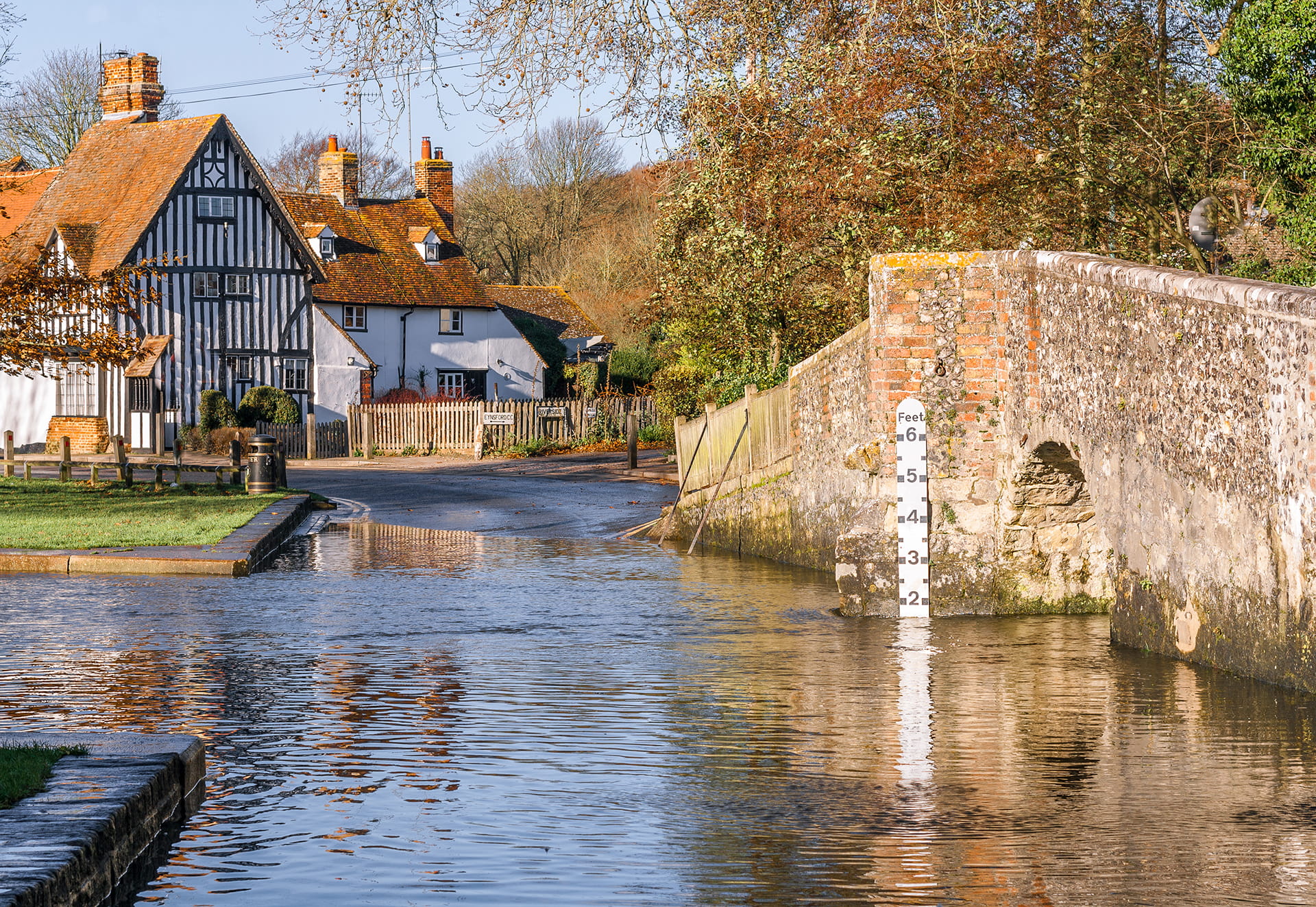
Kent may be famous for its castles, cathedral cities, seaside towns and iconic White Cliffs, but some of the county’s most rewarding days out can be found away from its busiest attractions.
Hidden among the countryside, coast and historic towns are peaceful gardens, wildlife-rich wetlands, secluded beaches and small corners of Kent that are easy to overlook. These are places where the appeal is not necessarily how much you can fit into a day, but how little you need to rush.
From wandering through woodland gardens near Sevenoaks to watching birds over the North Kent marshes, finding a tiny historic waterfall in West Malling or escaping to a quiet beach beneath the White Cliffs, there are plenty of opportunities to discover a slower side of the Garden of England.
If you are searching for hidden gems in Kent, peaceful places to visit, quiet beaches or relaxing days out away from the crowds, these are some of the county’s best-kept secrets worth putting on your list.
Discover Kent’s Quieter Side Away From the Usual Crowds
A relaxing day out does not have to mean travelling miles into the countryside or finding somewhere nobody else knows about. Sometimes it simply means choosing the quieter alternative: taking a woodland path instead of joining a busy attraction, exploring a small historic town rather than a major shopping centre or walking along a lesser-known stretch of the Kent coast.
That is what makes Kent particularly good for slower days out. Within one county, you can move between rolling countryside, historic villages, ancient woodland, chalk cliffs, marshland and coastline. Many of the places below are close enough to Kent’s better-known destinations to combine with them, while still offering somewhere to escape when you want a little more space.
Some are established attractions that remain surprisingly peaceful. Others are small discoveries that might only occupy an hour or two but can transform an ordinary afternoon into something memorable.
Secret Gardens and Country Estates for a Peaceful Day Out in Kent
Kent’s reputation as the Garden of England is about far more than orchards and farmland. The county is home to historic estates and private gardens filled with woodland paths, unusual plants and quiet corners where there is no particular reason to hurry.
Rather than trying to see everything, these are places best enjoyed at walking pace.
Great Comp Garden, Sevenoaks – A Hidden Kent Garden Made for Slow Wandering
Tucked away at Platt, near Sevenoaks, Great Comp Garden feels a world away from some of Kent’s larger historic estates. Around seven acres of garden surround the 17th-century manor house, with winding paths leading between colourful borders, woodland and architectural features.
The garden was developed by Roderick and Joyce Cameron after they moved to Great Comp in 1957. What followed was decades of planting and experimentation, creating a garden known today for rare and unusual plants as well as one of Europe’s notable collections of salvias.
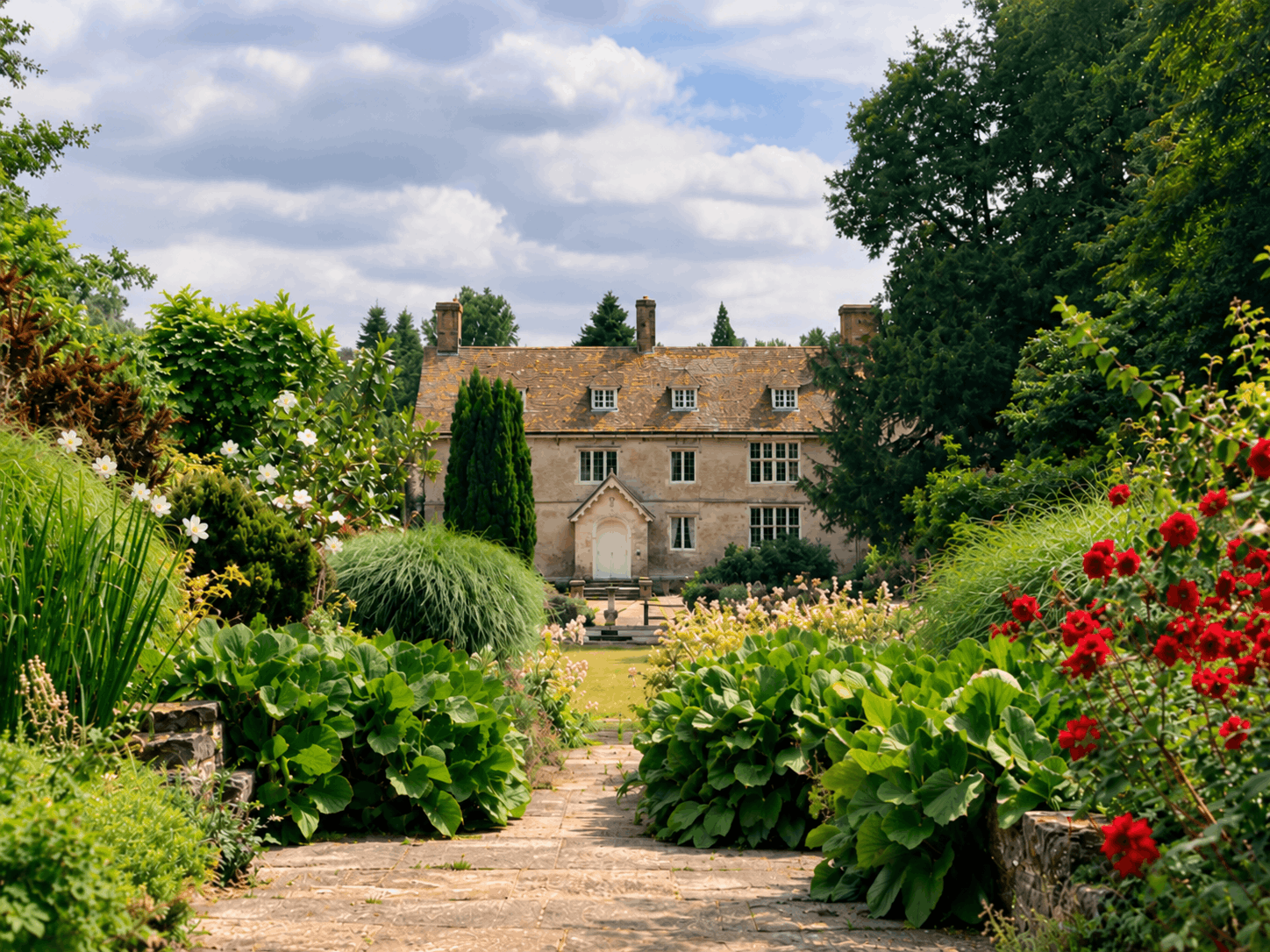
There is plenty of seasonal variation. Spring brings magnolias, azaleas, rhododendrons, hellebores and bulbs, while later in the year the planting becomes increasingly vibrant as salvias, dahlias, ornamental grasses and other late-flowering plants take over.
Part of Great Comp’s appeal is its scale. It is substantial enough to explore without feeling like you need to march from one attraction to the next. Wander through the Italian Garden, look for the romantic garden ruins, follow the woodland paths and leave enough time for tea or lunch at the Old Dairy Tearoom.
Best for: garden lovers, couples, photography, quiet walks and anyone looking for a gentle half-day out in West Kent.
Goodnestone Park Gardens – Peaceful Parkland and Walled Gardens Near Canterbury
Set in the countryside east of Canterbury, Goodnestone Park Gardens combines approximately 15 acres of formal gardens, woodland, parkland, wildflower areas and a beautifully restored historic walled garden.
The estate has been shaped over several centuries. Goodnestone House was built in 1704 and the landscape surrounding it evolved from formal early gardens into the wider parkland and terraces seen today.
One of its most interesting connections is with Jane Austen. Elizabeth Bridges of Goodnestone married Austen’s brother Edward, and Jane became a regular visitor to the estate. Goodnestone’s recorded history notes that after staying here in 1796, Austen began writing the novel that would become Pride and Prejudice.
Today, however, you do not need to arrive with a literary itinerary. The pleasure is in wandering.
The Walled Garden is divided into a succession of different spaces, moving through subtropical planting, herbaceous borders, productive gardens, flowers and glasshouse displays. Elsewhere, woodland paths pass beneath mature oak and sweet chestnut trees, while terraces around the house open towards parkland and countryside.
There are enough changes in scenery to make a long visit worthwhile, but Goodnestone rarely feels like somewhere you need to rush around with a checklist.
Best for: a peaceful garden day, history, Jane Austen enthusiasts, countryside walks and visitors staying around Canterbury or East Kent.
Riverhill Himalayan Gardens – Woodland Walks and Views Over the Weald of Kent
High above the surrounding countryside near Sevenoaks, Riverhill Himalayan Gardens combines historic planting with expansive views across the Weald of Kent.
The Rogers family has lived at Riverhill since 1840, when botanist John Rogers purchased the estate. Rogers was one of the early members of the Royal Horticultural Society and developed a particular interest in newly introduced rhododendrons and azaleas from Asia. Riverhill’s sheltered hillside and lime-free soil made it particularly well suited to them.
Generations of the family have continued developing and restoring the gardens, creating a landscape that feels much less formal than many traditional country estates.
Explore woodland paths, lawns and different garden areas before stopping simply to take in the view. On a clear day, the outlook across the Weald is one of the highlights.
Riverhill also works well if different people in your group want different things from a day out. Keen gardeners can pay attention to the historic planting while everybody else can enjoy the walks, landscape and open space.
Best for: woodland wandering, families, garden enthusiasts and anyone searching for peaceful places near Sevenoaks.
Peaceful Nature Spots and Waterside Escapes Hidden Around Kent
You do not need manicured gardens to find tranquillity in Kent. Some of the county’s most atmospheric landscapes are considerably wilder.
Across the North Kent Marshes, around the Thames and Medway estuaries and beside the county’s rivers, water has shaped landscapes that feel remarkably removed from nearby towns.
RSPB Cliffe Pools – Birdwatching, Lagoons and Big Skies on the North Kent Marshes
For a completely different side of Kent, head towards the Hoo Peninsula and RSPB Cliffe Pools.
This is a landscape of open horizons, freshwater pools, saline lagoons and marshland, with the River Thames beyond. There are no ornamental flower beds or grand country houses here. The attraction is the space itself.
The reserve is particularly important for water birds. Avocets and common terns can be seen during the breeding season, while migratory species pass through at other times of year. Winter brings large gatherings of ducks, lapwings and waders.
You do not need to be an experienced birdwatcher to appreciate it. Waymarked trails lead through the reserve to several viewpoints, including routes towards the Thames and elevated views across the pools.
Bring binoculars if you have them, but also give yourself time to simply stop. On a clear day, the enormous skies and exposed marshland are part of what makes this one of Kent’s most distinctive quiet places.
Best for: wildlife, birdwatching, photography, walking and anyone who prefers wild landscapes to formal attractions.
West Malling Cascade – A Little-Known Historic Corner in the Heart of Town
Not every Kent secret needs to fill an entire day.
Hidden beside Swan Street in West Malling is The Cascade, an unusual ornamental waterfall that many people can pass without appreciating its history.
The Grade II-listed structure dates from 1810 and incorporates medieval stone fragments reused from nearby St Mary’s Abbey. Built from stone rubble with a pointed central arch, it is a curious little piece of architecture that feels almost unexpectedly theatrical for such a small feature.
The Cascade works particularly well as part of a slower exploration of West Malling rather than as a destination on its own. The historic town centre has attractive architecture, independent shops, cafés, pubs and restaurants, while Manor Park Country Park is only a short walk away.
That combination makes West Malling ideal when you want a relaxing day without committing to a large attraction. Wander the historic streets, find The Cascade, stop somewhere for lunch and then follow one of the paths around Manor Park’s lake, meadows and woodland.
Best for: an easy afternoon, local history, independent shopping, cafés and gentle walking.
Canterbury’s River Stour – See a Calmer Side of the City From the Water
Canterbury is hardly one of Kent’s hidden destinations, but there are quieter ways to experience one of the county’s busiest historic cities.
The River Stour runs directly through the historic centre, passing old buildings, gardens and sections of the city that can feel surprisingly removed from the streets just metres away.
Historic river tours have operated in Canterbury for generations, taking visitors along the water while guides explain stories and details that are easily missed on foot. The traditional shared tours are relatively short, making them easy to combine with a relaxed lunch or wander through the city’s smaller lanes.
Even if you have visited Canterbury many times, seeing it from water level changes the perspective. The buildings suddenly appear from different angles, parts of the medieval city become more apparent and the pace is considerably gentler than following the crowds between its major landmarks.
Good to know: Canterbury’s guided river tours are seasonal, so check the current operating calendar before making a special journey.
Best for: couples, history, returning visitors to Canterbury and seeing a familiar Kent destination differently.
Hidden Coastal Spots in Kent for Sea Air Without the Crowds
Kent’s coastline stretches from the Thames and Medway estuaries around the Isle of Thanet, past Deal and Dover and on towards Romney Marsh and Dungeness.
That means there is far more to the Kent coast than its busiest seaside towns.
Move away from the major resorts and you can find stretches of shingle, chalk cliffs, rock pools and nature-rich shoreline where a walk beside the sea can still feel wonderfully simple.
Samphire Hoe – A Peaceful Nature Escape Beneath the White Cliffs
Between Folkestone and Dover, beneath towering chalk cliffs, Samphire Hoe occupies one of the most unusual landscapes in Kent.
The 30-hectare nature reserve was created using material excavated during construction of the Channel Tunnel. What could have remained an engineering by-product has instead developed into an important habitat for wildlife and a striking place to walk beside the English Channel.
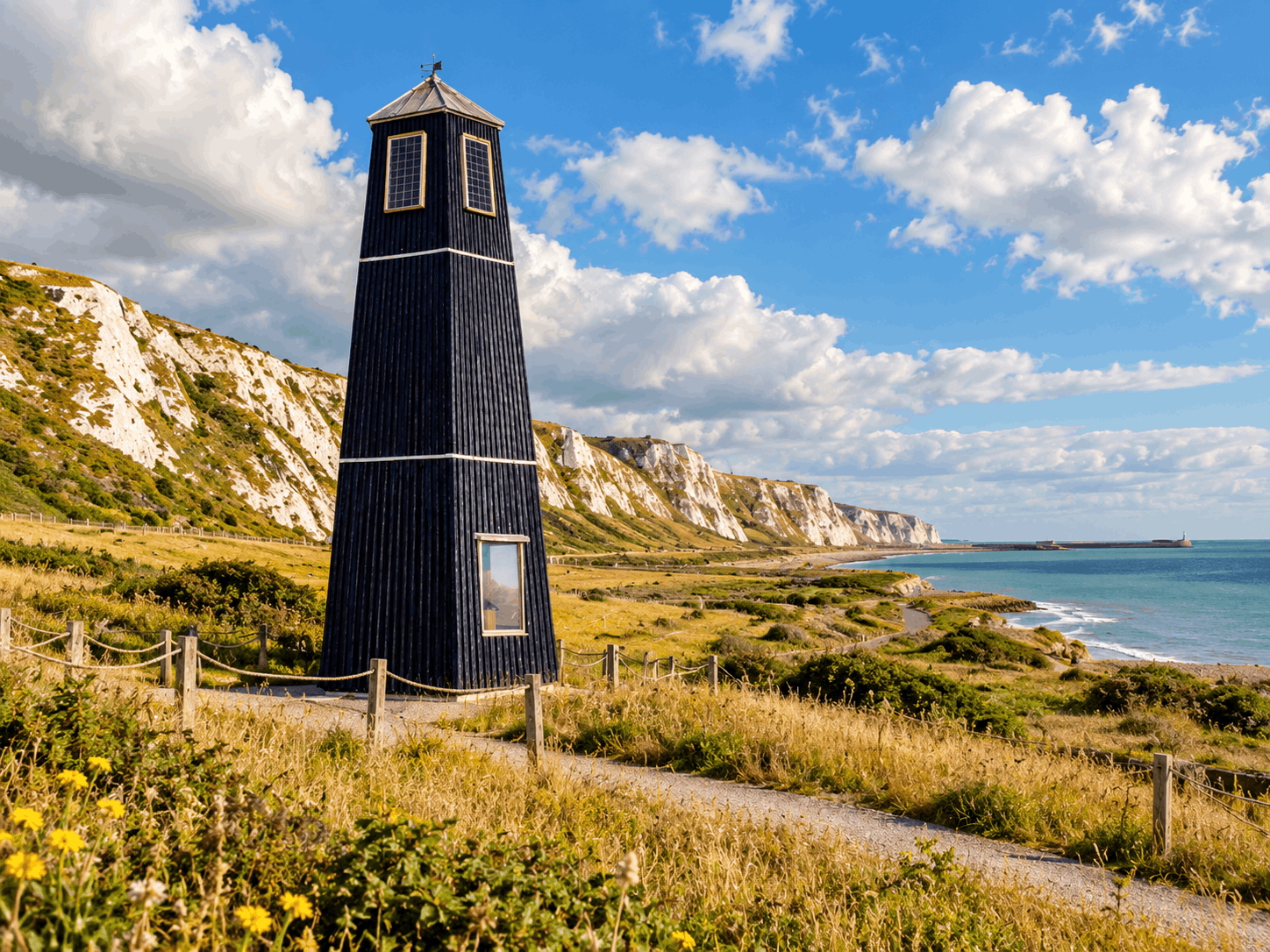
Its position is what makes it so memorable. The White Cliffs rise sharply behind the reserve, while the sea stretches out in the opposite direction. Walking here feels completely different from walking along the top of the cliffs.
The reserve supports a wide range of plants and wildlife, while its paths provide an accessible way to appreciate the landscape without needing to tackle one of Kent’s longer coastal walks.
There is also something rather enjoyable about getting there: motorists approach through a tunnel cut through the cliffs before emerging into the reserve.
If you associate Dover primarily with ferries and the castle, Samphire Hoe reveals a much quieter side of the area.
Best for: nature, coastal walking, geology, photography and a quieter alternative to the busiest White Cliffs viewpoints.
St Margaret’s Bay – A Secluded Kent Coast Escape Beneath the Chalk Cliffs
Continue east along the coast and the cliffs open around St Margaret’s Bay, a shingle beach tucked below St Margaret’s-at-Cliffe.
Explore Kent describes the bay as a place offering peace and quiet in the heart of White Cliffs Country, and that is a fair summary of its appeal. Chalk cliffs rise behind the shore while the English Channel stretches ahead, creating a much more enclosed atmosphere than the broad seafronts of Kent’s larger coastal towns.
The beach sits on the Saxon Shore Way, so it can either be your destination or the starting point for a longer walk. Heading up towards the cliff top opens up routes towards South Foreland Lighthouse and some outstanding views along the coast.
Rock pools are exposed around the shoreline, and the landscape changes noticeably with the tide. If you simply want fresh air rather than a major itinerary, bring a drink, sit for a while and watch the ships crossing the Channel.
For something more energetic, climb from the bay towards South Foreland Lighthouse. The Victorian lighthouse occupies one of the most dramatic points on the White Cliffs and has played an important role in the history of both electric lighting and radio communication.
Best for: coastal scenery, walking, rock pools, sea views and combining a quiet beach with the White Cliffs.
Seasalter Beach – A Quiet Alternative to Busy Whitstable
Whitstable is rightly one of Kent’s best-loved seaside towns, but summer weekends can bring plenty of visitors to its harbour, restaurants and town centre.
A little farther west, Seasalter Beach offers a considerably quieter alternative.
Explore Kent includes Seasalter among the county’s hidden beaches, describing the small coastal settlement as generally peaceful and relaxed. It is not somewhere to visit in search of arcades, promenades or a long list of attractions. That absence is precisely the point.
Walk beside the shingle, watch the changing light over the Swale and enjoy a stretch of coast that feels less polished and more residential than central Whitstable.
Seasalter also has an interesting past. Salt production here dates back centuries, while the wider coastline has associations with smuggling. The Whitstable Coastal Trail reaches towards Seasalter and links the area with the maritime history of its better-known neighbour.
For a longer day, start with the independent shops and harbour around Whitstable before walking or driving west when you are ready to escape the crowds.
Best for: quiet coastal walks, sunsets, combining with Whitstable and anyone who prefers an understated beach.
Historic Kent Villages and Market Towns Made for Slow Wandering
Sometimes the best relaxing day out is one without a fixed itinerary.
Kent has historic villages and market towns where much of the appeal comes from simply walking, stopping when something catches your attention and finding somewhere good for lunch or coffee.
Chiddingstone – A Storybook Kent Village, Castle and Woodland Escape
There are prettier villages in Kent, but few feel quite as complete as Chiddingstone.
Much of the village is owned by the National Trust and it is considered one of the best-preserved Tudor villages in the country. Half-timbered buildings and narrow streets create the sort of scene that feels almost designed for a period drama – which explains why Chiddingstone has appeared in several film and television productions.
Take your time walking along the historic high street and look for the Old Manor, St Mary’s Church and the unusual rock formation known as the Chiding Stone, which local legends have variously connected with druids, Anglo-Saxon boundaries and public punishment.
Then continue towards Chiddingstone Castle, which adds enough to turn a village visit into a fuller day out.
The historic house contains collections assembled by Denys Eyre Bower, spanning Ancient Egypt, Buddhism, Stuart and Jacobite history and Japanese art. Outside, around 25 acres of informal grounds include lawns, woodland trails, a lake and countryside views.
That mixture works particularly well if you want a day that never feels dominated by one attraction. Spend some time in the village, explore the castle if it is open, walk beside the lake and finish with tea rather than racing onwards to another destination.
Good to know: the castle itself operates seasonal opening days and can occasionally close for private events, while its grounds have different access arrangements. Check before travelling if the castle is an important part of your visit.
Best for: historic Kent, architecture, woodland walks, museums, photography and an unhurried country day.
Faversham – Independent Shops, Historic Streets and a Slower Kent Day Out
Faversham is sometimes overshadowed by nearby Canterbury and Whitstable, yet it is one of Kent’s most rewarding towns for an unstructured day out.
The historic centre gathers around an attractive market place where you can browse independent shops, galleries, cafés and traditional pubs without the scale or intensity of a major shopping destination.

Head towards Standard Quay and the atmosphere changes again, bringing you closer to Faversham Creek and the town’s long maritime and trading history.
What makes Faversham particularly well suited to a relaxing day is the choice it gives you. You can browse local businesses, follow a heritage trail, spend time beside the creek, explore the surrounding countryside or simply settle into a café and abandon the itinerary altogether.
The Faversham Society’s Visitor Information Centre in Market Place is also useful for anyone who wants to dig deeper into the town’s history, with local maps and trails available to help you explore beyond the most obvious streets.
If you have more time, the surrounding Faversham area also opens onto gardens, orchards, marshes and walking routes, making the town a good base for discovering another quieter corner of North Kent.
Best for: independent shopping, heritage, food and drink, relaxed wandering and a Kent day out without a rigid schedule.
How to Plan a Relaxing Day Out in Kent Without the Stress
The irony of searching for somewhere peaceful is that the most relaxing places rarely remain peaceful when everybody arrives at the same time.
A little planning can therefore make a significant difference, particularly at gardens, nature reserves and coastal locations where parking or seasonal conditions can affect your visit.
The Best Times to Visit Kent’s Hidden Gems and Avoid the Crowds
Weekdays will generally be quieter than weekends, particularly during school holidays and the warmer months. If a weekend is your only option, arriving early or visiting later in the afternoon can change the experience considerably.
Season matters too.
Spring is particularly rewarding for Kent’s gardens and woodland, while early autumn can offer excellent walking weather, colourful planting and fewer school-holiday crowds. Winter may not suit every attraction, but the coast, marshes and nature reserves can be at their most atmospheric when the weather is clear.
If your priority is peace rather than guaranteed sunshine, do not automatically discount the shoulder seasons.
Getting to Kent’s Quieter Places by Train and Car
Some of Kent’s best quiet places are easiest to reach by car, particularly country gardens and more isolated stretches of coast. Others work surprisingly well by public transport.
Canterbury, Faversham, Sevenoaks, Whitstable and West Malling all have railway stations, making it possible to build a relaxed day around the town and then continue on foot, by bus or taxi depending on your chosen destination.
Coastal walking can also remove the need to drive directly to every attraction. The Kent coastline forms part of the wider King Charles III England Coast Path, with existing coastal routes allowing visitors to link towns, beaches, cliffs and nature reserves on foot.
If you are driving, check parking arrangements before travelling. The fact that somewhere is quieter does not necessarily mean it has unlimited parking.
Check Opening Times, Tides, Parking and Accessibility Before You Travel
A little preparation is particularly worthwhile for the places in this guide because they range from privately operated gardens to beaches and wildlife reserves.
- Check seasonal opening dates for private gardens, historic houses, river tours and tearooms.
- Check tide times before coastal walks, particularly if you plan to explore rock pools or walk close to the shoreline.
- Confirm parking if you are travelling to smaller villages or remote coastal spots.
- Look at accessibility information before visiting gardens, nature reserves or cliff-top locations, where surfaces can range from paved paths to woodland tracks and steep slopes.
- Check weather conditions before visiting exposed coastal or marshland areas.
- Allow more time than you think you need. The whole point of these days out is not having to rush.
Details can change throughout the year, so it is always worth checking the attraction, National Trust, RSPB, local council or tourism website shortly before travelling.
Frequently Asked Questions About Kent’s Hidden Gems and Relaxing Days Out
What are the best hidden gems to visit in Kent?
Some of Kent’s most interesting lesser-known places include Great Comp Garden near Sevenoaks, Goodnestone Park Gardens near Canterbury, RSPB Cliffe Pools on the Hoo Peninsula, Samphire Hoe near Dover and the historic village of Chiddingstone.
The best choice depends on the type of day you want. Gardens such as Great Comp and Riverhill suit slow summer wandering, while Cliffe Pools and Samphire Hoe are better choices if you prefer wildlife, walking and open landscapes.
Where are the most peaceful places to visit in Kent?
For genuinely peaceful surroundings, try RSPB Cliffe Pools, Seasalter Beach, Samphire Hoe or one of Kent’s smaller private gardens. Visiting outside peak weekend and school-holiday periods will usually make even popular places considerably calmer.
Historic towns such as Faversham and West Malling are another option if you want somewhere relaxed without being completely isolated.
Where can you go in Kent to escape the crowds?
Move away from Kent’s headline attractions and look towards smaller gardens, nature reserves, country parks, historic villages and less developed sections of coastline.
Instead of central Whitstable on a busy summer afternoon, for example, continue towards Seasalter. Rather than only viewing the White Cliffs from Dover’s main visitor area, explore Samphire Hoe below the cliffs or St Margaret’s Bay farther along the coast.
What are the best quiet beaches in Kent?
St Margaret’s Bay and Seasalter are both good choices for visitors seeking a quieter atmosphere, while Explore Kent also highlights several lesser-known coastal spots around the county.
Remember that even normally quiet beaches can become busy during hot weekends and school holidays, so timing remains important.
Which hidden gems in Kent can you reach by train?
Several places in this guide can form part of a car-free day out. Faversham and West Malling have railway stations close to their historic centres, while Canterbury and Whitstable are straightforward rail destinations.
Dover Priory can be used as a starting point for exploring the White Cliffs area, although reaching some of the more isolated attractions may require a bus, taxi or substantial walk.
Always check the full route before travelling rather than assuming a nearby railway station means the attraction itself is within easy walking distance.
What are the best free or low-cost relaxing days out in Kent?
Kent’s coast, country parks, historic towns and many walking routes provide plenty of options for a relaxing day without paying a large admission fee.
A walk around Faversham, West Malling or Chiddingstone Village can cost very little beyond transport and refreshments, while beaches such as St Margaret’s Bay and Seasalter are naturally suited to simple days built around walking and scenery.
Nature reserves can also offer excellent value, although parking charges, donations or other costs may apply depending on where you visit.
Slow Down and Discover a Different Side of Kent
The most memorable day out does not always involve Kent’s biggest castle, busiest beach or most photographed landmark.
Sometimes it is a quiet woodland path, an unexpected historic building, a table beside a village café or a stretch of coastline where you can hear little more than the sea.
Kent has more than enough major attractions to fill countless weekends, but exploring its quieter side reveals how varied the county really is. Historic gardens sit only a few miles from busy towns, wild marshes stretch towards the Thames, secluded bays hide beneath famous chalk cliffs and centuries of history can be found along streets most people simply drive through.
So next time you are planning a day out in Kent, leave a little space in the itinerary. Choose somewhere you have never thought to stop before, take the slower route and see what you find.
Some of Kent’s best-kept secrets are best discovered without rushing at all.