
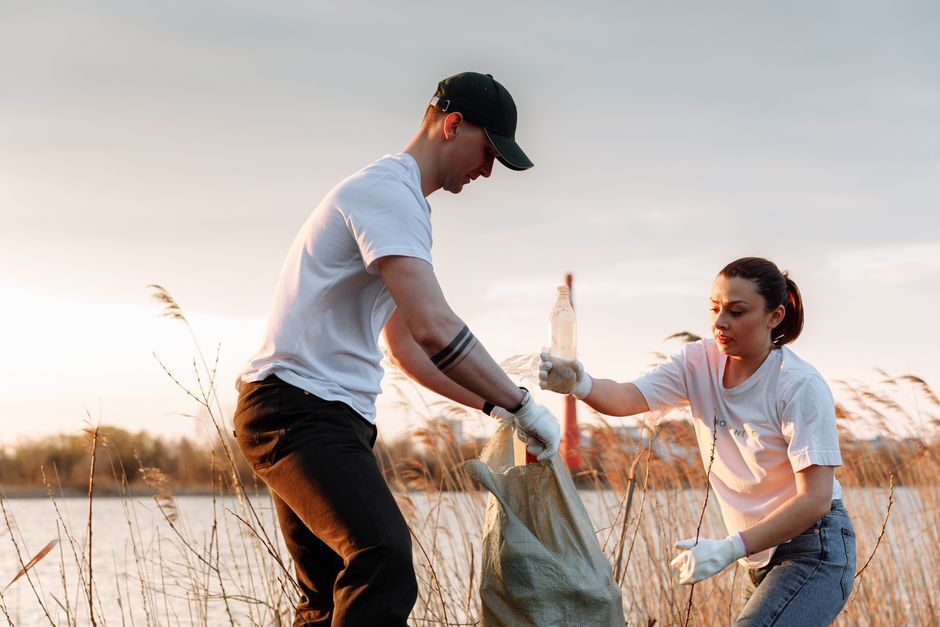
From chalk grassland and ancient woodland to productive farmland, estuaries and densely populated coastal towns, Kent faces a remarkably varied set of environmental challenges. The response is equally diverse, with community groups, farmers, charities, councils and locally owned organisations working on everything from habitat restoration and renewable energy to repair schemes, pollinator corridors and coastal conservation.
What makes many of these projects particularly interesting is their local scale. Sustainability does not only mean ambitious county-wide targets. In practice, it can involve volunteers looking after a single stretch of coastline, residents repairing household items instead of replacing them, farmers reconnecting fragmented habitats or a community organisation installing solar panels and reinvesting the proceeds locally.
Several of these efforts are now becoming increasingly connected. The publication of the Kent & Medway Local Nature Recovery Strategy has created a county-wide framework for deciding where nature recovery could make the greatest difference, while initiatives such as Kent’s Plan Bee, Wilder Blean, Farming in Protected Landscapes and the Kent Sustainable Communities Network are already turning broader environmental ambitions into action on the ground.
Kent & Medway’s Local Nature Recovery Strategy Sets the Bigger Picture
One of the most significant recent developments is the Kent & Medway Local Nature Recovery Strategy. Developed under the Environment Act 2021 and led locally by Kent County Council, the final strategy was formally launched in December 2025 following extensive consultation.
Rather than being a general statement about protecting wildlife, the strategy identifies specific priorities for nature recovery and uses mapping to show where particular actions could have the greatest impact. Existing important habitats are mapped alongside areas where restoration, creation or better management could help create a more connected ecological network.
That matters because one of the biggest pressures on wildlife is not simply the loss of individual habitats but their fragmentation. A wildflower meadow, woodland or wetland may support valuable species on its own, but its ecological value can increase when wildlife is able to move between neighbouring habitats.
The strategy therefore considers environments ranging from chalk grassland and ancient woodland to coastal grazing marsh, mudflats, farmland and urban green space. Priorities include bringing nature closer to communities, improving ecological connections and identifying opportunities for measures such as tree planting, habitat restoration and better land management.
For residents, community groups and land managers, the accompanying mapping is particularly useful because it turns an enormous county-wide environmental challenge into something more local: what exists nearby, what needs protecting and where future nature recovery might be most effective.
Community Climate Action Is Becoming Better Connected Across Kent
Many environmental projects begin at neighbourhood level, but small groups can struggle when they work entirely independently. The Kent Sustainable Communities Network has been created to help connect grassroots groups working on climate, biodiversity and sustainability across the county.
The network brings together organisations interested in areas including carbon reduction, nature recovery, circular economy projects and community engagement. It also provides a Green Action Map where groups can share environmental projects, events and opportunities taking place around Kent.
This kind of coordination may be less visible than planting a woodland or installing solar panels, but it addresses a common problem in local environmental action: successful ideas in one town are not always known about elsewhere.
A repair group, community garden or wildlife project does not necessarily need to invent a completely new model if another Kent community has already developed something that works. Sharing experience, volunteers and practical knowledge can allow small local initiatives to have an influence beyond their immediate neighbourhood.
Kent Community Energy Is Keeping Renewable Power Local
Renewable energy provides another example of sustainability moving beyond individual households. Kent Community Energy is a community benefit society that develops and owns renewable energy projects, with profits reinvested into community and sustainability initiatives across Kent.
One of its largest assets is a 5MW community-owned solar farm near Sittingbourne. The site contains around 20,000 solar panels and is estimated to generate electricity equivalent to the annual consumption of approximately 1,725 homes.
The model is important because the benefits extend beyond the electricity itself. Income generated from community-owned renewable energy can be returned to local projects rather than leaving the area entirely.
In 2026, Kent Community Energy planned to distribute up to £28,000 through its community grant programme. Recent recipients have included organisations tackling energy efficiency, fuel poverty and environmental improvement.
One example is Emmaus Dover, which received support towards insulating accommodation at its White Cliffs site. The organisation also operates a reuse model of its own, repairing and refurbishing donated furniture and white goods for resale. Kent Community Energy reported that Emmaus diverted 114 tonnes of donated items from landfill through reuse in the previous year, alongside further recycling.
For householders and small businesses wanting to generate their own power, Kent County Council also operates Switch Together Kent, a group-purchasing scheme for solar panels and battery storage. Collective purchasing is intended to make it easier for participating properties to obtain competitively priced installations from a pre-vetted supplier.
Repair Cafés and Reuse Projects Are Tackling Waste Before It Reaches the Bin
Recycling is important, but preventing an item from becoming waste in the first place can be even more effective. Across Kent, repair cafés, reuse organisations, charity projects and second-hand businesses are helping extend the useful lives of everyday products.
The principle is straightforward. A broken lamp, toaster, item of clothing or small appliance does not automatically need replacing if somebody with the right skills can repair it. Community repair events bring those skills together while helping residents save money and learn how products can be maintained rather than discarded.
Kent’s current waste strategy is increasingly recognising repair and reuse as part of the wider circular economy, rather than treating recycling as the only alternative to disposal. Kent County Council has also developed a repair, reuse and upcycling business locator, helping residents find organisations already working in this area.
Local authorities are supporting the movement too. Maidstone Borough Council’s current climate action programme includes support for repair cafés and social enterprises as part of its plans to increase household reuse and reduce unnecessary waste.
Kent has also been involved in Circular South East, selected as one of Defra’s pilot projects exploring how businesses and communities can make better use of materials that might otherwise enter the waste stream.
The significance of these schemes is that they move the conversation beyond simply asking which recycling bin something belongs in. Reusing, borrowing, repairing and buying second-hand all reduce demand for new materials before recycling becomes necessary.
Kent’s Plan Bee Is Creating More Space for Pollinators
Some of Kent’s environmental initiatives focus on species that can easily be overlooked. Kent’s Plan Bee is the county’s pollinator action plan, created to improve habitats and food sources for bees, butterflies, moths, hoverflies, wasps and other pollinating insects.
The programme looks beyond designated nature reserves. Gardens, parks, roadside verges, hedgerows, school grounds and small pieces of community land can all provide nectar, pollen and shelter, making relatively modest spaces part of a much larger network.
Kent County Council has changed elements of its own vegetation and hedgerow management to better support pollinators, while the programme also provides practical guidance for residents, organisations and landowners. Its Community Pollinator Toolkit includes ideas suitable for everything from window boxes to larger areas of public land.
In 2023, Kent’s Plan Bee was recognised by Defra as a Bees’ Needs Champion for its work supporting pollinating insects. The initiative continues to publish seasonal information and encourage residents to make small changes at home and in community spaces.
That could mean allowing part of a lawn to flower, planting nectar-rich species across different seasons, retaining useful shelter or simply becoming less enthusiastic about removing every supposedly untidy corner of a garden.
Wilder Blean Is Using Natural Processes to Restore Ancient Woodland
Near Canterbury, one of Kent’s most unusual nature recovery projects is taking a very different approach to woodland management.
The Wilder Blean project, led by Kent Wildlife Trust and Wildwood Trust, is using large grazing animals to restore natural processes within West Blean and Thornden Woods.
European bison were introduced to the woodland in 2022 alongside Exmoor ponies, Iron-Age pigs and cattle. These animals influence woodland structure through their natural behaviour: grazing vegetation, disturbing soil, stripping bark and creating open spaces where different plants and wildlife can establish.
The bison are sometimes described as ecosystem engineers because their behaviour changes the habitat around them. Instead of people attempting to recreate every process with machinery and intensive intervention, the project explores whether animals can help create a more varied and naturally functioning woodland.
The original project is now part of a broader ambition for the Blean Wildscape, which seeks to improve ecological connections across a much larger landscape while also considering opportunities for communities and local businesses.
The project is particularly relevant to Kent because it tackles one of the central themes running through the county’s wider nature recovery work: creating larger, better connected habitats rather than managing isolated pockets of wildlife independently.
Farmers Are Connecting Nature Recovery Across the Kent Downs
With farming occupying much of Kent’s rural landscape, environmental recovery cannot happen solely inside nature reserves. The way farmland is managed can influence soil health, wildlife, water quality, carbon storage and the connections between habitats.
The Farming in Protected Landscapes programme in the Kent Downs provides funding for farmers and land managers delivering projects with benefits for nature, climate, people and the landscape.
Potential projects range from restoring chalk grassland and hedgerows to creating ponds, improving woodland, reducing soil erosion and developing more nature-friendly approaches to farming. Funding can also be used to improve countryside access, including replacing difficult stiles, creating accessible trails and providing new walking routes.
The programme has now been confirmed for a further three years, allowing new projects to continue being developed across the Kent Downs.
An increasingly ambitious example is Chalk to Coast. Covering around 450 square miles of north Kent, the project aims to reconnect fragmented habitats between the Kent Downs and the north Kent marshes and coastline.
Rather than concentrating on a single farm, Chalk to Coast is being led by a larger cluster of farmers and landholders working across the landscape. Early work has included ecological studies and mapping intended to identify where coordinated action could bring the greatest benefits for biodiversity, climate resilience, water and air quality.
It demonstrates how local sustainability is increasingly moving beyond individual projects. A restored hedge or pond matters on its own, but its value can be greater when it forms part of a connected network stretching across multiple farms and habitats.
Thanet’s Coastal Wardens Are Helping Protect the Marine Environment
On the coast, sustainability presents a different set of challenges. Thanet’s chalk reefs, beaches and intertidal habitats support important marine and bird life while also attracting large numbers of visitors.
The long-running Thanet Coast Project works with local volunteers to help protect the North East Kent Marine Protected Area and increase understanding of the coast.
Its Coastal Warden scheme allows volunteers to adopt and monitor a local bay or section of coastline. Wardens receive training before helping to observe wildlife and coastal activity, report problems and support public events and conservation work.
The programme remains active in 2026, with new Coastal Warden training alongside beach cleans, wildlife events and educational activities taking place throughout the year.
There is also a more specialised Coastbusters programme addressing invasive non-native marine species. Volunteers are trained to identify and help control species that can disrupt the local marine ecosystem.
The project shows how environmental protection can involve far more than organised litter picking. Citizen monitoring, species recording, education and long-term stewardship can all provide information that helps specialists understand how heavily used coastal habitats are changing.
Towns Are Experimenting With Greener Public Spaces
Sustainability projects are not confined to Kent’s countryside and coastline. Some of the most useful opportunities for environmental improvement are inside towns, where relatively small areas of green infrastructure can provide shade, manage surface water, support wildlife and make neighbourhoods more pleasant places to walk.
Maidstone’s 2025–26 biodiversity programme provides a useful example of the range of measures now being considered locally. Current actions include creating wetlands and scrapes in parks, expanding community orchards and food forests, extending less intensive mowing in selected green spaces and introducing new town-centre planting.
The programme also includes plans for pocket parks incorporating sustainable drainage. These systems allow planted areas to help slow and manage rainfall rather than immediately sending all surface water into drains, which can become increasingly important during intense rainfall.
Previous community projects in the borough have included a new woodland at Yalding, where 1,450 trees were planted beside the River Medway through a partnership involving the council, Medway Valley Countryside Partnership, Maidstone Victory Angling Society and volunteers.
No individual planting scheme will transform an urban environment by itself. The value comes from accumulating many interventions: street trees, community orchards, wetlands, pollinator planting and better-connected green spaces that collectively make towns more resilient and provide more room for nature.
How Kent Residents Can Get Involved Locally
One of the encouraging features of Kent’s sustainability projects is that many do not require specialist qualifications or a large area of land.
Residents can join conservation volunteering through organisations such as Kent Wildlife Trust and the county’s countryside partnerships, train as Coastal Wardens in north-east Kent or find environmental organisations through the Kent Sustainable Communities Network.
Those who prefer something closer to home can support pollinators through Kent’s Plan Bee, use repair and reuse services before replacing possessions, investigate community or household renewable energy, or volunteer with an existing community garden, wildlife group or repair café.
Farmers, businesses and community organisations have access to a different range of opportunities, from Farming in Protected Landscapes funding and nature recovery mapping to business support and local environmental grants.
The important point is that sustainability in Kent is not being delivered through one project or organisation. A county of this size needs different approaches for different landscapes and communities, and many of the initiatives now under way are increasingly designed to connect those individual efforts.
Making Sustainability Part of Everyday Life in Kent
The scale of the environmental challenges facing Kent means there is no quick solution. Nature recovery, lower-carbon energy, reduced waste and more resilient communities all involve work that will continue for years rather than months.
But there is already a considerable amount happening locally. The Kent & Medway Local Nature Recovery Strategy is providing a clearer framework for where ecological action is most useful. Wilder Blean and Chalk to Coast are experimenting with landscape-scale recovery. Kent Community Energy is linking renewable generation with community benefit, while repair networks are helping useful items remain in circulation for longer.
Meanwhile, projects such as Kent’s Plan Bee and the Thanet Coastal Wardens demonstrate that smaller actions can still form part of something much larger. A patch of pollinator-friendly planting, a repaired household appliance or a volunteer survey of a local beach may appear modest in isolation, but replicated across communities they become part of a wider change in how resources and landscapes are managed.
That combination of county-wide planning and practical local action is likely to be increasingly important. For Kent to become more sustainable, the work cannot happen only in strategies or protected landscapes; it has to become part of ordinary homes, businesses, farms, streets and communities too.