
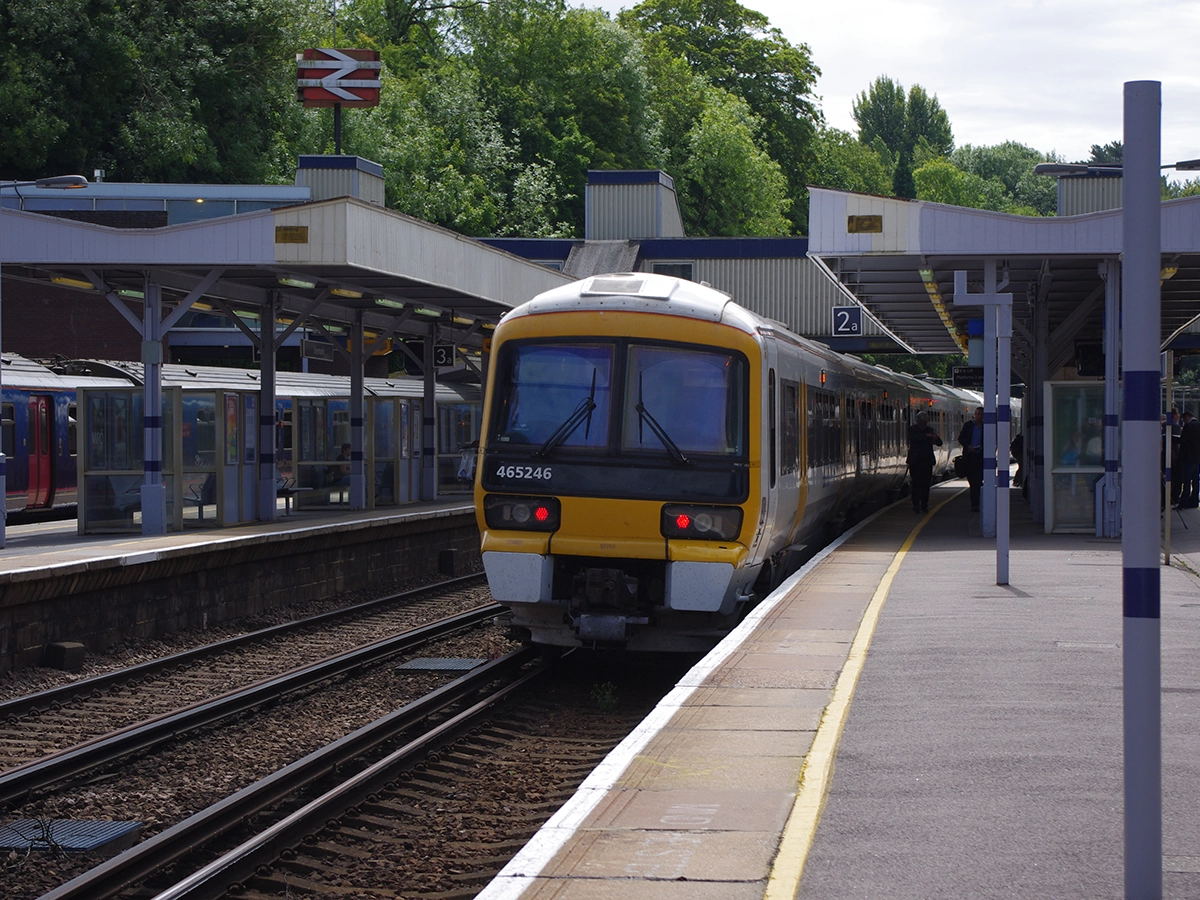
Kent has long been one of London’s principal commuter counties, but choosing where to live involves much more than finding the shortest train journey. A town with a 25-minute service into the wrong London terminal can produce a worse daily commute than somewhere 40 minutes away with a direct train that arrives close to your workplace.
Frequency matters too, as does the time it takes to reach the station from home, the cost of the ticket and what happens when you are not commuting. Housing choice, schools, restaurants, shops, countryside and the general character of a place all become part of the equation once you are considering somewhere as a home rather than simply a railway station.
Hybrid working has widened the options considerably. Travelling from Canterbury or Ashford five days a week is a very different proposition from making the journey twice, allowing commuters to consider parts of Kent that offer more space or a stronger lifestyle outside working hours.
Best Kent Commuter Towns at a Glance
Journey times below are approximate fastest direct services and can vary by train and timetable, so always check the services you would realistically use before choosing an area.
| Location | London station | Fastest | Direct? | Character | Best for |
|---|---|---|---|---|---|
| Sevenoaks | London Bridge / Charing Cross | ~24 mins | Yes | West Kent town | Fast commuting |
| Tonbridge | London Bridge / Charing Cross | ~32 mins | Yes | Riverside market town | All-round commuting |
| Gravesend | St Pancras | ~23 mins | Yes | Thames-side town | HS1 access |
| Ebbsfleet / Greenhithe | St Pancras | ~19 mins | Yes | Modern & established | Newer homes |
| Rochester | St Pancras | ~36 mins | Yes | Historic town | Character |
| Ashford | St Pancras | ~38 mins | Yes | Town & countryside | Hybrid commuters |
| Royal Tunbridge Wells | Charing Cross | ~54 mins | Yes | Affluent town | Lifestyle |
| Dartford | London Bridge | ~37 mins | Yes | London-edge town | Frequent services |
| Canterbury | St Pancras | ~54 mins | Yes | Historic city | City lifestyle |
| Maidstone | Victoria | ~1 hr 3 mins | Yes | County town | Amenities & choice |
Sevenoaks
Sevenoaks is one of the most obvious places to begin if journey time is near the top of your list. Fast trains can reach London Bridge in around 24 minutes, with direct services also continuing towards Charing Cross and Cannon Street. The frequency of London-bound trains is another advantage, giving commuters more flexibility than locations dependent on one or two fast services each hour.
Outside the commute, Sevenoaks feels like an established town rather than a dormitory suburb. There are restaurants, shops and everyday amenities in the centre, while Knole and the surrounding West Kent countryside provide a very different environment within minutes of the High Street.
The trade-off is housing cost. Homes within an easy walk of Sevenoaks station are highly sought after, and the strength of the rail connection contributes to the premium attached to the area. If your budget stretches to it, however, Sevenoaks makes particular sense for somebody travelling into London regularly and unwilling to spend a large part of every working day on the train.
Tonbridge
Tonbridge sits a little further into Kent but remains one of the county’s strongest all-round commuter towns. Fast direct trains can reach London Bridge in a little over half an hour, with services continuing to Charing Cross and, at certain times, Cannon Street. The number of services is just as useful as the headline journey time, particularly for commuters who do not leave work at exactly the same time every evening.
The town itself combines practical amenities with more character than its commuter credentials might suggest. Tonbridge Castle sits beside the River Medway, there are riverside walks through the centre and the housing stock ranges from Victorian and Edwardian streets to modern developments and larger family homes.
Tonbridge is often considered alongside Sevenoaks by buyers wanting the same railway line but a different balance between property and commute. Within Tonbridge itself, however, location still matters. A property requiring a long drive and station parking creates a very different daily routine from somewhere ten minutes away on foot.

Gravesend
Gravesend has an unusually strong commuting advantage for a town of its distance from central London: Southeastern’s high-speed service can reach St Pancras in around 23 minutes. Conventional services towards London Bridge and other London destinations are slower, but having both options gives commuters more flexibility.
The town sits on the Thames and has a substantial centre, a wide range of housing and good access to both north-west Kent and major road connections. For buyers primarily concerned with getting into London quickly while looking beyond the more expensive West Kent commuter belt, it deserves serious consideration.
The important calculation is whether you actually need the high-speed train. HS1 can transform the journey time, but tickets using the high-speed route can cost more than conventional services. Someone commuting twice a week may view that premium very differently from somebody travelling every weekday.
Ebbsfleet and Greenhithe
If St Pancras is your ideal London terminus, Ebbsfleet is difficult to ignore. Direct high-speed trains can cover the journey from Ebbsfleet International in around 19 minutes, putting this part of Kent remarkably close to central London in railway terms.
The surrounding area has seen substantial residential development, making it particularly relevant to buyers looking for newer homes. Nearby Greenhithe offers a more established residential base with its own railway station, while Bluewater provides a huge concentration of shopping, restaurants and leisure facilities close by.
This is an area where the words “near Ebbsfleet” need careful examination. A house that looks geographically close to the high-speed station may still require a drive, bus journey or awkward walk, dramatically changing the real commute. If HS1 is the reason you are moving there, test the journey from the exact development or street you are considering.

Rochester
Rochester offers a useful combination of London connectivity and genuine historic character. High-speed trains can reach St Pancras in around 36 minutes, while other direct services provide alternatives towards London Victoria and stations through south-east London.
The town centre is one of its biggest advantages. Rochester Cathedral, the castle and the historic High Street give it an identity that feels quite separate from its role as a commuter location, with independent shops, cafés, pubs and restaurants adding to the appeal. Housing ranges from period properties close to the centre to newer homes further out.
Again, proximity to the station matters. Central Rochester makes the commute particularly convenient, whereas properties further into the surrounding Medway neighbourhoods may add a bus or car journey at the beginning and end of every working day. For commuters who want somewhere that still feels distinctive once they step off the train, Rochester is worth a close look.

Ashford
On a map, Ashford may look too far from London to belong in a commuter guide. HS1 changes that calculation significantly. Direct high-speed services from Ashford International can reach St Pancras in around 38 minutes, making the train journey comparable with locations geographically much closer to the capital.
Ashford offers a broad range of housing, from major modern developments to established neighbourhoods, while the surrounding countryside and villages provide another option for people willing to drive to the station. The town also has substantial shopping and everyday amenities, making it practical for family life outside commuting hours.
The high-speed fare is the obvious consideration. For somebody travelling into London every weekday, both ticket cost and station parking need to be calculated carefully. For a hybrid worker travelling two or three times a week, Ashford becomes considerably easier to justify, particularly if moving further into Kent provides the type or size of property they want.
Royal Tunbridge Wells
Royal Tunbridge Wells asks commuters to accept a longer journey in return for a strong lifestyle outside London. Direct trains to Charing Cross can take from around 54 minutes, travelling through Tonbridge, Sevenoaks and London Bridge on the way into the capital.
The town itself is a major part of the appeal. The Pantiles, independent shops, restaurants, cafés, parks and nearby High Weald countryside give Tunbridge Wells an identity beyond commuting, while its stock of Victorian, Edwardian and other period homes makes it particularly attractive to buyers looking for character.
It is well suited to people who do not regard the shortest possible commute as the only priority, particularly hybrid workers. One practical warning is that some of the town’s most desirable residential areas are not especially close to the station. A 55-minute train can easily become a considerably longer door-to-door journey once walking, driving or parking is included.

Dartford
Dartford is geographically one of the closest Kent towns to London and remains a practical choice for commuters who value proximity and service frequency. Direct trains to London Bridge can take from around 37 minutes, with a large number of services throughout the day and connections towards other London destinations.
The housing stock is broad, ranging from older central properties to suburban streets and newer development. Road connections are another major consideration, particularly for households where one person commutes by train while another needs access to the M25 or wider south-east.
Dartford’s strength is largely practical rather than picturesque. It offers considerably easier access to London than towns further into Kent, but the precise neighbourhood matters. As elsewhere, living close enough to walk to the station is a different proposition from adding a drive and parking to each commute.
Canterbury
Canterbury is best considered as a city in its own right that happens to have a viable London commute. Direct high-speed trains from Canterbury West reach St Pancras in around 54 minutes, with roughly 25 direct services a day currently operating on the route.
What distinguishes Canterbury from many conventional commuter towns is everything available when you are not working. The historic centre, cathedral, restaurants, pubs, theatres, universities and independent businesses give it a substantial cultural life, while the Kent countryside and coast are also within easy reach.
A near-hour train each way is a significant commitment five days a week, but hybrid working changes the calculation. If you only need to be in London twice a week, Canterbury can offer a lifestyle that feels far more independent of the capital. Housing ranges from city-centre period properties to family neighbourhoods and villages outside the city, although moving too far from Canterbury West can undermine the convenience of HS1.
Maidstone
Maidstone is more complicated from a commuting perspective because it has several stations and no single rail route that dominates every journey. Maidstone East provides the principal direct service to London Victoria, taking roughly an hour to an hour and ten minutes depending on the train. Maidstone West and Maidstone Barracks operate on the Medway Valley line, with a smaller number of journey options that can suit different destinations.
What the town offers in return is scale. As Kent’s county town, Maidstone has extensive shopping, restaurants, leisure facilities, riverside areas and a large variety of residential neighbourhoods. Housing choice is correspondingly broad, while the Kent Downs and surrounding countryside remain close by.
For a Maidstone commuter, matching the house to the station is particularly important. Someone working near Victoria may find Maidstone East perfectly practical, while another commuter heading towards King’s Cross or the City could face a less convenient journey. Work backwards from the London destination before deciding which part of Maidstone makes sense.
Which Kent Commuter Town Is Right for You?
There is no meaningful overall winner because each town solves a different version of the commuting problem. Someone working beside London Bridge has different priorities from someone based near King’s Cross, while a five-day commuter will usually place far more value on journey time than someone travelling twice a week.
- For a particularly fast commute: Sevenoaks, Ebbsfleet and Gravesend.
- For a strong all-round commuter town: Tonbridge.
- For historic character: Rochester.
- For a city lifestyle: Canterbury.
- For a substantial country-town lifestyle: Royal Tunbridge Wells.
- For high-speed travel from further into Kent: Ashford.
- For practical proximity to London: Dartford.
- For modern development and HS1 connectivity: Ebbsfleet and the surrounding area.
- For county-town amenities and broad housing choice: Maidstone.
Think About Which London Station You Actually Need
Headline journey times can be misleading because reaching London is only part of the commute. Sevenoaks and Tonbridge work particularly well for London Bridge, Charing Cross and parts of the City served by Cannon Street. Maidstone East is more naturally aligned with Victoria, while HS1 makes St Pancras the key London destination for Ebbsfleet, Gravesend, Rochester, Ashford and Canterbury.
High-speed services also call at Stratford International, which can be useful for people working in east London, although onward travel may still be required depending on the final destination. Someone working near London Bridge may find a slightly slower conventional service more convenient than arriving at St Pancras and crossing London afterwards.
Always calculate the journey to your actual workplace. Twenty extra minutes on the train can be irrelevant if the station is around the corner from your office, while a supposedly faster service can become much slower once an Underground journey and interchange are added.
High-Speed Rail Versus Mainline Services
HS1 has changed the commuting map of Kent. Ashford, Canterbury and Rochester are geographically much further from central London than traditional commuter towns such as Sevenoaks, but high-speed services dramatically reduce the time spent on the train. Ebbsfleet and Gravesend gain an even bigger advantage because of their position closer to London.
The trade-off is price. High-speed travel can be more expensive than using conventional Southeastern services, so compare the tickets you would actually buy rather than concentrating solely on journey time. Flexible and part-time commuting products may make more sense for hybrid workers than a traditional season ticket.
The calculation should therefore include both time and money. Saving 20 minutes each way may be easily worth the additional cost twice a week but much more significant when multiplied across ten journeys every working week.
What to Check Before Moving to a Kent Commuter Town
Test the Real Door-to-Door Commute
Do the journey from a property you are seriously considering, not simply from the town’s railway station. Include the walk, bus journey or drive to the station, finding a parking space, waiting for the train and travelling onwards once you reach London. A 35-minute railway journey can easily become 75 minutes from front door to desk.
Check Train Frequency, Not Just the Fastest Service
The fastest train shown in a journey planner may not run at the time you need it. Look at several typical weekday mornings and evening returns and see how frequently the useful services actually operate. Regular trains can be more valuable than one exceptionally fast departure.
Work Out the True Cost of Commuting
Include the rail ticket, any high-speed premium, station parking and onward London transport. Then multiply the figure by the number of days you realistically expect to travel. Hybrid working has made annual season-ticket comparisons much less useful for many commuters than they once were.
Visit on a Normal Weekday
A sunny Saturday afternoon tells you very little about the Monday morning commute. Visit during the working week, walk from the station to potential streets and see what the town feels like after commuters return home in the evening. You are choosing somewhere to live all week, not somewhere to spend occasional weekends.
Is Kent Still Practical for Hybrid Commuters?
Hybrid working has arguably made more of Kent practical for London workers than at any point in the traditional five-day commuting era. A journey of close to an hour can feel punishing twice every weekday but much more manageable when it only happens on Tuesday and Thursday.
That particularly changes the case for Ashford, Canterbury and Royal Tunbridge Wells. The trade-off can become less about finding the shortest rail journey and more about whether additional space, countryside access, a larger town centre or a stronger sense of separation from London is worth spending longer on the train a few times a week.
The best approach is to evaluate the commute across an entire week. Add up the hours and costs based on your real office pattern, then compare that with what each location gives you during the remaining days. For many people, that produces a very different shortlist from simply sorting Kent stations by their fastest train to London.