
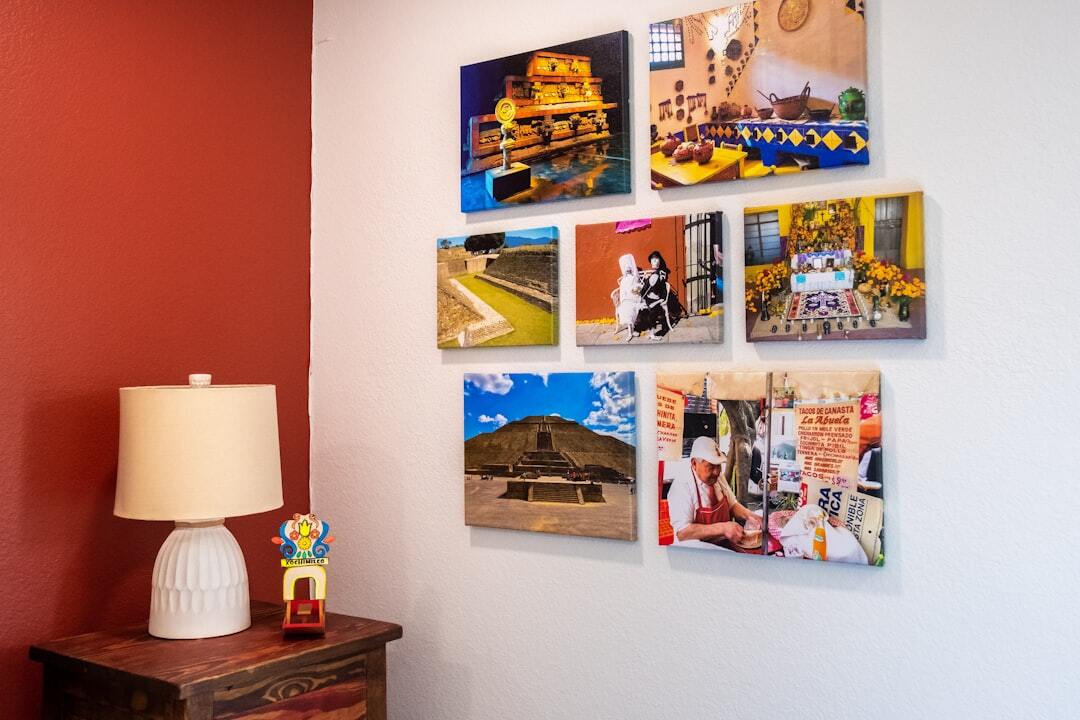
A gallery wall is more than a passing interiors trend. Done well, it becomes a personal art collection that gives a room character, creates a natural focal point and reflects the people who live there. As the cooler months arrive, introducing autumnal artwork is also an easy way to shift the mood of a room without committing to a full seasonal redecoration.
Warm colours, atmospheric landscapes, botanical illustrations and tactile pieces can bring a sense of autumn indoors while still feeling sophisticated enough to remain on display beyond the season. You do not need to fill the wall with pumpkins, orange leaves and obvious seasonal motifs either. Subtle changes in colour, subject matter and texture can create an autumn feel while keeping the overall display timeless.
If arranging a gallery wall feels daunting, a little preparation goes a long way. From choosing artwork and frames to planning spacing and deciding where each piece should sit, these autumn gallery wall ideas will help you create a display that feels balanced, personal and naturally connected to the season.
Why a Gallery Wall Is Perfect for an Autumn Home Refresh
Artwork can change the atmosphere of a room surprisingly quickly. A gallery wall brings several pieces together into one larger visual feature, making it possible to introduce colour, texture and personality without repainting walls or replacing furniture.
Autumn is particularly well suited to this kind of update because the season offers such a broad visual palette. Deep greens, warm browns, burgundy, rust, ochre and muted gold can all sit comfortably alongside neutral interiors, while landscape photography, botanical prints and abstract artwork provide plenty of ways to introduce seasonal character without making the display feel themed.
It is also an adaptable way to decorate. Rather than rebuilding the entire gallery wall each season, a small number of prints can be rotated as the year changes. A bright summer photograph might make way for an atmospheric woodland scene, while a pale abstract could be replaced by something with deeper, earthier tones.
This makes a gallery wall ideal for anyone who likes their home to evolve gradually through the seasons rather than undergo dramatic decorative changes.
Choose an Autumn Colour Palette Before Selecting Your Art
One of the easiest ways to make a gallery wall feel cohesive is to establish a loose colour palette before buying or arranging individual pieces.
Classic autumn colours include burnt orange, ochre, rust, deep red, olive green, chocolate brown and muted gold. However, you do not need to use every shade at once. Selecting two or three dominant colours and repeating them subtly across different artworks can make the display feel much more considered.
For a softer interpretation of autumn, consider warm neutrals, moss green, clay, beige and muted terracotta. These shades work particularly well in contemporary interiors and can remain relevant throughout the year.
The wall itself, surrounding furniture and existing textiles should also influence the palette. If your room already contains strong colour, quieter artwork may provide balance. In a neutral room, richer autumn tones can become the element that gives the gallery wall its impact.
Use Autumnal Art Without Making the Wall Feel Overly Seasonal
Autumn artwork does not have to mean literal pictures of falling leaves. In fact, a gallery wall often looks more sophisticated when the seasonal influence is slightly understated.
Landscape paintings and photography can introduce misty woodland, golden fields, dramatic skies or earthy mountain scenery. Botanical illustrations offer another subtle connection to nature, particularly when they feature berries, seed heads, branches or foliage.
Abstract pieces can work equally well. Look for paintings and prints that use warm earthy colours, organic shapes or layered textures rather than obviously seasonal imagery.
Vintage prints, still-life paintings, architectural drawings and nature-inspired illustrations can also contribute to an autumn palette while adding variety. The aim is to create the feeling of autumn through colour, texture and atmosphere rather than turning the wall into a temporary seasonal display.
Planning Your Gallery Wall Layout
Before making any holes in the wall, measure the available space and consider how the finished arrangement will relate to the furniture around it.
Gallery walls commonly work well above sofas, sideboards, dining tables, beds and console tables, but they can also transform staircases, hallways and otherwise overlooked corners.
Lay the artwork out on the floor first so you can experiment with different arrangements. This makes it much easier to move pieces around, test spacing and decide which artwork should act as the visual anchor.
You can also cut paper templates matching the dimensions of each frame and temporarily attach them to the wall with low-tack tape. This allows you to judge the overall scale and positioning before committing to the final arrangement.
Symmetrical or Eclectic?
A symmetrical gallery wall creates a cleaner, more structured appearance. Frames are generally aligned in rows or columns, with consistent spacing and similar proportions. This approach works particularly well in modern or minimalist rooms.
An asymmetric or salon-style gallery wall feels more relaxed and collected over time. Different frame sizes and artwork formats can be combined, allowing the arrangement to expand gradually as you find new pieces.
Neither approach is inherently better. The choice should reflect the room and your personal style. What matters is that the arrangement still has enough visual balance to feel intentional.
Create a Strong Focal Point
Starting with one larger or particularly striking artwork can make the rest of the layout easier to build.
This does not necessarily need to sit directly in the centre. An oversized landscape, abstract painting or photograph positioned slightly off-centre can provide the visual anchor around which smaller works are arranged.
If several pieces are similar in size, use colour or contrast instead. The artwork with the strongest visual impact can naturally become the focal point even if its frame is no larger than the others.
Keep the Spacing Consistent
Spacing is one of the details that can make the difference between a gallery wall that feels carefully curated and one that looks randomly assembled.
A gap of roughly 5 to 8 centimetres between frames usually creates enough separation without making the works feel disconnected. The exact measurement can vary according to the size of the display, but consistency matters more than following a precise rule.
Very small gaps can make the arrangement feel crowded, while excessive spacing can cause the individual artworks to lose their relationship with one another.
Mix Different Types of Art for a More Personal Display
The strongest gallery walls rarely rely on one type of artwork alone. Mixing paintings, photography, illustrations, prints and handcrafted pieces can create a display with greater depth and personality.
Affordable art prints and posters are useful for introducing seasonal colours without a large investment. Canvas pieces can provide additional texture, while photography can capture the atmospheric quality of autumn particularly well.
Handmade pieces can make the arrangement feel more personal. Botanical studies, embroidery, textile art, small tapestries or pressed foliage can add a tactile quality that contrasts with framed prints.
Try balancing detailed artwork with quieter pieces. A bold abstract can sit alongside a simple botanical drawing, while a dramatic landscape can be softened by a minimalist print. This variation keeps the eye moving around the wall without making every piece compete for attention.
Choose Frames That Bring the Collection Together
The frames themselves play an important part in how cohesive a gallery wall feels.
Natural timber is particularly effective for an autumn-inspired display because it introduces warmth and complements earthy artwork. Oak, walnut and darker stained woods can all work depending on the room.
Black frames offer a sharper contemporary contrast, while antique brass, bronze or aged metallic finishes can introduce a more traditional feel.
You do not necessarily need identical frames. Mixing finishes can make the wall appear more collected and personal, but it helps to repeat certain materials or colours throughout the arrangement. For example, two or three wooden frames among several black ones can establish enough repetition to make the combination feel deliberate.
Mounts can also create visual breathing space around detailed pieces. Neutral white, cream or warm off-white mounts are generally easier to combine than strongly coloured alternatives.
Curating a Cohesive Autumn Gallery Wall
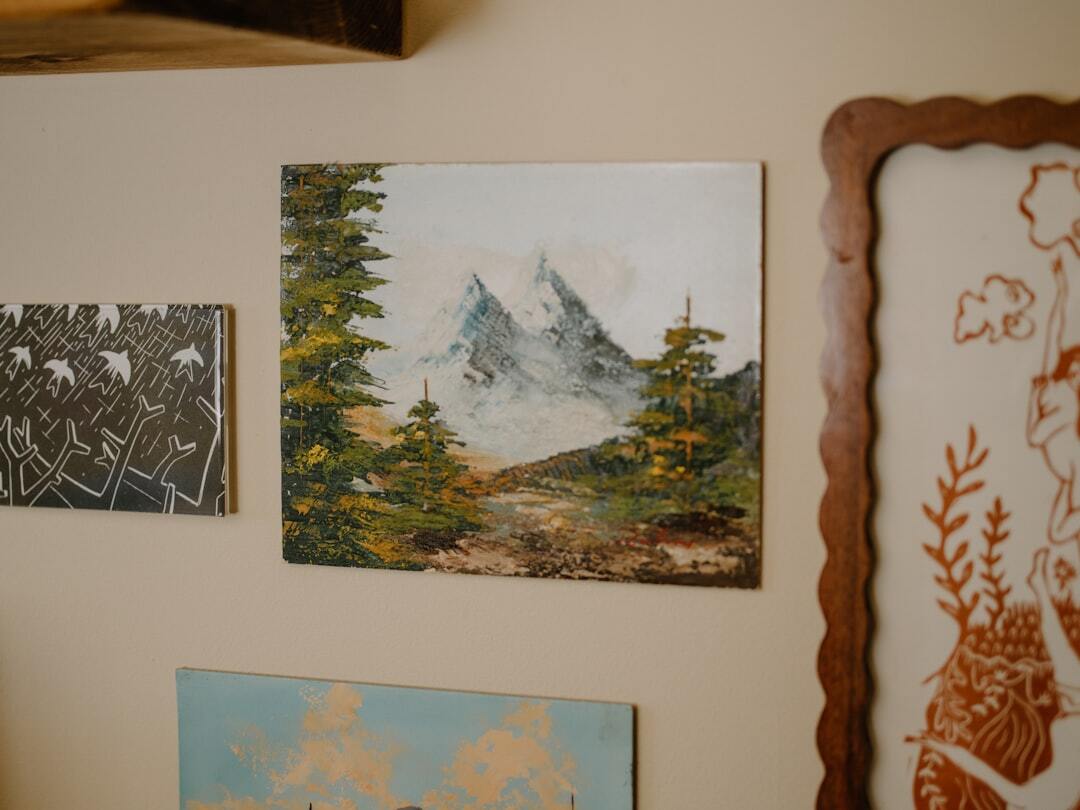
A cohesive gallery wall does not require every piece to match. In fact, too much similarity can make the arrangement feel flat. The aim is to create subtle connections between different works.
Those connections might come from colour, subject, framing or artistic style. A woodland photograph might share deep green tones with an abstract print, while a botanical illustration could pick up the warm brown found in a neighbouring landscape.
Repeating two or three dominant colours throughout the display is one of the simplest ways to create continuity. Neutral or timber frames can then provide another visual thread tying the pieces together.
You can also introduce a few non-framed elements, such as a small textile piece, ceramic wall decoration or preserved botanical artwork. These additions break up the repeated rectangular shapes of traditional frames and give the wall additional texture.
Use Lighting to Enhance Your Artwork
Lighting can significantly affect how artwork looks once it is on the wall.
Natural light can reveal colour and detail beautifully, but prolonged exposure to strong direct sunlight can cause some prints, photographs and fabrics to fade over time. If possible, avoid positioning delicate artwork where it receives intense direct sunlight for several hours each day.
During autumn, when evenings become darker earlier, artificial lighting becomes more important. Picture lights, wall lights or nearby lamps can emphasise the gallery wall and create a warmer atmosphere.
Warm-toned lighting tends to complement autumn colours particularly well, enhancing ochre, brown, red and gold without making the room feel harsh.
Where to Find Autumnal Art for a Gallery Wall
Building a gallery wall does not require buying every piece from the same retailer. Combining artwork collected from different sources often creates a more interesting and personal result.
Online marketplaces and independent art platforms provide access to limited-edition prints, photography, downloadable artwork and original pieces from artists around the UK and further afield. Many platforms allow artwork to be filtered by subject, colour and style, which can be useful when you are trying to complete a particular section of a gallery wall.
When purchasing online, check the actual dimensions rather than judging scale from photographs alone. A print that looks substantial on-screen may be much smaller once framed. It is also worth confirming whether measurements include the mount or frame.
If buying original artwork, look for information about the artist, materials and edition size. These details can add meaning to the piece and make your gallery wall feel more like a genuine collection rather than simply a decorative arrangement.
Support Local Artists, Galleries and Autumn Craft Fairs
Local galleries, open studios and craft fairs can be excellent places to find artwork that is not widely available online.
Buying in person also gives you the opportunity to see texture, colour and scale properly before committing. Computer screens can alter colour significantly, particularly with subtle earthy shades and textured paintings.
Autumn is traditionally a busy period for exhibitions, makers’ markets and open-studio events, making it a useful time to discover new artists. Original prints, small paintings, photography, textiles and botanical work can all make distinctive additions to a gallery wall.
Speaking directly with an artist may also reveal the story behind a piece or provide an opportunity to commission something specifically for your space. Those personal connections can give a gallery wall far more character than filling it entirely with mass-produced prints.
How to Refresh a Gallery Wall Through the Seasons
One of the advantages of a gallery wall is that it does not need to remain static.
Instead of removing the entire arrangement each season, identify a small number of frames that are easy to update. Swapping three or four prints can be enough to shift the overall colour palette and atmosphere.
Autumn landscapes and earthy abstracts might later give way to winter photography, spring botanical illustrations or brighter summer artwork while the majority of the display remains unchanged.
Keeping seasonal prints stored flat in protective sleeves makes them easy to rotate without damage. If you regularly change artwork, frames with simple removable backs can also make the process considerably easier.
Periodic dusting and checking that hooks and fixings remain secure will help keep the display looking its best. Artwork should also be kept away from excessive moisture and direct sunlight wherever possible.
Creating an Autumn Gallery Wall That Still Feels Like Your Home
The most successful gallery walls are personal rather than perfect. Autumn provides a rich source of colour, texture and inspiration, but the finished display should still reflect your own taste and the character of the room.
You do not need to follow a strict formula or fill every available section of wall. Start with artwork you genuinely enjoy, establish a loose palette and allow the collection to grow naturally.
By combining landscapes, photography, botanical prints, abstract pieces and personal finds, you can create an autumn gallery wall that feels warm and seasonal without becoming overly themed. The result is a focal point that can continue evolving long after autumn has passed.