
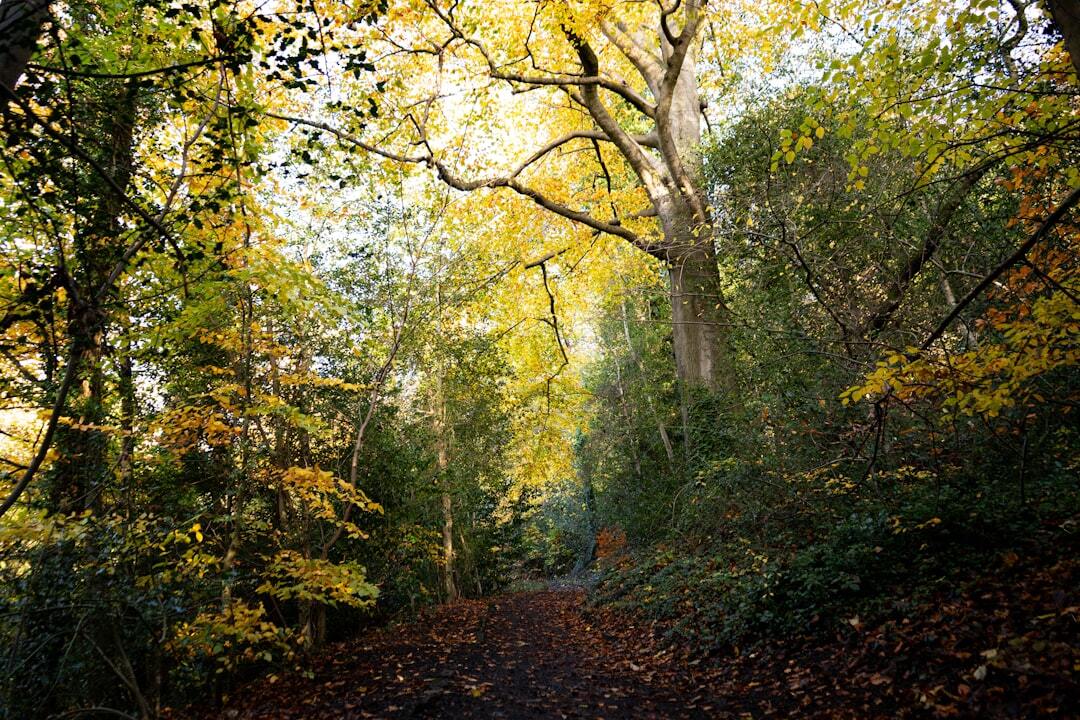
Autumn transforms Kent’s woodlands into some of the county’s most rewarding places to explore on foot. Beech, oak, hornbeam, sweet chestnut and maple gradually shift through shades of yellow, copper, orange and red, while fallen leaves, fungi and lower seasonal light give familiar paths an entirely different atmosphere.
Kent is particularly well suited to an autumn woodland walk. The county contains everything from internationally important tree collections and huge working forests to ancient woodland reserves and smaller, secluded nature sites. In the Kent Downs alone, woodland covers more than a fifth of the National Landscape, with a large proportion classified as ancient woodland.
There is no single weekend when every wood reaches its peak. Different trees change at different times and weather conditions can move the season forwards or backwards. That is part of the appeal: from the first changing leaves in late September to golden beech and leaf-covered paths in November, Kent’s woodlands continue evolving throughout autumn.
Best Woodland Walks in Kent for Autumn Colour
The best autumn walks are not necessarily the longest. What matters is the combination of trees, landscape and route, whether that means wandering around a carefully curated collection at Bedgebury, following a trail through the ancient woods of the Blean or simply disappearing beneath the canopy at King’s Wood.
These routes offer a mixture of easy waymarked walks, longer woodland circuits and more natural paths where sturdy footwear is advisable.
Bedgebury National Pinetum – Kent’s Spectacular Autumn Colour Walk
For sheer variety of autumn colour, Bedgebury National Pinetum and Forest near Goudhurst is difficult to beat. The National Pinetum extends across around 350 acres and contains more than 12,000 trees and shrubs from around the world, creating a display that changes noticeably as autumn progresses.
Rather than reaching peak colour all at once, Bedgebury’s autumn arrives in waves. One of the earliest transformations takes place along Cherry Tree Avenue, where the leaves of more than 100 great white cherry trees begin shifting through auburn, copper and fiery orange from late September into early October.
As October develops, maples and acers add deeper amber, bronze and red tones around the collection. Later in the month, the landscape around Marshal’s Lake becomes particularly striking as swamp cypress and dawn redwoods turn rust, red and copper. These unusual deciduous conifers shed their needles for winter, creating colours that contrast beautifully with Bedgebury’s darker evergreen trees and reflect in the water.
The season can continue well into November, when beech trees bring later waves of yellow and copper and fallen leaves transform the paths beneath them.
You do not need to tackle a long forest walk to enjoy the display. The waymarked Pinetum Trail has short and long loops of approximately 0.8 and 1.6 miles, while the wider forest contains numerous options for visitors wanting a longer walk. The shorter pinetum routes are also among the more accessible choices in this guide, with defined paths and no steps or narrow gates.
For anyone whose main priority is seeing the greatest possible variety of autumn foliage in one place, Bedgebury is an excellent starting point.
Toys Hill – Woodland Trails and Sweeping Views Across the Weald
High above the Weald near Westerham, Toys Hill offers more than 200 acres of woodland and some wonderful elevated views across the Kent countryside.
Unlike a formal garden, the experience here is very much about following woodland paths through a changing landscape. Trees frame distant views across the Weald, while fallen leaves gather beneath the canopy and the wooded slopes become increasingly golden as autumn moves on.
The National Trust maintains several waymarked walks, so there is no need to commit to one demanding route. Options range from roughly 1¾ miles to 4 miles, while longer walks connect Toys Hill with neighbouring countryside and other National Trust properties.
One popular option is the 2.5-mile circular route connecting Toys Hill and Emmetts Garden via Ide Hill. For something more substantial, the Weardale Walk extends for around five miles and links Toys Hill, Emmetts and the surrounding countryside.
The terrain is worth considering before setting out. Some woodland paths are uneven, with steeper slopes and sections that can become muddy after rain. The reward is a walk that combines enclosed woodland with moments where the trees open and reveal extensive views beyond.
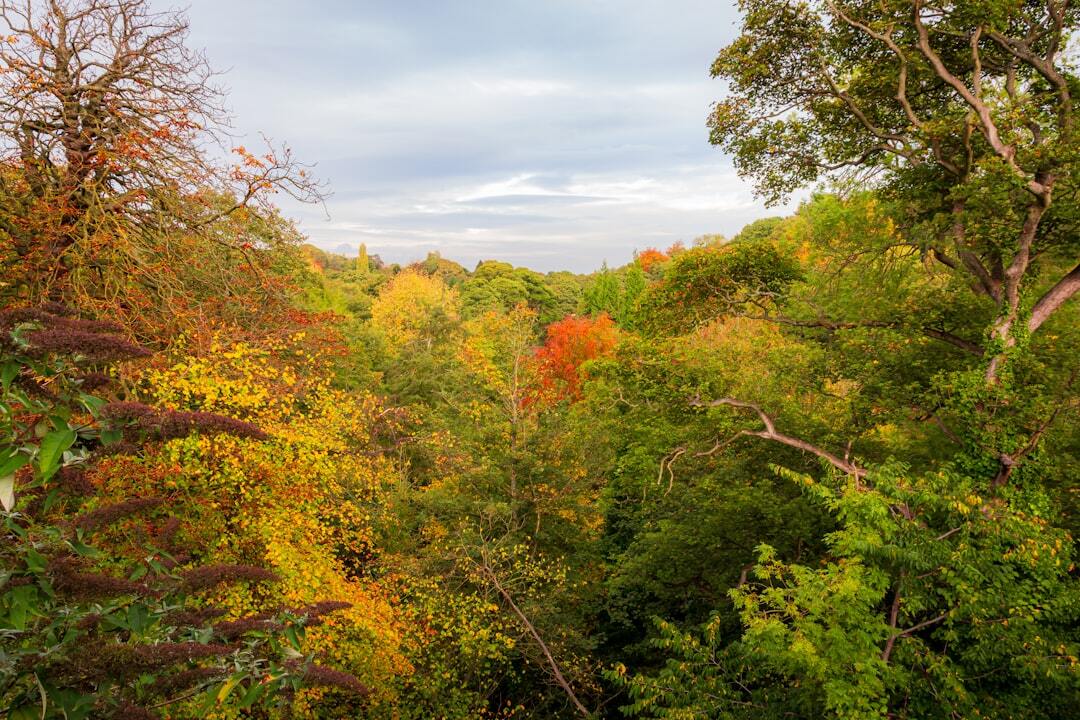
Hucking Estate – Ancient Woodland and North Downs Autumn Colour
For a more rural autumn walk, Hucking Estate sits on the North Downs and combines woodland, chalk grassland, hedgerows and open countryside.
The Woodland Trust has gradually expanded the wooded landscape here, planting hundreds of thousands of trees alongside areas of existing ancient woodland. The result is a varied estate rather than one continuous block of forest, with paths moving between mature trees, newer native woodland and more open areas.
Oak, hornbeam and sweet chestnut all contribute to the seasonal display, while autumn also brings berries, fungi and increasingly thick carpets of fallen leaves. On cooler mornings, mist settling over the downs can give the landscape a particularly atmospheric quality.
Hucking also contains traces of a much longer human history. An ancient droveway crosses the estate, while woodland banks, old chalk pits and the remains of earlier land use can still be found throughout the landscape.
The Woodland Trust publishes seasonal walking guides for Hucking, including dedicated autumn routes. This makes it a good option for walkers looking for countryside and woodland without the more formal visitor-attraction feel of somewhere such as Bedgebury.
King’s Wood – A Classic Forest Walk Through Beech and Sweet Chestnut
Near Challock, King’s Wood covers 588 hectares within the Kent Downs and offers the kind of autumn walk where it is easy to feel completely surrounded by trees.
The forest combines broadleaf woodland and conifers, including impressive beech groves and areas of sweet chestnut coppice. In autumn, those broadleaf areas become the main attraction as the canopy shifts towards yellow, bronze and copper and the forest floor disappears beneath fallen leaves.
There is a network of public footpaths along with a 6km waymarked walking trail. Surfaces vary, so this is less manicured than a garden or country park and is better suited to visitors who want the feeling of a proper forest walk.
The sheer size of King’s Wood is one of its advantages. Even on busier autumn weekends it is possible to move away from the main car park and find quieter tracks deeper into the woodland.
Visitors driving should be aware that Forestry England is introducing parking charges at King’s Wood from 1 October 2026, so it is worth checking the latest information before travelling.
The Blean – Ancient Woodland on Canterbury’s Doorstep
North of Canterbury, the Blean forms one of the most important woodland landscapes in this part of Kent. West Blean and Thornden Woods alone extends across around 490 hectares and contains extensive areas of ancient woodland.
Autumn suits the landscape particularly well. Mature oak woodland, regenerating areas and coppiced sections create a mixture of colours and textures, while an ancient droveway running through the woods provides a physical link to the landscape’s long history.
There are five waymarked trails of varying lengths, as well as a surfaced route of around one mile for visitors wanting something straightforward. A hard track of approximately two miles also runs across the reserve from west to east.
West Blean is now particularly well known for the Wilder Blean project. European bison, ponies, cattle and pigs are being used as conservation grazers, helping natural woodland processes return and creating a more varied habitat.
A walk here should not be approached as a guaranteed opportunity to see bison. The animals have a large area of woodland available to them and sightings depend entirely on where they happen to be. Dogs must be kept on leads because livestock are present, and visitors should always keep their distance from the grazing animals.
Even without a wildlife sighting, the scale and age of the woodland make the Blean one of Kent’s strongest choices for a genuinely immersive autumn walk.
Shorne Woods Country Park – Family-Friendly Trails Through Ancient Woodland
Shorne Woods Country Park, near Gravesend, is particularly useful for walkers who prefer a clearly defined route and a choice of distances.
The 292-acre park combines ancient woodland with lakes, meadows, wetlands and more open areas, giving its autumn walks greater variety than a continuous forest.
Routes begin with an easy one-mile option around the visitor centre, birch woodland, lakes and grassy glades. A 0.8-mile trail follows the edge of the ancient woodland, while the 1.9-mile Red Route introduces steeper and more challenging ground.
Those wanting to spend longer among the trees can follow the 3.7-mile Explorer Trail, which passes some of the park’s best habitats and is particularly good for spotting fungi during autumn. The longer Darnley Trail extends for around 6.2 miles and connects Shorne Woods with neighbouring landscapes.
This choice of trails makes Shorne Woods particularly easy to adapt around children, available time and weather conditions. You can have a short autumn stroll without committing to a full afternoon or choose a longer circuit when conditions are good.
Lullingstone Country Park – Ancient Trees and the Darent Valley
In the Darent Valley, Lullingstone Country Park combines mature woodland with some of Kent’s most notable trees and wide views across the North Downs landscape.
The two-mile Woodland Walk is the obvious choice for an autumn visit. It passes through semi-ancient woodland where a mixture of trees, fungi and seasonal vegetation create a continually changing route.
For a longer walk, the four-mile Lullingstone Loop extends through the surrounding countryside and passes remarkable mature chestnuts, hornbeam and some of the area’s significant oak trees. Views across the Darent Valley provide a contrast to the more enclosed woodland sections.
Autumn works particularly well here because the interest comes from mature broadleaf trees rather than ornamental planting. Huge trunks, twisting branches and ageing trees become increasingly prominent as the canopy thins and leaves collect beneath them.
For families wanting something shorter, the park also has a 1.5-mile Discovery Trail designed with children in mind.
Brenchley Wood – A Quieter High Weald Autumn Walk
Between Pembury and Matfield, Brenchley Wood offers something smaller and considerably quieter than the major forests and country parks.
This Kent Wildlife Trust reserve contains relic High Weald woodland dominated by mature beech and oak, along with pockets of heathland and bog. At around 15 hectares it is not a destination for a long-distance hike, but its scale is part of the appeal.
In autumn, the mature trees and secluded paths create an intimate woodland atmosphere, while fallen leaves and fungi add interest at ground level. The restored heathland also introduces a different habitat from the dense woodland surrounding it.
There are few visitor facilities, which means Brenchley Wood feels much less like an organised attraction. Paths can become muddy or boggy, particularly as the year progresses, and the reserve is not wheelchair accessible. Dogs should be kept on leads.
For walkers who value quiet woodland over cafés, visitor centres and formal trails, it is an excellent alternative to Kent’s better-known autumn destinations.
When Is the Best Time to See Autumn Colour in Kent?
Autumn colour in Kent usually develops gradually rather than appearing across the county at the same time. Individual tree species respond differently to shortening days and falling temperatures, while sunshine, rainfall, wind and overnight conditions can all affect how quickly leaves change and how long they remain on the trees.
The first signs can appear during late September. At Bedgebury, for example, the great white cherry trees along Cherry Tree Avenue are among the earlier trees to change, developing shades of auburn, orange and copper around the beginning of the season.
October generally brings the broadest mixture of colour. Maples and acers can produce particularly vivid reds and oranges, while oak, hornbeam and sweet chestnut contribute warmer yellows, browns and bronze tones across Kent’s more natural woodlands.
Late October and early November can be just as rewarding. Bedgebury’s beech trees often provide a later wave of gold and copper, while mature woodland elsewhere becomes increasingly atmospheric as more leaves collect on the forest floor and the canopy begins to open.
Strong winds can bring a colourful season to an abrupt end, so there is little value in trying to predict one perfect weekend months in advance. A bright walk early in the season can be just as rewarding as catching a woodland at its supposed peak.
What Makes Kent’s Woodlands So Good in Autumn?
Kent contains an unusually rich mixture of woodland landscapes. The Kent Downs National Landscape is one of Britain’s most wooded protected landscapes, with woodland covering more than 20% of the area and almost 70% of that woodland classified as ancient.
Ancient woodland is land that has remained continuously wooded since at least 1600. It is valuable not only for its mature trees but for the complex habitats that have developed beneath them over centuries, supporting fungi, insects, birds, mammals and characteristic woodland plants.
The variety of tree species also helps extend Kent’s autumn season. Beech can produce brilliant gold and copper, while oak tends towards warmer brown and bronze. Sweet chestnut brings yellow tones, and hornbeam can hold its changing leaves well into the colder months.
At places such as Bedgebury, international tree collections add species rarely encountered together in natural British woodland. Maples, cherry trees, swamp cypress and dawn redwood introduce much stronger reds and oranges, creating a very different autumn display from an ancient Kentish oak wood.
The season is about more than leaves too. Autumn is one of the best periods for seeing woodland fungi, berries become increasingly visible in hedges and clearings, and lower sunlight can illuminate the forest floor in ways rarely seen beneath a dense summer canopy.
Choosing the Right Autumn Walk
For the greatest variety of tree colour, Bedgebury National Pinetum is difficult to match. Its international collection and documented progression of autumn foliage mean something is usually changing somewhere in the landscape throughout the season.
Toys Hill works particularly well if you want woodland combined with long views across the Weald, while Hucking Estate offers a more open mixture of woodland and North Downs countryside.
Choose King’s Wood when the priority is simply being immersed in a large forest. For ancient woodland and an ambitious conservation project, West Blean and Thornden Woods provides a completely different experience.
Families and visitors wanting clearly marked routes of varying difficulty may find Shorne Woods easiest to plan, while Lullingstone combines woodland with ancient trees and Darent Valley views. Brenchley Wood is the choice for something quieter, smaller and less developed.
There is no need to decide which is definitively the ‘best’. Each provides a different way to experience autumn, and several are different enough to justify returning to the woods more than once as the season progresses.
Planning an Autumn Woodland Walk in Kent
Woodland conditions change quickly during autumn. A dry path in September can become muddy after several days of rain, while fallen leaves can conceal roots, stones and uneven ground. Walking boots or sturdy shoes are worthwhile for all but the easiest surfaced routes.
Daylight also disappears noticeably earlier as the season advances. Longer forest walks should be started with enough time to finish comfortably before dusk, particularly in unfamiliar woods where paths can look very different under a dense canopy.
Check current visitor information before setting out. Forestry work, conservation projects, storm damage and wet conditions can occasionally result in trail diversions or temporary closures. Parking arrangements can change too, as King’s Wood demonstrates with the introduction of charges from October 2026.
If walking with a dog, check the individual site’s requirements. Nature reserves and woodlands with conservation grazing may require dogs to remain on leads, while livestock and wildlife should always be given plenty of space.
It is also worth resisting the temptation to take fungi, plants or interesting pieces of deadwood home. Fallen timber, leaf litter and fungi are all important parts of a functioning woodland ecosystem and provide habitat and nutrients long after they have fallen from the trees.
Discover Kent’s Woodlands at Their Most Colourful
Kent’s autumn walks range from the extraordinary international tree collection at Bedgebury to ancient woods that have occupied the landscape for centuries.
The North Downs offer mature woodland at Hucking and Lullingstone, while King’s Wood provides the scale and atmosphere of a true forest. Toys Hill combines woodland with far-reaching views, the Blean reveals how conservation is reshaping an ancient landscape, and reserves such as Brenchley Wood provide a quieter alternative away from the county’s busier visitor destinations.
The best approach is not necessarily to wait for one predicted weekend of perfect colour. Autumn moves through Kent gradually, with different trees and woodlands reaching their most interesting stages at different times.
Visit early and the canopy may still be predominantly green with flashes of orange and red. Return a few weeks later and the same path could be carpeted in leaves beneath bare branches and golden beech. That constant change is precisely what makes Kent’s woodlands worth exploring throughout the season.