
Kent’s coastline is one of the most rewarding places in South East England for birdwatching. Estuaries, saltmarsh, grazing marsh, shingle, reedbeds and mudflats create a remarkably varied collection of habitats, while the county’s position on the south-eastern edge of Britain places it directly on important migration routes.
That combination means the experience changes dramatically through the year. Spring can bring returning warblers, cuckoos and other summer visitors. Autumn sees birds moving through Kent on journeys between breeding and wintering grounds, while winter transforms the estuaries and marshes as large numbers of ducks, geese and waders arrive.
You do not need to be an experienced birder to enjoy it either. Several of Kent’s best birdwatching sites have established trails, viewing hides or accessible areas where beginners can spend a few hours learning to distinguish waders, wildfowl and birds of prey.
From the extraordinary landscape of Dungeness to the Swale marshes and the mudflats of Pegwell Bay, these are some of the best birdwatching spots on and around the Kent coast.
Why the Kent Coast Is One of the South East’s Best Birdwatching Destinations
Kent’s strength as a birdwatching destination comes from the sheer variety of coastal habitats packed into a relatively small county.
The north coast contains extensive estuaries, mudflats, saltmarshes and grazing marsh. These areas become particularly important in autumn and winter when migratory birds arrive to feed and roost. The east coast around Sandwich and Pegwell Bay adds dunes, shingle and intertidal habitat, while Dungeness in the south-east has an unusual combination of vast shingle expanses, scrub, freshwater pits and reedbeds.
Coastal and floodplain grazing marsh is especially valuable for birdlife. In winter these open wetlands can support large gatherings of geese, ducks and swans, while damp spring grassland provides feeding and breeding habitat for waders.
The variety means a day on the Kent coast can produce far more than traditional seabirds. Depending on the location and season, visitors may encounter avocets, godwits, plovers, ducks and geese alongside marsh harriers, owls, warblers and migrating songbirds.
Estuaries, Marshes and Shingle Create Exceptional Bird Habitats
Different bird species require very different places to feed and rest, and Kent’s coast offers an unusually broad selection.
Mudflats exposed by a falling tide provide rich feeding grounds for waders searching for worms, molluscs and other invertebrates. Saltmarsh and reedbeds offer cover, while shallow freshwater pools attract ducks and other wetland species.
Shingle is equally important. Areas around Dungeness and Sandwich Bay support specialised plants and wildlife, while exposed coastal scrub can provide shelter and feeding opportunities for birds arriving after long migratory journeys.
This mosaic of habitats is one reason several Kent reserves hold national or international conservation designations rather than simply being attractive places for a walk.
Why Kent’s Position Makes It Important for Migrating Birds
For migratory birds travelling between Britain and continental Europe, Kent occupies an important geographical position.
Dungeness is particularly famous during migration. Explore Kent notes that its position close to continental Europe makes it an important stopping point, with autumn occasionally producing unusual visitors alongside more regular migrants.
The estuaries perform a different but equally important role. Rather than merely passing overhead, many birds stop to feed on mudflats and saltmarsh or remain in Kent throughout the winter.
That is why timing matters so much. The same reserve visited in June and January can feel like an entirely different birdwatching destination.
When Is the Best Time for Birdwatching on the Kent Coast?
There is no single best month for birdwatching in Kent because each season brings a different mix of species and behaviours.
For the greatest variety, spring and autumn migration can be particularly exciting. For sheer numbers of wetland birds, winter is difficult to beat.
Spring – Returning Migrants and Breeding Birds
Spring brings movement back to the coast as summer visitors return from the south and resident birds enter the breeding season.
At Sandwich and Pegwell Bay, species including nightingales, cuckoos and warblers arrive during spring, while Dungeness can see swallows, swifts and martins feeding across the reserve.
It is also an interesting time for waders. At Elmley, restored grazing marsh supports breeding birds including lapwing and avocet, with the reserve describing spring as a major period for its breeding wader populations.
Birdwatchers should be particularly careful at this time of year. Ground-nesting and shore-nesting birds can be extremely vulnerable to disturbance, so marked routes, viewing points and restricted areas should always be respected.
Autumn – Peak Migration Along the Kent Coast
Autumn is arguably the most unpredictable and exciting season.
Large numbers of birds are moving south, and Kent’s exposed coastline can provide a first or final resting point around crossings of the English Channel and North Sea.
At Dungeness, regular autumn migrants include wheatears, whinchats, redstarts and ring ouzels, while the wider area has also recorded scarcer visitors during favourable migration conditions. Large numbers of waders can stop at the RSPB reserve to feed before continuing their journeys.
Further north, autumn marks the return of many wetland birds to the Swale and Thanet coast. Redwings, fieldfares, brent geese and a wide selection of waders begin appearing as the season progresses.
Unlike a zoo or collection, of course, there are no guarantees. Weather, wind direction, tides and simple chance all influence what arrives on a particular day, which is part of the appeal.
Winter – Waders, Wildfowl, Raptors and Owls
If your idea of impressive birdwatching involves large flocks, winter is an excellent time to visit the Kent marshes.
South Swale alone attracts wintering brent geese, dunlin, avocets, turnstones, oystercatchers and ringed plovers. Marsh harriers can be seen hunting over the landscape, while short-eared owls and merlins are among the other winter possibilities.
At Dungeness, winter brings an extensive selection of ducks including wigeon, gadwall, teal, shoveler, pochard, tufted duck, goldeneye and pintail.
Elmley and the wider Isle of Sheppey can be particularly rewarding for birds of prey and owls. Recent reserve information highlights wintering wildfowl and waders alongside short-eared owls, marsh harriers and other raptors.
Best Birdwatching Spots on the Kent Coast
There are birdwatching opportunities around much of Kent’s shoreline, but a handful of locations stand out because of their habitats, conservation importance and variety of species.
Dungeness – One of Kent’s Most Important Migration Hotspots
Dungeness looks unlike almost anywhere else in Kent. Its vast shingle landscape is broken by scrub, pools, reedbeds and open water, creating a surprisingly varied habitat for wildlife.
The RSPB reserve is one of the best places to begin. Its freshwater pits attract substantial numbers of wetland birds, while reedbeds support species such as bittern. Spring brings aerial displays from hobbies as they hunt insects, and swallows, swifts and martins can gather over the water.
Autumn changes the atmosphere completely. Migrating waders arrive to feed, while whinchats, wheatears, redstarts and ring ouzels may appear around the reserve. The wider Dungeness peninsula is also well known among experienced birders because migration can occasionally bring less common species.
Winter remains productive rather than quiet. Ducks gather across the pits, while smaller winter visitors can be found around scrub and sheltered areas.
Dungeness is particularly good for visitors who want more than one type of birdwatching in a single day. You can move between open water, reedbeds, shingle and coastal scrub without travelling to another reserve.
Oare Marshes – Waders and Wildfowl Beside the Swale
Oare Marshes, near Faversham, is one of Kent’s most important wetland birdwatching sites. Kent Wildlife Trust describes the reserve as internationally important for migratory, overwintering and breeding wetland birds.
The reserve combines grazing marsh with freshwater dykes, open scrapes, reedbed, saltmarsh and a seawall overlooking the Swale. That variety concentrates a surprising amount of birdlife into an area that can be explored relatively easily on foot.
Waders are one of the main attractions, particularly during migration and winter. Black-tailed godwits, redshanks, avocets and other wetland birds can gather around the scrapes, while ducks make use of the open water.
Timing a visit around the tide can make a considerable difference. Kent Wildlife Trust specifically schedules migration events around high tide, when greater numbers of birds move onto the reserve’s floods and scrapes to feed and roost.
That makes Oare an excellent place for birdwatchers who want to understand how coastal tides influence bird behaviour rather than simply ticking species off a list.
Elmley National Nature Reserve – Raptors, Owls and Breeding Waders
Elmley occupies a huge expanse of grazing marsh on the Isle of Sheppey, overlooking the Swale. The wide, open landscape makes it especially good for watching birds of prey.
Marsh harriers are among the signature species, quartering low across the marshes as they hunt. The reserve also supports several owl species, with barn and little owls present and short-eared owls appearing as autumn and winter visitors.
Spring provides an entirely different experience when breeding waders move to the fore. Lapwing, avocet, oystercatcher and redshank are among the birds associated with Elmley’s managed wet grassland.
The reserve has walking routes and four bird hides, including more distant hides for people willing to spend longer exploring. Certain shoreline areas are closed during autumn, winter and spring because they are important feeding and resting places for migratory birds, with viewing screens providing an alternative way to watch without disturbance.
Elmley is privately managed and visitor arrangements can change, so check the reserve’s current entry requirements before travelling. At the time of the latest update, visits were being managed through advance booking because of high demand.
Sandwich and Pegwell Bay – Coastal Waders, Wildfowl and Migrating Birds
Sandwich and Pegwell Bay National Nature Reserve is a broad coastal landscape of saltmarsh, mudflats, dunes, shingle and grassland between Sandwich and Ramsgate.
Its importance changes with the seasons. Spring brings returning birds including warblers, cuckoos and nightingales. During summer, oystercatchers and ringed plovers use the shingle, while autumn and winter produce the biggest influx of waders and waterfowl. Dunlin, sanderling and grey plover are among the birds that use the saltmarsh and mudflats during the colder months.
Other species regularly associated with the reserve include shelduck, brent geese and black-tailed godwits. Kestrels can be seen hunting overhead, and the mix of open water and shoreline habitat makes this a particularly accessible introduction to coastal birdwatching.
The reserve is also a good example of why responsible access matters. Mudflats and saltmarsh are feeding grounds rather than empty open space, and parts of the reserve are restricted to reduce disturbance. Repeatedly forcing birds to fly can cost them valuable feeding time and energy, particularly before migration or during winter.
South Swale – Winter Birdwatching Along the Estuary
South Swale Nature Reserve stretches along the north Kent coast between Faversham and Whitstable and is especially rewarding during winter.
The tidal mudflats and waters of the Swale contain abundant food, attracting substantial numbers of waders and wildfowl as the tide falls. Brent geese, wigeon, turnstones, dunlin, avocets, oystercatchers and ringed plovers can all be among the winter visitors.
The open marshes also provide opportunities to spot predators. Marsh harriers can patrol above the reedbeds, while short-eared owls may appear over rougher ground and merlins are among the wintering raptors recorded in the area.
South Swale feels less formal than some reserves. There are no extensive visitor facilities and paths can become muddy, but that is part of its appeal for birdwatchers looking for a quieter estuary experience.
The shoreline itself is an important feeding and roosting area, so visitors are specifically asked to remain on the public rights of way and avoid walking across the beach.
RSPB Cliffe Pools – Wetland Birdwatching Beside the Thames Estuary
At the western end of Kent’s estuarine landscape, Cliffe Pools offers another excellent wetland birdwatching experience.
The reserve consists of pools and lagoons beside the Thames, creating feeding and roosting habitat for large numbers of water birds. Spring can bring breeding avocets and common terns, while autumn sees wintering waders arriving as summer migrants depart.
Winter is particularly impressive, when flocks of ducks, dunlin and lapwing gather around the reserve. Explore Kent also highlights godwits, curlew, little egrets and avocets around the wider Cliffe landscape.
Like Oare, Cliffe can become especially interesting around tidal movements as birds leave exposed mud and gather on secure roosting areas.
It is an excellent option for anyone exploring the Thames-side section of north Kent rather than travelling towards the better-known reserves further east.
What Birds Can You See Along the Kent Coast?
The exact species change constantly, but several broad groups dominate birdwatching around Kent’s estuaries and coastline.
Waders – Avocets, Godwits, Dunlin and Plovers
Waders are among the most characteristic birds of the Kent coast.
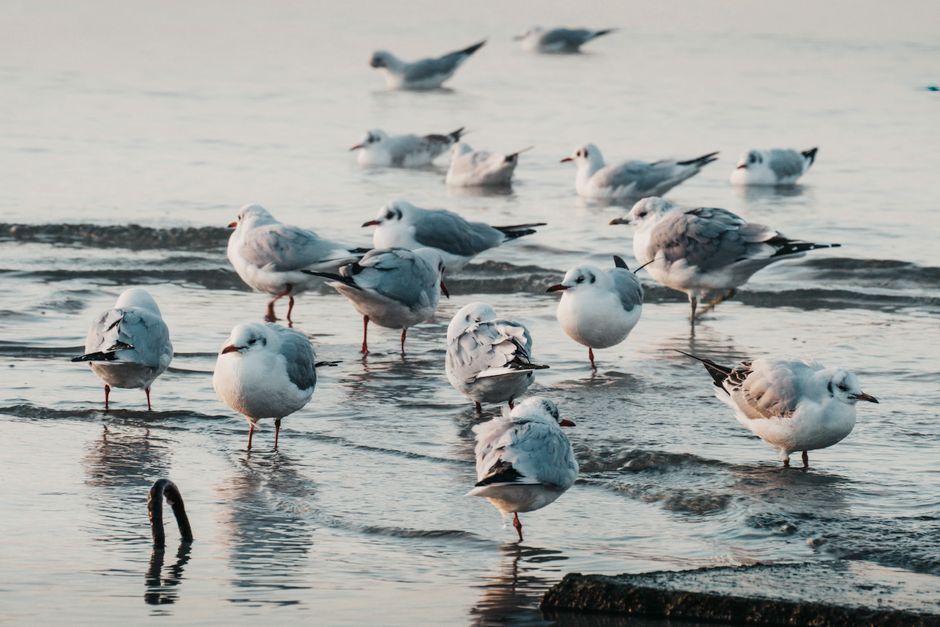
Species such as dunlin, black-tailed godwit, redshank, oystercatcher and grey plover use mudflats and shallow wetlands to search for food. Avocets are particularly distinctive, with their black-and-white plumage and upturned bills used to sweep through shallow water.
At suitable sites, the most memorable experience may not be identifying one individual bird but seeing hundreds or thousands moving together when the tide forces them from their feeding grounds.
Ducks, Geese and Other Wintering Wildfowl
Winter transforms Kent’s wetlands as birds arrive from colder breeding grounds further north and east.
Brent geese are closely associated with the Swale and other estuarine habitats, where they feed on eelgrass and coastal vegetation. Wigeon, teal, shoveler and other ducks can form substantial groups across pools and tidal water.
For beginners, these winter gatherings can be useful places to practise identification because several species may be visible together, allowing size, shape and behaviour to be compared directly.
Marsh Harriers, Peregrines and Other Birds of Prey
Kent’s open marshes are excellent hunting territory for raptors.
Marsh harriers are perhaps the most characteristic, often seen flying low over reedbeds and grazing marsh. Kestrels are widespread, while peregrines, merlins and other raptors can appear around wetlands where large concentrations of smaller birds provide hunting opportunities.
Elmley and the Isle of Sheppey are particularly well known for winter raptor watching, while South Swale also regularly records marsh harriers and merlins.
Owls Along the North Kent Marshes
The north Kent marshes are also excellent owl country.
Barn owls hunt over grassland throughout the year, while short-eared owls are especially associated with autumn and winter. Unlike many owls, short-eared owls often hunt during daylight, increasing the chances of seeing one quartering low across open marshland.
Elmley regularly highlights both resident owl species and its returning short-eared owls, making the Isle of Sheppey one of the more promising areas to look for them.
Spring and Autumn Migrants Passing Through Kent
Migration adds unpredictability to coastal birdwatching.
Warblers, wheatears, redstarts and other smaller birds can pause around scrub and grassland before continuing their journeys. Dungeness is particularly associated with this movement because birds arriving from or preparing to cross the Channel can concentrate around the headland.
Sandwich Bay is another significant migration location, with nearby bird-observation work reflecting the importance of this stretch of coastline to birds moving through eastern Kent.
Why Dungeness Is Such a Special Place for Birdwatching
Dungeness deserves additional attention because the landscape itself is so unusual.
Shingle, Reedbeds and Freshwater Pools Create Diverse Habitats
At first glance, its enormous shingle expanse can appear almost barren. In reality, the wider Dungeness landscape contains a complex mixture of dry shingle, low scrub, reedbeds and freshwater pits.
That allows birds with very different requirements to occupy the same general area. Ducks and waders use the water, bitterns and other wetland birds benefit from reedbeds, while migrating songbirds can shelter and feed around scrub.
For visitors, this means the birdwatching can change significantly within a relatively short walk or drive. Watching wildfowl from a hide and searching coastal scrub for migrants feel like completely different activities, yet both can form part of the same visit.
Migration Can Bring Unexpected Visitors
Migration is one of the reasons Dungeness has such a strong reputation among serious birdwatchers.
The birds present can change according to wind direction and weather, and occasionally species that are unusual in Kent appear among the more predictable migrants.
That does not mean a first-time visitor should arrive expecting rarities. The real attraction is that even familiar migration periods can produce a constantly changing mix of birds, making repeat visits worthwhile.
Why the North Kent Marshes Are Essential for Winter Birdwatching
Dungeness may have the greatest name recognition, but winter on the north Kent marshes can be every bit as impressive.
The Swale Provides Vital Feeding Grounds for Thousands of Birds
The Swale separates the Isle of Sheppey from mainland Kent and is surrounded by some of the county’s most important wetlands.
Oare Marshes and South Swale sit on the mainland side, while Elmley and the Swale National Nature Reserve occupy important habitat around Sheppey. Together, these areas provide feeding and roosting opportunities for large numbers of wintering birds.
Mudflats exposed by the tide are particularly valuable because they provide access to abundant invertebrate food. As the tide rises, birds are gradually pushed towards roosts on marshes, islands and other secure ground.
High Tide Can Produce Spectacular Wader Roosts
This movement is why checking the tide table can transform a birdwatching visit.
At low tide, birds may be widely dispersed across distant mud. As the water advances, feeding areas disappear and birds gather more tightly at high-tide roosts.
Oare Marshes is a particularly useful example, with Kent Wildlife Trust timing guided migration sessions around high tide specifically because greater numbers of birds gather on the reserve’s scrapes at that point.
The objective should never be to approach a roost closely. A good viewing position with binoculars or a telescope allows impressive views without forcing birds to waste precious energy repeatedly taking flight.
How to Plan a Birdwatching Day on the Kent Coast
A little preparation makes coastal birdwatching considerably more rewarding, particularly at tidal sites.
Check Tides Before Visiting Coastal and Estuary Sites
Tide times can influence both what you see and where the birds are located.
Low and falling tides expose feeding mud, while high tide can concentrate birds at roosts and inland scrapes. There is no universally perfect tide because different locations behave differently, but knowing what the water is doing will help you understand the activity in front of you.
If you are visiting Oare, the Swale or Pegwell Bay specifically for waders, checking tide times beforehand is particularly worthwhile.
Bring Binoculars and Consider a Spotting Scope
A pair of binoculars is enough to begin birdwatching and will dramatically improve what you can see across open marsh or water.
A spotting scope becomes particularly useful on estuaries, where birds may be feeding hundreds of metres away. It also allows details to be observed without approaching wildlife more closely.
Beginners do not need expensive equipment. A comfortable pair of binoculars, a field guide or identification app and time to watch behaviour are far more valuable than buying specialist equipment before you know whether you enjoy the hobby.
Use Bird Hides and Viewing Screens Where Available
Hides allow visitors to watch wetland birds while reducing disturbance and providing shelter from wind and rain.
Dungeness, Oare, Elmley and Sandwich and Pegwell Bay all provide dedicated viewing opportunities of one kind or another. Some hides require a walk, so check the reserve map beforehand if mobility or time is a consideration.
Once inside a hide, give yourself time. Birdwatching often becomes more productive after ten or fifteen minutes of quietly scanning rather than immediately moving to the next viewpoint.
Check Access, Parking and Opening Information Before Travelling
Nature reserves are working conservation sites, and access arrangements can change because of weather, habitat management, breeding birds or visitor pressure.
Paths may also become muddy or temporarily inaccessible, particularly around marshes during winter.
Check the official reserve website on the day you travel rather than relying solely on an older article or map. This is especially important for Elmley, where visitor numbers are actively managed, and for reserves containing seasonally restricted areas.
Responsible Birdwatching on Kent’s Coast and Nature Reserves
The habitats that make Kent so rewarding for birdwatching are also highly sensitive.
Give Feeding and Roosting Birds Plenty of Space
A flock suddenly flying away may look spectacular, but repeatedly causing birds to take flight can reduce feeding time and waste energy.
This is particularly significant during migration and winter, when birds need to build or maintain energy reserves. Kent Wildlife Trust specifically warns that disturbance can cause missed feeding opportunities, wasted energy and reduced breeding success.
Use binoculars and scopes to close the visual distance rather than physically approaching birds.
Stay on Designated Paths and Respect Restricted Areas
Restricted areas exist because wildlife needs places where people do not regularly enter.
At Sandwich and Pegwell Bay, sections of saltmarsh and mudflat have controlled access, while South Swale asks visitors to remain on public paths and away from important shoreline habitat.
Follow signs even when an area looks empty. Eggs, chicks and resting birds can be exceptionally difficult to see.
Take Extra Care Around Birds During Migration and Breeding Season
Spring nesting birds and exhausted migrants are particularly vulnerable.
Keep dogs under control according to reserve rules and never allow them to chase birds. If you notice alarm calls, repeated circling or a bird clearly reacting to your presence, increase your distance.
Responsible birdwatching usually produces better observations anyway. Birds behaving naturally are far more interesting to watch than birds reacting to people.
Where Beginners Should Start Birdwatching on the Kent Coast
If you are completely new to birdwatching, you do not need to begin by identifying every small brown bird in a hedge.
Wetland reserves are ideal places to start because larger species can often be watched for longer periods. Ducks, geese, herons, avocets and birds of prey tend to be easier to follow through binoculars than fast-moving woodland birds.
Oare Marshes is particularly manageable because several habitats are concentrated within a relatively compact reserve. Dungeness is another excellent choice where hides and open water provide plenty to watch, while Sandwich and Pegwell Bay combines birdwatching with straightforward coastal walking.
Start by learning a few common species and watch how they behave. Notice whether a bird feeds by probing mud, diving underwater, grazing vegetation or hunting from the air. Behaviour often provides as much help with identification as colour.
The more familiar common birds become, the easier it is to notice when something different appears.
Exploring Kent’s Coast Through Its Birdlife
Birdwatching offers a different way to experience the Kent coast. Places that might initially look like empty mudflats, flat marshland or exposed shingle begin to reveal a constant pattern of movement as tides, weather and seasons change.
Dungeness provides the drama of migration and one of Britain’s most distinctive coastal landscapes. Oare and South Swale reveal the importance of the Swale estuary, while Elmley offers expansive marshes where owls and raptors can become the focus. Sandwich and Pegwell Bay combines coastal migration with rich intertidal feeding grounds, and Cliffe Pools demonstrates just how valuable the Thames estuary remains for wetland birds.
No two visits are quite the same. A quiet summer morning, an autumn migration day and a high-tide winter afternoon can produce entirely different experiences at the same reserve.
That unpredictability is part of what makes birdwatching on the Kent coast so rewarding. Bring binoculars, check the tide and weather, give the wildlife plenty of space and allow yourself enough time to simply stand still and watch.