

Contemporary British literature offers an extraordinary choice of novels, from sharp observations of modern life and relationships to ambitious historical fiction, speculative stories and books that explore identity, class and a changing Britain. The difficult part is often knowing where to begin.
Some of today’s most celebrated British authors have produced substantial bodies of work, while others have become known for a handful of novels that have helped shape modern fiction. Whether you’re discovering contemporary British authors for the first time or looking for your next book, the best starting point isn’t necessarily an author’s newest novel. It’s the book that most clearly captures what makes their writing distinctive.
Our recommendations bring together established names and influential modern voices, including Zadie Smith, Kazuo Ishiguro, Bernardine Evaristo, David Nicholls, Kate Atkinson and Jojo Moyes, alongside the enduring work of Hilary Mantel. Each offers something different, so we’ve suggested a book to start with and the kind of reader most likely to enjoy it.
Contemporary British Authors and the Books We’d Recommend
There is no single style that defines contemporary British fiction. Today’s writers move between literary fiction, romance, historical novels, family drama, social commentary, crime and speculative storytelling, often combining several of these traditions within the same book.
If you’re wondering which British authors are worth reading, these are some of the writers and novels we’d put towards the top of the list.
Zadie Smith – Start with White Teeth
Few contemporary novelists have captured modern London with the energy of Zadie Smith. Her writing explores family, friendship, class, race, identity and multicultural Britain, often combining serious ideas with humour and vividly drawn characters.
White Teeth remains an excellent introduction. Centred around interconnected families in north-west London, the novel moves across generations and cultures while examining belonging, expectation and the complicated ways personal history follows us into the present.
Readers who enjoy ambitious novels filled with overlapping characters, social observation and big ideas are likely to find plenty to admire. Those who enjoy White Teeth can continue with On Beauty, NW and Swing Time.
Best for: readers interested in London, multicultural Britain, family relationships and intelligent social commentary.
Kazuo Ishiguro – Start with Never Let Me Go
Kazuo Ishiguro has a remarkable ability to make an apparently restrained story become increasingly powerful as its meaning slowly emerges. Memory, regret, responsibility and the stories people tell themselves recur throughout his fiction.
Never Let Me Go is one of the best places to begin. What initially appears to be a reflective story about childhood friendships gradually becomes something considerably more unsettling. Its speculative premise is important, but the novel’s real force comes from its exploration of love, mortality and what gives a human life value.
Readers who prefer something more traditionally British in setting might instead begin with The Remains of the Day, while Klara and the Sun provides another accessible route into Ishiguro’s speculative fiction.
Best for: thoughtful readers who enjoy understated writing, philosophical questions and novels that reveal themselves gradually.
Bernardine Evaristo – Start with Girl, Woman, Other
For a vivid portrait of modern Britain told through multiple lives and perspectives, Bernardine Evaristo is essential contemporary reading.
Girl, Woman, Other follows a group of predominantly Black British women whose lives intersect in different ways. Their experiences span generations, backgrounds, identities and attitudes, creating a broad portrait of Britain while still allowing each individual story room to breathe.
The structure feels experimental without making the book inaccessible. It is energetic, compassionate and frequently funny, dealing with serious subjects without becoming weighed down by them.
Best for: readers who enjoy multiple viewpoints, interconnecting stories, questions of identity and contemporary social history.
Hilary Mantel – Start with Wolf Hall
Few recent British authors have changed expectations of historical fiction as profoundly as Hilary Mantel. Her Thomas Cromwell trilogy brought Tudor England to life not as a distant sequence of dates and monarchs, but as a dangerous political world inhabited by ambitious, uncertain and recognisably human characters.
Wolf Hall is the natural starting point. Told through the rise of Thomas Cromwell at the court of Henry VIII, the novel combines political manoeuvring with extraordinary psychological detail.
It demands more concentration than many of the books on this list, but readers willing to immerse themselves in its world can continue with Bring Up the Bodies and The Mirror and the Light.
Best for: readers who love immersive historical fiction, political intrigue and richly detailed character studies.
David Nicholls – Start with One Day
If you prefer fiction built around relationships, humour and the complications of ordinary life, David Nicholls is one of the most accessible contemporary British authors to explore.
One Day follows Emma Morley and Dexter Mayhew by returning to their lives on the same date across successive years. It’s a simple structural idea that allows the novel to explore friendship, love, ambition, missed opportunities and the ways people change over time.
Nicholls is particularly good at balancing comedy with emotional weight. His books are easy to become absorbed in without feeling slight, making him a strong choice for readers who want character-led contemporary fiction rather than something formally experimental.
Best for: readers who enjoy relationships, humour, nostalgia, romance and emotionally engaging contemporary fiction.
Kate Atkinson – Start with Life After Life
Kate Atkinson is difficult to place neatly into one genre, which is part of her appeal. Her novels range from literary fiction to mysteries and historical stories, frequently playing with chronology and the possibilities of storytelling itself.
Life After Life is perhaps the clearest demonstration of her imagination. Ursula Todd is born in 1910, dies and then appears to begin life again, with events unfolding differently each time. The premise allows Atkinson to explore chance, history, family and the countless small decisions that alter the course of a life.
Readers who prefer crime fiction can also explore Atkinson’s Jackson Brodie novels, beginning with Case Histories.
Best for: readers who enjoy inventive structures, family stories, historical settings and fiction that plays with time.
Jojo Moyes – Start with Me Before You
Jojo Moyes has become one of Britain’s best-known popular novelists by writing accessible stories with strong characters and considerable emotional pull.
Me Before You is the obvious introduction to her work. It centres on the relationship between Louisa Clark and Will Traynor, two people whose circumstances and outlooks on life could hardly be more different.
Although romance plays an important role, the novel also tackles independence, choice, family responsibilities and how dramatically someone’s life can change. Readers looking for an emotionally involving book that moves quickly are likely to find Moyes particularly approachable.
Best for: readers seeking emotional contemporary fiction, romance and character-driven storytelling.
Ian McEwan – Start with Atonement
Ian McEwan has spent decades examining morality, desire, memory and the consequences of seemingly small actions. His novels can be psychologically intense, and few demonstrate that better than Atonement.
Beginning in an English country house in 1935, the story turns on a young girl’s interpretation of events she does not fully understand. What follows stretches across war, love, guilt and the reliability of storytelling itself.
It’s an excellent choice for readers who enjoy carefully constructed literary fiction and novels that continue to raise questions long after the final page.
Best for: readers interested in psychology, moral dilemmas, wartime Britain and precisely written literary fiction.
Ali Smith – Start with How to Be Both
Readers looking for something more experimental should consider Ali Smith. Her fiction is playful with language, form and chronology while remaining deeply interested in art, politics, relationships and the way we understand one another.
How to Be Both brings together stories separated by centuries and challenges conventional expectations about how a novel should be structured. It’s a book that rewards curiosity and readers willing to let a story unfold in an unusual way.
Smith’s seasonal quartet, beginning with Autumn, is another strong choice for those interested in fiction responding directly to contemporary British society.
Best for: adventurous readers who enjoy experimental fiction, art, language and unconventional storytelling.
Which Contemporary British Author Should You Read First?
The right place to start depends far more on what you enjoy reading than on which writer has collected the most prizes. British fiction is broad enough that two highly acclaimed authors can provide completely different reading experiences.
- For modern London and social observation: start with Zadie Smith and White Teeth.
- For quiet, thought-provoking fiction: choose Kazuo Ishiguro and Never Let Me Go.
- For different perspectives on contemporary Britain: try Bernardine Evaristo and Girl, Woman, Other.
- For historical fiction: begin with Hilary Mantel and Wolf Hall.
- For relationships and emotional storytelling: read David Nicholls’ One Day.
- For inventive storytelling: choose Kate Atkinson’s Life After Life.
- For an emotional, accessible read: try Jojo Moyes and Me Before You.
- For ambitious literary fiction: consider Ian McEwan’s Atonement.
- For experimental fiction: explore Ali Smith and How to Be Both.
How to Choose Your Next British Novel
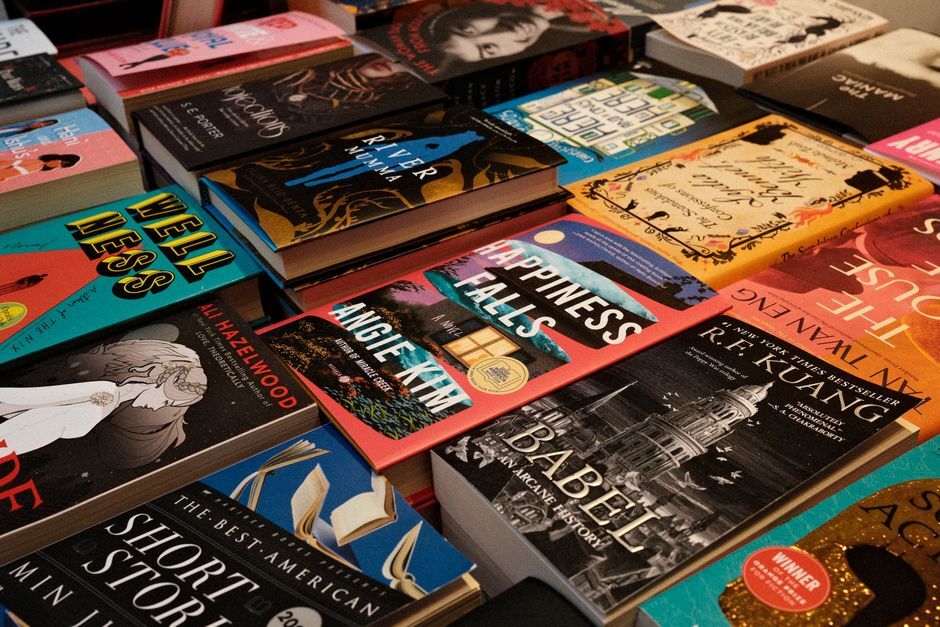
Faced with shelves of contemporary fiction, it can be tempting to choose whichever novel currently has the biggest display in the bookshop. A better approach is to think about the reading experience you’re actually looking for.
Think About Your Reading Mood
Some books require concentration; others are ideal when you simply want to become absorbed in someone else’s life. If you want something emotionally immediate, David Nicholls or Jojo Moyes may be easier choices than the denser historical world of Hilary Mantel or the structural experimentation of Ali Smith.
Choose a Theme That Interests You
Readers fascinated by identity, class and contemporary Britain might gravitate towards Zadie Smith or Bernardine Evaristo. If memory, regret and morality interest you more, Kazuo Ishiguro and Ian McEwan offer very different approaches to those themes.
Don’t Assume You Need to Begin With an Author’s Debut
There is no rule saying you need to read a novelist chronologically. Starting with the book that best represents their work is often more rewarding. If it captures your imagination, you can then explore earlier novels, later work and lesser-known titles.
Use Literary Prizes as a Starting Point, Not the Final Decision
Major literary prizes can be useful places to discover authors and books you might otherwise overlook. The Booker Prize in particular has introduced generations of readers to significant contemporary fiction, but an award shouldn’t be the only reason you choose a book.
Personal taste still matters. A highly acclaimed experimental novel may be less enjoyable to you than an accessible relationship story, historical mystery or family drama. The best recommendation is ultimately one that matches the type of reading experience you want.
What Defines Contemporary British Literature?
There isn’t a single subject, genre or writing style that defines contemporary British literature. Its strength comes partly from the opposite: the enormous range of experiences now represented within it.
Modern British authors write about metropolitan life and rural communities, migration and belonging, relationships and family, Britain’s history and its changing identity. They draw on backgrounds and traditions that extend far beyond the geographical boundaries of the UK, reflecting the complexity of modern British society.
The distinction between literary and popular fiction has also become increasingly fluid. Writers can address substantial themes while producing highly readable books, and genres such as historical fiction, speculative fiction, crime and romance regularly overlap with literary storytelling.
That variety makes contemporary British fiction particularly rewarding to explore. Reading Zadie Smith after Hilary Mantel, or Kazuo Ishiguro after David Nicholls, reveals just how little these writers need to have stylistically in common to contribute to the same broader literary landscape.
More British Authors Worth Exploring
The writers above provide a useful starting point, but they represent only a fraction of contemporary British fiction. Once you’ve found the genres and styles that appeal to you, there are plenty of other authors worth adding to your reading list.
- David Mitchell for ambitious novels that move between genres, periods and interconnected stories.
- Maggie O’Farrell for emotionally rich fiction, family relationships and historical storytelling.
- Monica Ali for novels exploring identity, community and British multicultural life.
- Jeanette Winterson for imaginative, distinctive fiction exploring identity, love and storytelling.
- Jonathan Coe for witty, politically and socially observant novels about modern Britain.
- Sarah Waters for atmospheric historical fiction, suspense and complex relationships.
Following authors rather than simply individual bestsellers can be one of the most enjoyable ways to build a reading list. Once you connect with a particular voice, working through an author’s other novels often reveals recurring themes and ideas that aren’t obvious from a single book.
Frequently Asked Questions About Contemporary British Authors
Who are some of the best-known contemporary British authors?
Zadie Smith, Kazuo Ishiguro, Ian McEwan, Bernardine Evaristo, Kate Atkinson, Ali Smith, Jojo Moyes and David Nicholls are among the most widely recognised contemporary British novelists. Hilary Mantel also remains enormously influential through her historical fiction and particularly the Wolf Hall trilogy.
What is a good contemporary British novel to start with?
For an accessible introduction, One Day by David Nicholls is a strong choice. Readers wanting more literary complexity could start with Zadie Smith’s White Teeth, while Kazuo Ishiguro’s Never Let Me Go combines accessible prose with deeper philosophical questions.
Which contemporary British authors write historical fiction?
Hilary Mantel is one of the defining modern British historical novelists, particularly for the Wolf Hall trilogy. Kate Atkinson and Sarah Waters also incorporate historical settings into much of their fiction, while Maggie O’Farrell has written acclaimed novels drawing on historical figures and periods.
Which British authors are good for readers who prefer romance?
David Nicholls and Jojo Moyes are good starting points for readers who enjoy relationships and romance but still want substantial character development. Their novels often extend beyond conventional romance to explore friendship, family, ambition, grief and personal change.
Which British authors should I read if I like literary fiction?
Kazuo Ishiguro, Zadie Smith, Ian McEwan, Bernardine Evaristo and Ali Smith are all strong choices. Their styles differ considerably, from Ishiguro’s restrained prose to Ali Smith’s more experimental approach, so readers can explore several very different forms of modern British literary fiction.
Are contemporary British authors only writing about life in Britain?
No. British writers frequently set novels elsewhere, draw on international histories or explore characters with connections across several countries and cultures. Contemporary British literature is better understood through its writers and publishing tradition than as fiction that must take place exclusively within Britain.
Finding Your Next Favourite British Author
The appeal of contemporary British literature lies in its variety. There is no single novel that represents modern British fiction and no definitive order in which its authors should be read.
If you want an expansive portrait of contemporary Britain, begin with Zadie Smith or Bernardine Evaristo. For something quieter and more philosophical, try Kazuo Ishiguro. Historical-fiction readers can immerse themselves in Hilary Mantel, while David Nicholls and Jojo Moyes offer immediately engaging, character-driven stories. Readers looking for something structurally adventurous can turn instead to Kate Atkinson or Ali Smith.
The important thing is simply to start somewhere. Choose the author whose subject, style or recommended book sounds most appealing, and allow one novel to lead to another. With such a broad range of voices, genres and perspectives to explore, contemporary British fiction can keep even the most enthusiastic reader occupied for years.