
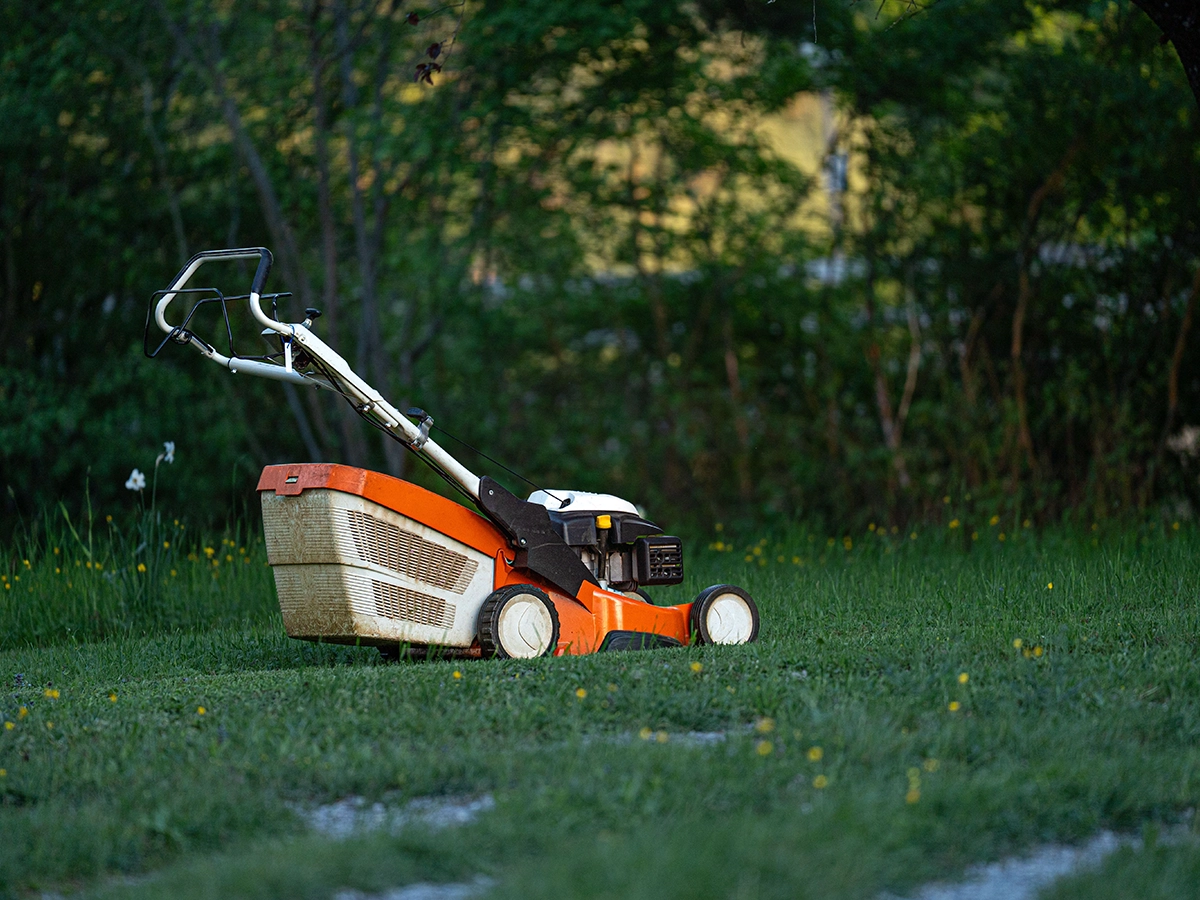
Early to mid-autumn is one of the best times to give your lawn some attention before colder and wetter weather arrives. After months of summer sun, dry spells, garden furniture and regular foot traffic, grass can head into autumn looking thin, compacted or worn in places.
A few well-timed jobs can help the lawn recover before winter and put it in a stronger position for spring. That does not mean every lawn needs scarifying, aerating, feeding and reseeding every year. Start by looking at its condition, then concentrate on the treatments that actually solve a problem rather than doing everything simply because autumn has arrived.
When Should You Prepare Your Lawn for Winter?
September and October are generally the main months for autumn lawn maintenance in the UK. The soil is often still warm enough for grass to grow and recover, while increased rainfall means newly sown seed and existing turf are less likely to struggle with prolonged dry conditions.
Weather matters more than a specific date. Scarifying, aerating or repairing a lawn when it is waterlogged, extremely dry, frozen or covered in frost can cause more harm than good. By November, conditions are usually becoming less suitable for major renovation work, so the emphasis should gradually shift towards keeping the lawn clear, mowing only when necessary and avoiding unnecessary damage.
If autumn has remained unusually mild, you may have a little longer to work. Equally, an early spell of cold or very wet weather may bring the main lawn-care window to an end sooner.
Clear Fallen Leaves and Debris
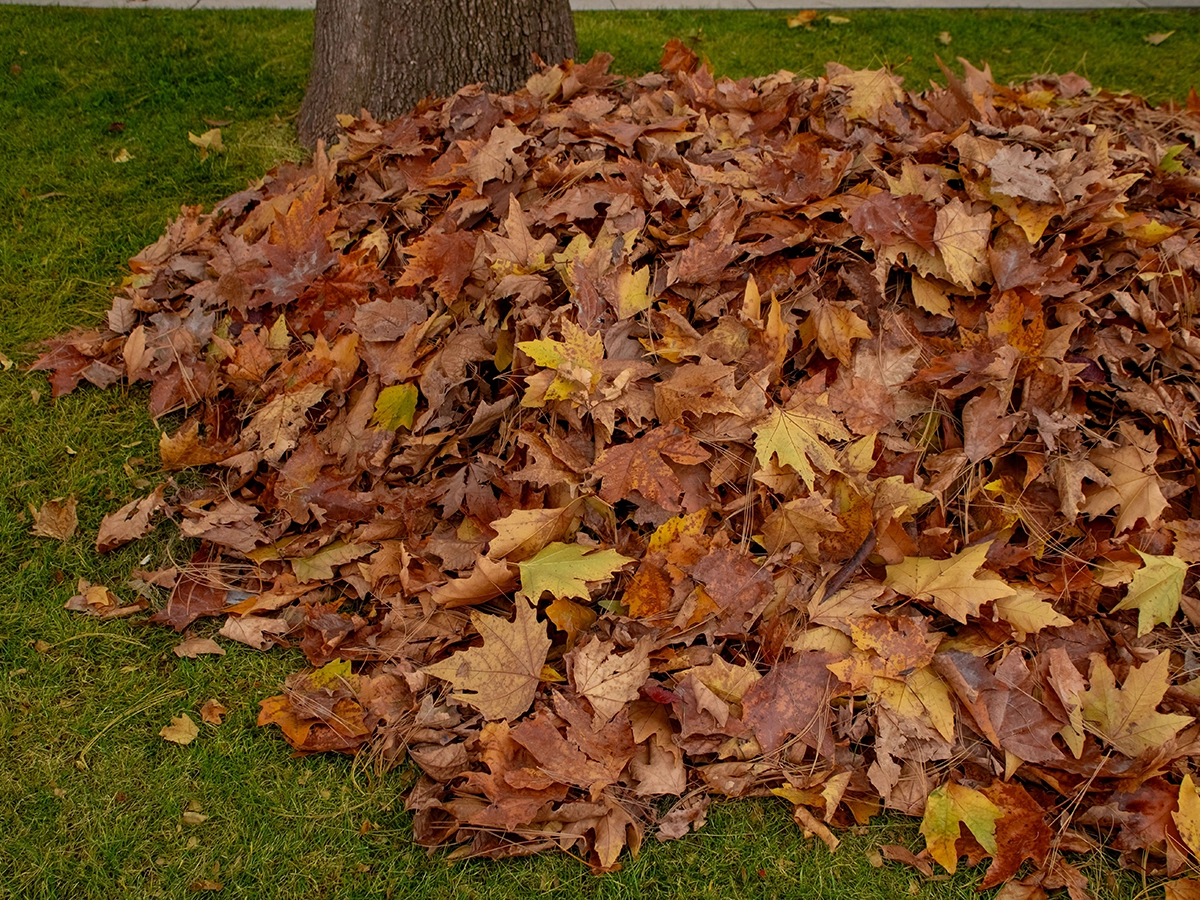
A scattering of autumn leaves is not an emergency, but allowing a thick, wet layer to sit across the lawn for weeks can block light and trap moisture around the grass. Regularly collecting larger accumulations keeps the lawn exposed to light and air during a season when both are already becoming limited.
A spring-tined rake works well on smaller lawns, while a mower with a collection box can make the job quicker when conditions are dry enough to mow. There is no need to chase every individual leaf around the garden; concentrate on preventing dense mats from building up.
Do not waste the leaves you collect. Healthy fallen leaves can be added to suitable composting material or gathered separately to make leaf mould, giving you a useful soil improver for the garden in future.
Keep Mowing While the Grass Is Still Growing
Summer ending does not automatically mean mowing should stop. Grass can continue growing during mild autumn weather, although considerably more slowly than during spring and early summer. Continue mowing when necessary, but wait until the lawn is reasonably dry and raise the cutting height so you are leaving the grass slightly longer.
A very close cut leaves less leaf area to support the grass and can make the lawn more vulnerable as growing conditions deteriorate. Autumn is therefore not the time to scalp an overgrown lawn in an attempt to avoid mowing it again.
Avoid taking the mower onto waterlogged ground, where the wheels can compact the soil and damage the surface. Frozen or heavily frosted grass should also be left alone until conditions improve.
When Should You Make the Final Cut Before Winter?
There is no universal date for the final lawn cut of the year. In a mild autumn, grass may continue putting on noticeable growth well into the season, while colder conditions can bring mowing to an end much earlier.
The better approach is to watch the lawn. If it is still clearly growing and the ground is dry enough to take the mower without causing damage, an occasional cut is fine. As temperatures fall, mowing naturally becomes less frequent. Leave the grass slightly longer than you would during peak summer rather than trying to finish the year with an exceptionally close cut.
Scarify the Lawn if It Has Built Up Thatch or Moss
Scarifying simply means removing the layer of dead grass, moss and organic debris that can accumulate around the base of the lawn. A modest amount of organic material is normal, but a heavy layer of thatch can interfere with the movement of water and air into the soil.
For a small lawn, a spring-tined rake may be all you need. Work across the surface firmly enough to pull out loose moss and thatch without deliberately tearing healthy grass from the ground. Larger lawns can be tackled with a powered scarifier, which makes the process considerably quicker.
Scarifying can leave the lawn looking worse before it looks better, so timing matters. Early autumn gives grass an opportunity to recover while growing conditions are still reasonable. Aggressively scarifying late in the season, when temperatures have dropped and growth has slowed, can leave bare and damaged areas heading into winter.
Most importantly, do not scarify just because it appears on an autumn lawn-care checklist. If there is little moss or thatch to remove, there may be no benefit in disturbing a healthy lawn.
Aerate Compacted Areas
Lawns that have been heavily used through summer can become compacted, particularly along common walking routes, around children’s play areas and on heavier soils. Compaction makes it harder for air and water to move through the soil to the grass roots and can contribute to poor drainage.
A small lawn can be aerated with an ordinary garden fork. Push the tines into the soil and gently work them backwards and forwards to create openings. There is no need to treat every square centimetre if only a few sections are suffering; concentrating on heavily used or slow-draining areas can be enough.
Lawns growing on heavy clay or consistently wet soil are more likely to benefit from regular attention than free-draining lawns that receive little traffic. Like scarifying, aeration is a treatment for a particular condition rather than something every lawn automatically needs each autumn.
Repair Bare and Worn Patches
Autumn provides an opportunity to repair areas worn thin by summer activity, pets, drought or garden furniture. Start by removing dead material and lightly loosening the surface of the soil so new grass seed has better contact with the ground.
Choose a lawn seed suitable for the conditions and intended use of the area, then sow according to the packet instructions. A family lawn that receives plenty of foot traffic may need a different seed mixture from an ornamental lawn or a heavily shaded area.
Keep newly seeded patches moist while the grass establishes and protect them from unnecessary traffic. Timing is important: grass seed needs sufficiently mild conditions to germinate and begin establishing before winter. If autumn has already turned cold, it may be better to postpone significant reseeding rather than waste seed that will struggle to establish.
For larger areas of severe damage, replacing the affected section with turf can sometimes be more practical than trying to patch it repeatedly with seed.
Feed Your Lawn for Autumn – But Only if It Needs It
A lawn that looks tired or is recovering poorly from summer may benefit from an autumn lawn feed. These products are formulated differently from feeds designed to encourage rapid leafy growth during spring and summer. The aim in autumn is to support stronger roots and resilience as the lawn heads towards winter.
Do not simply use leftover summer fertiliser because it happens to be sitting in the shed. Products high in nitrogen can encourage lush, soft growth at a time when that is not necessarily desirable. If you decide the lawn needs feeding, choose a product specifically intended for autumn use and follow the manufacturer’s application rate carefully.
Feeding is not compulsory. A healthy lawn growing well in reasonably fertile soil may recover perfectly well without additional fertiliser. Applying more product than the grass needs wastes money and does not automatically result in a better lawn.
Deal With Moss Before Winter
Moss often becomes increasingly noticeable during autumn, particularly in lawns that are shaded, damp, compacted or poorly drained. Removing existing moss by scarifying can improve the appearance of the lawn, but it is also worth asking why the moss is thriving in the first place.
If soil is badly compacted, aeration may help improve conditions. Persistent waterlogging may point towards a wider drainage problem, while deep shade from buildings, fences or trees can make some areas naturally difficult for conventional lawn grasses.
Repeatedly removing or treating moss without addressing the underlying conditions can become an annual battle. In very shady or damp areas, it may even be worth considering whether trying to maintain perfect grass is realistic or whether a more shade-tolerant planting approach would work better.
Protect Your Lawn During Winter
Once the main autumn jobs are complete, winter lawn care is mostly about avoiding unnecessary damage. Try not to repeatedly walk across very wet ground, as this can compact the soil and churn up the surface. When the grass is heavily frosted or frozen, staying off it until it thaws will also help prevent damaged patches.
Continue removing thick accumulations of fallen leaves and avoid leaving garden furniture, paddling pools, children’s equipment or other objects sitting on the same patch for months. Anything that blocks light for a long period can leave weakened or dead grass underneath.
During an unusually mild winter, the lawn may still grow enough to need an occasional trim. Only mow if the grass is actively growing and both the lawn and weather conditions are suitable; there is no benefit in mowing simply because several weeks have passed since the previous cut.
Your Autumn Lawn Care Checklist
- Clear significant accumulations of fallen leaves and debris.
- Continue mowing for as long as the grass is actively growing.
- Raise the mowing height rather than cutting the lawn very short.
- Scarify only where moss or thatch has built up significantly.
- Aerate areas that are compacted or struggling with poor drainage.
- Repair bare patches while temperatures are still mild enough for grass to establish.
- Use an appropriate autumn lawn feed only where the grass genuinely needs it.
- Look at the underlying causes of persistent moss rather than repeatedly treating the symptom.
- Avoid heavy traffic when the lawn is saturated, frozen or heavily frosted.
A good autumn lawn-care routine is less about doing as much as possible and more about responding to what the grass actually needs. Clear the leaves, keep mowing while growth continues and deal with obvious problems such as compaction, bare patches or excessive thatch while conditions are still favourable. Get those jobs right and the lawn has a much better chance of coming through winter ready to recover strongly in spring.