
Cutting energy bills is not simply about switching everything off or putting up with a colder home. In most households, the biggest opportunities come from using heating and hot water more efficiently, stopping heat you have already paid for from escaping and identifying where electricity is being used unnecessarily.
Some improvements cost nothing beyond changing a setting or habit, while others involve spending money on insulation, controls or a more efficient heating system. How much difference each one makes will depend on your property, household size and existing energy use, so it makes sense to tackle the obvious waste first before investing in expensive upgrades.
Start with Your Heating – It Is Usually the Biggest Opportunity
Space heating is one of the largest energy demands in a typical UK home, which means it deserves attention before relatively minor savings such as unplugging phone chargers. Start by looking at when your heating actually runs. A programmer or smart thermostat should reflect the times people are normally at home rather than following an old schedule that heats empty rooms every day. If your plans change, adjust the heating rather than allowing it to continue simply because that is what the timer says.
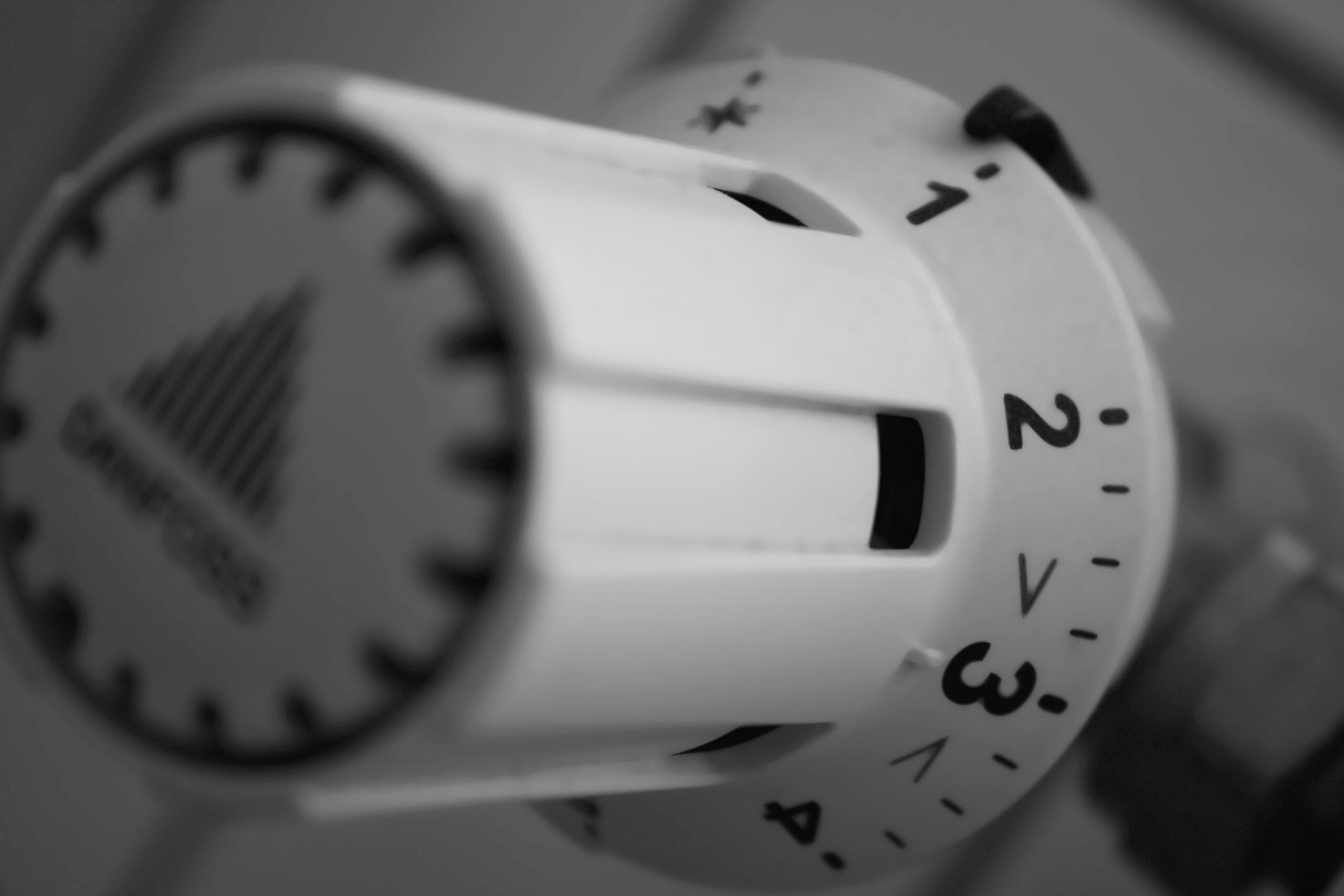
Your thermostat should be set to the lowest temperature that still keeps the household comfortably warm. There is no single correct setting for everybody: age, health, the property and personal comfort all matter. Thermostatic radiator valves can also help avoid overheating rooms that are used less frequently while keeping living areas comfortable. Make sure radiators can release heat properly too; large pieces of furniture positioned directly in front of them and heavy curtains hanging over them can prevent warmth circulating effectively.
The goal is not to see how cold you can tolerate your home. Excessively cold properties can create their own health and damp problems. Concentrate on heating the rooms you need, at the times you need them, without routinely overheating the whole house.
Check That Your Boiler Controls Are Set Up Properly
Many heating systems continue running on settings chosen when the boiler was installed, even though nobody in the household has ever checked whether they suit the property. Familiarise yourself with the room thermostat, timer or programmer and thermostatic radiator valves first. If you have a modern condensing boiler, it may also be worth understanding its flow temperature: this is the temperature of the water sent from the boiler around the central-heating system.
Condensing boilers can often operate more efficiently at a lower heating flow temperature, particularly during milder weather, but there is no universal number that should be copied from an online tip. The appropriate setting depends on the boiler, radiators and type of hot-water system. Homes with a separate hot-water cylinder have different considerations from those using a combi boiler, and heat pumps operate differently again, typically working best with lower temperatures over longer periods.
If you do not understand a boiler setting, consult the manufacturer’s instructions or ask a competent heating professional rather than changing temperatures at random. A well-configured system should keep the home comfortable while avoiding unnecessary fuel use.
Stop Heat Escaping Through Draughts
Heating a room efficiently makes little sense if warm air is continually escaping through gaps around doors and windows. On a cool, breezy day, check common trouble spots such as external doors, older window frames, letterboxes, gaps around floorboards and skirting boards, loft hatches and unused chimneys. In many cases, inexpensive seals, draught-excluding strips or suitable chimney draught products can improve comfort without requiring major building work.
Curtains can also help reduce the feeling of cold around windows after dark, particularly in older properties. Close them when evening temperatures fall, but avoid allowing thick curtains to hang directly over radiators and trap heat behind them. Internal doors can also be useful for keeping warmth within the parts of the home being used rather than allowing it to drift into halls and unused rooms.
There is an important difference between unwanted draughts and deliberate ventilation. Do not block air bricks, trickle vents, extractor systems or other ventilation simply to make a room feel warmer. Homes need adequate airflow to control moisture and maintain indoor air quality, particularly in kitchens, bathrooms and properties prone to condensation.
Use Less Hot Water Without Sacrificing Everyday Comfort
Every litre of hot water requires energy, so reducing unnecessary use can cut both water and heating costs. Showers are an obvious place to look: spending a little less time under the water can make a meaningful difference across an entire household, particularly where several people shower every day. A suitable water-efficient shower head may reduce water use further without making the shower feel dramatically weaker, although compatibility varies with different systems.
Elsewhere, avoid leaving hot taps running while washing or cleaning when the water is not actually needed, and fix dripping hot-water taps rather than ignoring them. If you have an older hot-water cylinder, make sure it is properly insulated, and consider insulating accessible hot-water pipework where appropriate. Households with stored hot water should also check that heating schedules broadly match when hot water is required rather than repeatedly heating a full cylinder unnecessarily.
Do not reduce stored hot-water temperatures to arbitrarily low levels in an attempt to save money. Water-storage systems need to operate safely, so follow the manufacturer’s guidance or seek professional advice before altering settings you do not understand.

Make Laundry Cheaper to Run
Washing machines and tumble dryers are used frequently enough for small changes to become worthwhile over a year. For everyday clothing that is suitable for it, washing at 30°C generally requires less energy than hotter cycles. Wait until you have a sensible load rather than repeatedly running a nearly empty machine, and use an eco programme when it is appropriate for the clothes and appliance. Eco cycles often take longer precisely because they reduce energy and water use rather than completing the wash as quickly as possible.
Drying is another significant opportunity. Use a washing line when the weather allows, or an indoor drying rack in a properly ventilated space instead of automatically using the tumble dryer. If you do need the dryer, avoid running repeated small loads and make sure the washing machine has completed an appropriate spin cycle first so clothes are not unnecessarily wet when they go in.
Indoor drying does add moisture to the air, so ventilation matters. Drying several loads in an unventilated cold room can contribute to condensation and damp, making a supposedly economical choice much less useful.
Run the Dishwasher Efficiently
A dishwasher is most efficient when you use its capacity properly. Wait for a sensible full load rather than running it for a handful of plates, select the eco programme where suitable and scrape leftover food into the bin instead of extensively pre-rinsing dishes beneath running hot water.
Keep filters clean and check spray arms periodically so the appliance can perform properly without requiring dishes to be washed again. There is no simple rule that hand washing is always cheaper than using a dishwasher, or vice versa; both can waste substantial amounts of heated water when used poorly. The useful principle is to avoid unnecessary cycles and unnecessary hot-water use.
Make the Kitchen More Energy Efficient
Kitchen savings are generally smaller individually, but these are appliances and habits repeated every day. Only boil roughly as much water as you need in the kettle, use lids on pans so food reaches temperature more quickly and choose a pan reasonably matched to the size of the hob ring. If several things need cooking at the same oven temperature, preparing them together can be more efficient than heating the oven repeatedly throughout the day.
Smaller appliances can sometimes use less energy than a full-size oven when cooking relatively small portions, but an air fryer or microwave is not automatically the cheapest option for every meal. Cooking time, quantity and the appliance itself all matter. Choose the equipment that makes sense for what you are preparing rather than assuming one appliance always wins.
Fridges and freezers also run continuously, so basic maintenance matters. Avoid leaving doors open while deciding what to eat, allow hot food to cool appropriately before refrigerating it and make sure ventilation gaps around the appliance are kept clear where the manufacturer requires them.
Cut Electricity Wasted on Standby and Lighting
Televisions, games consoles, computers and other electronics can continue drawing power while sitting in standby. Switching off equipment that genuinely does not need to remain powered can therefore reduce background electricity use. A switched extension lead or smart plug can make this more convenient where several non-essential devices are grouped together, while some energy-monitoring plugs can help identify equipment using more power than expected.
Use common sense rather than applying the rule indiscriminately. Fridges and freezers obviously need continuous power, while routers, recording equipment, smart-home hubs and devices that perform updates or rely on persistent connectivity may be better left operating as designed. Check the manufacturer’s guidance before routinely cutting power to equipment simply because it has a standby light.
For lighting, the straightforward wins are still the best ones: turn lights off in rooms nobody is using, make good use of daylight and replace frequently used old incandescent or halogen lamps with efficient LEDs where they remain in the home. There is little need to replace a perfectly good LED bulb simply because a newer smart version exists.
Use Your Smart Meter to Find Where Energy Is Going
A smart meter does not save energy by itself. Its value is that it makes consumption more visible, either through an in-home display or your supplier’s app. Instead of watching it obsessively from minute to minute, use it to understand patterns. Compare an ordinary day with one when the tumble dryer has been running repeatedly, or see what happens to gas consumption when the heating schedule changes.
This can help distinguish short periods of high consumption from electricity that is being used continuously in the background. If usage remains unexpectedly high overnight, for example, you can start investigating what is still operating. Likewise, seeing how heating consumption responds to different schedules is more informative than guessing which adjustment has made a difference.
Smart meters can also send readings automatically to suppliers, reducing reliance on estimated bills where the system is communicating correctly. If you do not have one, regular manual meter readings can still help you track consumption and ensure bills reflect what you have actually used.
Improve Insulation Before Paying to Generate More Heat
If a property loses heat quickly, even the most sophisticated thermostat can only do so much. Improving the building itself can therefore produce much larger long-term benefits than repeatedly tweaking appliances. Loft or roof insulation is often one of the first areas worth investigating, followed by cavity-wall insulation where the construction is suitable. Depending on the building, floor insulation, hot-water-cylinder insulation and accessible pipe insulation may also reduce unnecessary heat loss.
Solid-wall properties require more consideration. External or internal wall insulation can significantly change the thermal performance of a home, but it is a substantial project rather than a casual DIY energy-saving tip. Older, listed and traditionally constructed properties may need specialist advice so that insulation does not interfere with how the building manages moisture.
Windows can also be part of the equation, although replacing functional windows solely to reduce energy bills may take many years to repay the installation cost. If windows already need replacing, energy performance becomes an important part of choosing their replacement. Until then, draught-proofing and well-fitted curtains can often make older windows more comfortable at considerably lower cost.
Don’t Replace an Appliance Just to Chase Tiny Energy Savings
New appliances can be considerably more efficient than old models, but that does not mean replacing every working appliance is automatically a good financial decision. Buying a new fridge to save a relatively small amount of electricity each year makes little sense if the existing fridge is functioning properly and the purchase price will take years to recover.
Energy efficiency becomes especially relevant when an appliance genuinely needs replacing. Check the energy label and estimated consumption, but consider size as well as the headline rating. A huge fridge-freezer may consume more electricity overall than a smaller model that actually suits the household, even if both are relatively efficient for their respective categories.
Prioritise equipment that is used heavily or has particularly high consumption rather than buying new technology simply because it carries an energy-saving message.
If You Rent, Focus on the Changes You Can Control
Many energy-saving guides assume that everyone can install loft insulation, replace windows or change the heating system. Renters understandably have fewer options, but there are still worthwhile changes within their control. Learn how the heating timer and thermostat work, use radiator controls appropriately, tackle removable draughts around doors, close curtains after dark and reduce unnecessary hot-water and appliance use.
Report problems such as faulty heating, significant draughts caused by defects, broken windows or persistent damp to the landlord rather than trying to disguise them with temporary fixes. Permanent alterations normally need permission, and structural improvements such as insulation or heating-system replacement are decisions for the property owner.
Even without major building work, eliminating obvious wasted energy can still make a noticeable difference to consumption.
Check Whether Help Is Available for Bigger Improvements
Major improvements such as insulation or replacing a heating system can involve substantial upfront costs, so check whether support is available before paying for everything yourself. Eligibility changes over time and can depend on factors including where you live, household income or benefits, the property’s existing efficiency and the type of improvement being considered.
The Boiler Upgrade Scheme currently provides grants towards eligible low-carbon heating systems such as heat pumps in England and Wales, while ECO4 continues to support qualifying households with energy-efficiency measures until the end of December 2026. Older articles may also refer to the Great British Insulation Scheme, but that scheme closed at the end of March 2026.
Because schemes and eligibility rules change, use current GOV.UK or Ofgem information before making financial decisions rather than relying on an old article or social media post promising a particular grant.
Where Should You Start If You Want to Reduce Your Bill?
Begin with the areas that use the most energy rather than chasing every tiny saving at once. Check that your heating schedule and thermostat actually match how the household lives, then look for obvious draughts or places where paid-for heat is escaping. Review hot-water use next, particularly long showers, stored-water schedules and poorly insulated cylinders or pipework.
From there, look at everyday electricity use: tumble drying, washing, cooking, lighting and appliances sitting unnecessarily on standby. Use meter readings or smart-meter data to see whether changes are actually reducing consumption rather than assuming every energy-saving tip makes a meaningful difference.
Only then is it worth investigating larger investments such as insulation or heating-system improvements. The objective is not to make the home progressively colder or less convenient. The most effective strategy is to eliminate wasted energy, improve the building where practical and use the heat and electricity your household genuinely needs as efficiently as possible.