
A well-organised kitchen clears both physical and mental space, making every meal easier to prepare and every cupboard a pleasure to open. The real secret lies in starting with a clean slate, then tailoring your approach to how your household genuinely uses the kitchen each day.
These proven methods reveal how to maximise every inch of your kitchen cupboards, from clever storage solutions and practical zoning to design tweaks that really last.
Start with a Complete Declutter
The foundation of effective kitchen organisation is clearing out what does not belong before any new system is applied. Begin by fully emptying your cupboards, taking stock of everything inside, and separating items based on their usefulness and necessity. Identify duplicates, items you never use, broken gadgets, expired foods and those that have migrated from other rooms. Donate, recycle or discard as appropriate, organisation without decluttering only rearranges clutter. This makes it easier to see what storage needs are actually required and creates a genuinely fresh starting point.
Create Purposeful Kitchen Zones
Zoning is one of the most effective ways to organise a kitchen, ensuring your cupboards directly support how you cook, clean and live. Map out your kitchen into task-based areas: for example, cooking, baking, prep, hot drinks, food storage and cleaning. Assign cupboards closest to your hob and oven for pots, pans and utensils, with baking equipment near worktops. Everyday items like plates, bowls and mugs should be on the most accessible shelves, ideally at eye level or within easy reach. Store food prep tools and snacks near prep spaces and breakfast ingredients near the kettle or toaster. This point-of-use approach makes daily routines faster and prevents constant back-and-forth.
Group and Categorise Every Item
Once basic zones are set, group items by purpose, crockery, glassware, baking ingredients, tinned food, herbs and spices and so on. Within each group, categorise further by type: for example, cereals together, pastas and grains in another spot, or dividing mugs from glasses. This method is a long-standing favourite because it saves time when unloading the dishwasher or putting away shopping as every item has an assigned home. Think about frequency too: keep what you reach for daily upfront, with occasional-use or seasonal items in higher or deeper cupboards.
Utilise Smart Storage Solutions
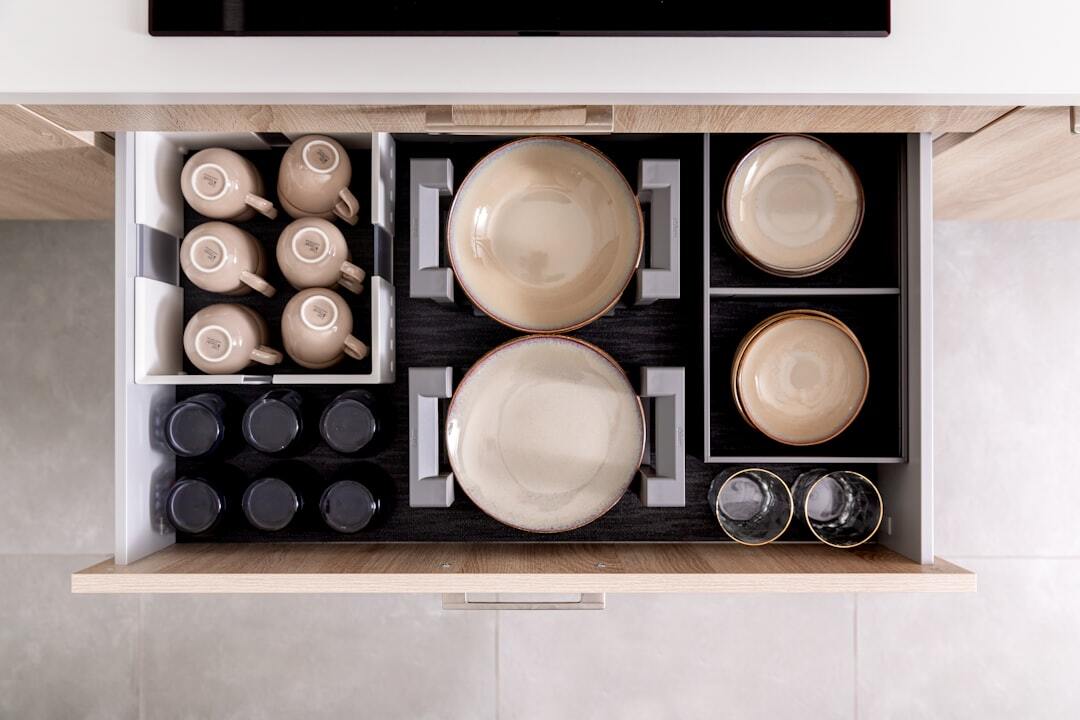
A clear system works best when backed up with practical storage tools. Drawer inserts or dividers keep utensils and gadgets ordered, avoiding the ‘jumbled drawer’ effect. Use labelled baskets or airtight containers for loose foods, baking supplies and snacks, ensuring nothing gets lost at the back. Consider shelf risers and stackable bins to exploit wasted vertical space, especially in tall cupboards. Corner cupboards, so often neglected, can benefit from lazy Susans, pull-out racks or trays. Hooks or small storage inside cupboard doors suit smaller items or pan lids, while sliding shelves make deep cupboards fully accessible. Repurposing boxes or containers is also effective without requiring expensive custom solutions.
Make the Most of Vertical and Awkward Spaces
Many kitchen cupboards have underused vertical or awkward zones, particularly in deep or high cabinets and corners. Add extra shelving, hanging baskets or wire racks to double storage where height allows. Pull-out drawers or sliding trays in deep cupboards prevent forgotten food and hard-to-reach items at the back. For high cupboards, store rarely used items or small appliances out of the way. Cupboard doors are sometimes overlooked but offer space for attachments like spice racks, utensils or bin bags, ensuring even compact kitchens feel spacious and manageable.
Maintain Organisation Long Term
Organisation should be a habit rather than a one-off project. Build a quick tidy into your routine, monthly or each season, check expiry dates, reassess what you use and readjust zones and storage as your habits or kitchen items change. If your kitchen still feels tight, review whether storage could be improved, for example, by adding drawer inserts, risers or hooks. Family members should know where everything goes and take responsibility for keeping the system running. For major redesigns, build storage into the cabinetry, such as integrated pull-outs, bin cupboards or drawer stacks, to lock in long-term efficiency.
Answering Kitchen Organisation FAQs
How often should kitchen cupboards be reorganised? At least every six months for most homes, or seasonally alongside food expiry checks. Are expensive organisers essential? Not at all; the goal is organisation that fits your needs, often with inexpensive or repurposed dividers, boxes or baskets. Where should pots and pans go? Store them near the hob or cooker for maximum practicality. What about deep or corner cupboards? Use rotating trays or pull-out baskets to keep all items visible and accessible. Does meal planning help? Yes, it prevents food waste and avoids overfilling cupboards with excess supplies.
Top Tips and Common Myths Debunked
You do not need a designer kitchen or premium gadgets for an efficient space. Organisation is about good habits and thoughtful use of cupboards, not having every item visible or buying uniform storage. Avoid the myth that more storage means more clutter; the real win is storing only what you use, where you use it. Map each item to its point of use, review contents regularly, and do not be afraid to adapt as your lifestyle changes. Ultimately, an organised kitchen truly begins with simple, conscious choices that suit your home.