
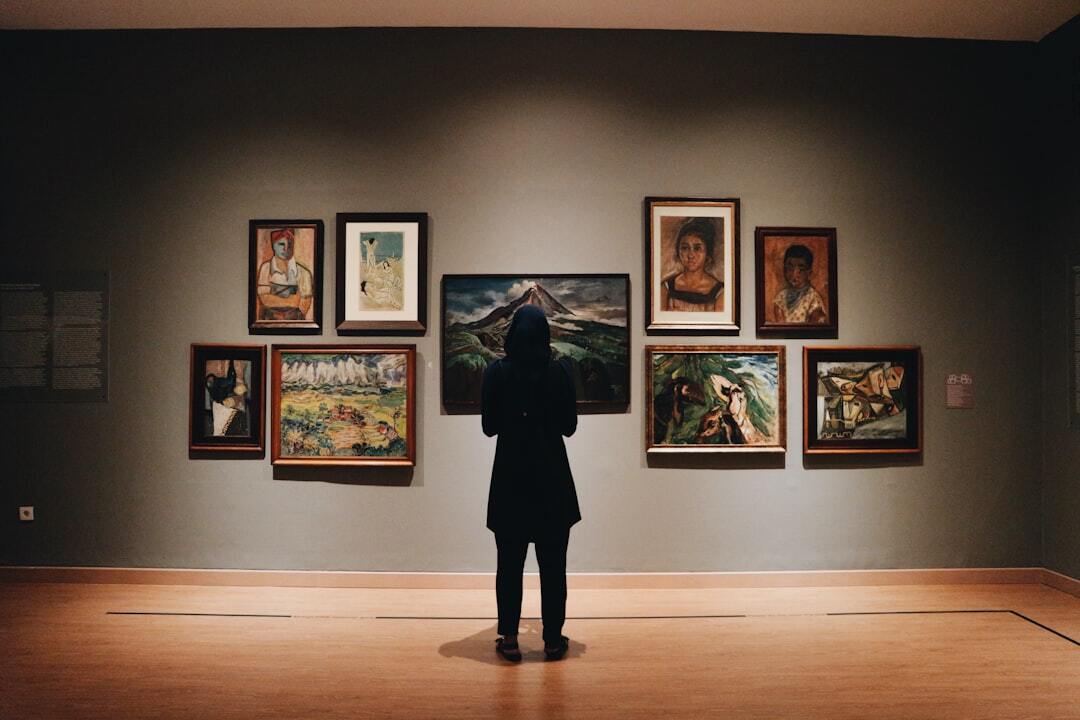
Kent’s art scene stretches considerably further than one famous gallery on Margate seafront. Across the county are independent contemporary galleries, artist-led exhibition spaces, museum collections and arts centres showing everything from painting and sculpture to film, ceramics, installation and experimental work.
Some venues bring internationally recognised artists to Kent, while others provide exhibition space for local and emerging talent. That variety makes the county particularly rewarding for gallery visits: you can see a major institutional exhibition in the morning, walk into a small commercial gallery nearby and encounter an entirely different part of the contemporary art world before lunch.
Programmes change throughout the year, so the exhibitions mentioned below reflect the current and forthcoming programme in autumn 2026. Always check the gallery’s latest listings before making a special journey.
Turner Contemporary, Margate
Turner Contemporary remains Kent’s most prominent contemporary art institution, occupying David Chipperfield’s distinctive building directly on Margate’s seafront. Its location is not incidental: JMW Turner’s relationship with Margate and the particular coastal light he encountered here provide the historical thread running through a gallery whose programme is otherwise firmly contemporary.
The scale allows Turner Contemporary to attract exhibitions that would ordinarily require a trip to London or another major city. From 3 October 2026 to 24 January 2027, the gallery is presenting Sophie Calle: Something Missing?, described by the venue as Calle’s first UK institutional exhibition in more than 15 years. Alongside it are a newly reopened display of JMW Turner’s Waves Breaking on a Lee Shore at Margate, David Hockney’s Sunley Window 2026 and the continuing Antony Gormley sculpture Another Time outside the gallery. Entry to the main exhibitions is currently free, with donations encouraged.
Turner Contemporary is also worth treating as the beginning of an art day rather than its only destination. Margate now has a dense network of independent galleries, studios and artist-led spaces within walking distance, particularly around the Old Town and Cliftonville. The seafront location also means a gallery visit naturally connects with the harbour arm, beach and town centre.
Carl Freedman Gallery, Margate
A short distance inland, Carl Freedman Gallery offers a very different experience. This is a commercial contemporary gallery rather than a large public institution, and its programme tends to concentrate on tightly curated solo and group exhibitions by established and emerging artists.
The gallery’s recent programme demonstrates its range. Earlier in 2026 it hosted Crossing Into Darkness, curated by Tracey Emin, followed by exhibitions from Billy Childish and Lindsey Mendick. Its autumn show, Lures by Emii Alrai, runs from 27 September to 8 November 2026.
The smaller setting is part of the appeal. Rather than moving through the scale and visitor traffic of a major institution, you can spend time with one artist or one curatorial argument in a more concentrated space. Pairing Carl Freedman with Turner Contemporary also gives a useful snapshot of why Margate has become such an important visual-arts destination: the two galleries occupy different parts of the art ecosystem but sit close enough to visit during the same trip.
Pie Factory Margate – Artist-Led Shows in the Old Town
Pie Factory Margate adds another layer to the town’s gallery scene. Set on Broad Street in the Old Town, it operates as an exhibition and events venue with spaces hired by artists, groups and creative organisations. That means the programme changes frequently and can move from fine art and photography to craft, design, markets and multidisciplinary projects from one week to the next.
The gallery itself advises visitors to check individual listings because opening hours are set by each exhibitor. That flexibility is precisely what makes it interesting: unlike a commercial gallery with a stable roster or an institution planning exhibitions years ahead, Pie Factory can provide a platform for short-run projects and artists who might not otherwise appear within Kent’s larger venues.
It is best visited as part of a wider Margate gallery crawl. Check what is on before travelling, then combine it with Turner Contemporary, Carl Freedman and the smaller studios and galleries scattered around the Old Town.
Linden Hall Studio, Deal
Deal has developed a strong independent arts scene of its own, and Linden Hall Studio is one of its most established contemporary galleries. The family-run space has operated since 2014 and combines a changing first-floor exhibition programme with a rolling collection of modern British and contemporary painting, sculpture, prints and ceramics downstairs.
The current exhibition, running from 3 to 31 October 2026, brings together painter David Abbott and sculptor and printmaker Frea Buckler in Right in Time, exploring their individual practices and creative relationship. This is followed in November by a solo exhibition from Lottie Cole, before the gallery’s large Winter Group Show opens in December.
Linden Hall is also notable for treating the gallery as more than somewhere to hang pictures. Its 2026 programme extends into artist talks, masterclasses, lectures and cinema. October’s Film in Focus season, for example, presents restored films by directors including Wong Kar-wai, Agnès Varda and Ingmar Bergman with an emphasis on cinema’s visual language, while other screenings connect directly with artists and art history.
That broader programme makes it particularly good for visitors who want a gallery that feels embedded in Deal’s cultural life rather than functioning solely as a retail space.
The Horsebridge Arts Centre, Whitstable
The Horsebridge occupies a prominent position close to Whitstable Harbour and combines gallery space with workshops, performances and community arts. Its exhibitions are free to visit and change frequently, giving the galleries a deliberately varied character rather than one fixed curatorial identity.
Autumn 2026 is a good example. We Are Our Memory, running from 8 to 18 October, brings together 38 contemporary artists from across Kent responding to a quotation by Jorge Luis Borges. The accompanying programme extends beyond the walls of the exhibition with artist discussion and other events. Later in November, the centre hosts its second Whitstable Ceramics Fair, bringing together more than 20 Kent ceramicists.
The Horsebridge is particularly valuable if you want to see work being made within Kent rather than concentrating only on nationally established names. Shows can include painting, print, ceramics, textiles, photography and mixed media, and the turnover means repeat visits often reveal an entirely different gallery.
Its harbour-side location also makes it exceptionally easy to incorporate into a Whitstable day out. The High Street, beach and harbour are all close enough that the gallery does not require a separate itinerary.
The Beaney House of Art & Knowledge, Canterbury
The Beaney is not exclusively a contemporary art gallery. It is part museum, part historic collection, part exhibition space and part cultural centre, housed in one of Canterbury High Street’s most recognisable buildings. That breadth, however, is exactly why it deserves inclusion: contemporary work regularly sits alongside historic art, archaeology, decorative objects and the city’s own stories.
From 3 October 2026 to 31 January 2027, the Beaney is showing David Blandy’s film Commons. The moving-image work combines archive material, three-dimensional scans and new footage of rocks and ancient woodland, using objects and non-human characters to explore common land, deep time and ideas about human relationships with the natural world. The project draws directly on collections at both the Beaney and Tunbridge Wells’ Amelia Scott.
Elsewhere in the building, The Making of Marlowe: Poet, Playwright, Provocateur runs until 22 November 2026, while December brings Jason and the Adventure of 254, a major solo exhibition by artist Jason Wilsher-Mills running into May 2027.
The mixture is broader than at a conventional white-cube gallery, so this is a particularly good option for groups with different interests. One visitor can concentrate on art while another explores Canterbury history and collections, without needing to split the day between separate venues.
Creek Creative, Faversham
Creek Creative feels much closer to the process of making art. Based on Abbey Street in Faversham, the organisation combines studios for working artists with gallery spaces, a shop, café and programme of exhibitions, talks, courses and performances.
Its exhibitions change quickly, often running for only a fortnight. From 29 September to 11 October 2026, the gallery is showing Past and Present, a retrospective of paintings by Anthony John Sharp. That is immediately followed by Kat Uzakova’s Connections from 13 to 25 October, combining textiles and figurative work.
That turnover means Creek Creative is worth checking repeatedly rather than treating it as a gallery with one defining collection. It is particularly supportive of local artists: the organisation says artists receive 70% of exhibition sales, with its galleries also available for artists and curators to hire.
For visitors, the attraction is the informal atmosphere. You can see a show, browse work by artists and makers and stop for food without the visit feeling especially formal. Its position close to Faversham’s historic centre also makes it an easy addition to the town’s markets, independent shops and creek-side walks.
The Amelia Scott, Royal Tunbridge Wells
The Amelia Scott brings together museum collections, local history, library services and changing exhibitions under one roof, but its temporary exhibition space has become an increasingly interesting stop for visual art in west Kent.
The strongest forthcoming example is Howard Hodgkin: In a Public Garden, opening on 23 October 2026 and continuing until 21 February 2027. The free exhibition brings together more than 30 Hodgkin prints created across five decades, from 1966 to 2016, examining the artist’s use of saturated colour, gesture, memory and place. It is a touring exhibition originally developed by Pitzhanger Manor & Gallery.
The programme around exhibitions is worth checking too. The Hodgkin show is accompanied by free curator-led sessions, while The Amelia’s wider schedule includes creative workshops, talks and activities alongside its gallery programme.
Like the Beaney, this is not a conventional standalone contemporary gallery, but that can make a visit more interesting. Art sits in conversation with the collections and history of Tunbridge Wells rather than being isolated from the wider cultural context.
Where to See Contemporary Art Made in Kent
If your priority is internationally recognised contemporary art, Margate provides the strongest concentration. Turner Contemporary can anchor the day, with Carl Freedman and Pie Factory offering very different gallery experiences within the same town.
For independent modern and contemporary art, Linden Hall Studio makes Deal particularly worthwhile. Whitstable’s Horsebridge and Faversham’s Creek Creative are stronger choices when you want to see regional artists, open-call exhibitions and work emerging from local creative communities rather than only established names.
Canterbury and Tunbridge Wells offer something different again. The Beaney and The Amelia mix contemporary commissions and temporary exhibitions with permanent collections, history and public events, making them particularly useful when you are visiting with people whose interests extend beyond contemporary art alone.
Look Beyond the Main Exhibition
It is worth checking a gallery’s events page as well as its exhibition listings before visiting. Kent’s art venues increasingly run talks, artist Q&As, workshops, film screenings, open studios, fairs and family sessions that can make one exhibition the starting point for a much wider programme.
That is particularly true at Linden Hall, The Horsebridge, Creek Creative, The Beaney and The Amelia, where activity extends well beyond conventional gallery opening hours. Margate also rewards walking between venues rather than treating each gallery as an isolated attraction.
Most importantly, check dates immediately before travelling. Short-run independent shows can last little more than a week, while larger venues close galleries temporarily between major exhibitions. A little planning can make the difference between an excellent art day and arriving during an installation changeover.
Kent’s Art Scene Is Bigger Than One Gallery
Turner Contemporary may have given Kent’s contemporary art scene its most recognisable landmark, but it is the network around it that makes the county worth exploring. Commercial galleries, artist studios, municipal collections and independent arts centres all contribute something different, and several of the most interesting exhibitions happen well beyond Margate.
The result is an art scene that can support very different kinds of day out: major international exhibitions on the coast, modern British painting in Deal, work by dozens of Kent artists in Whitstable or a moving-image commission inside a Canterbury museum. Check what is showing, choose two or three venues in the same area and allow the programme — rather than the reputation of one gallery — to shape the visit.