
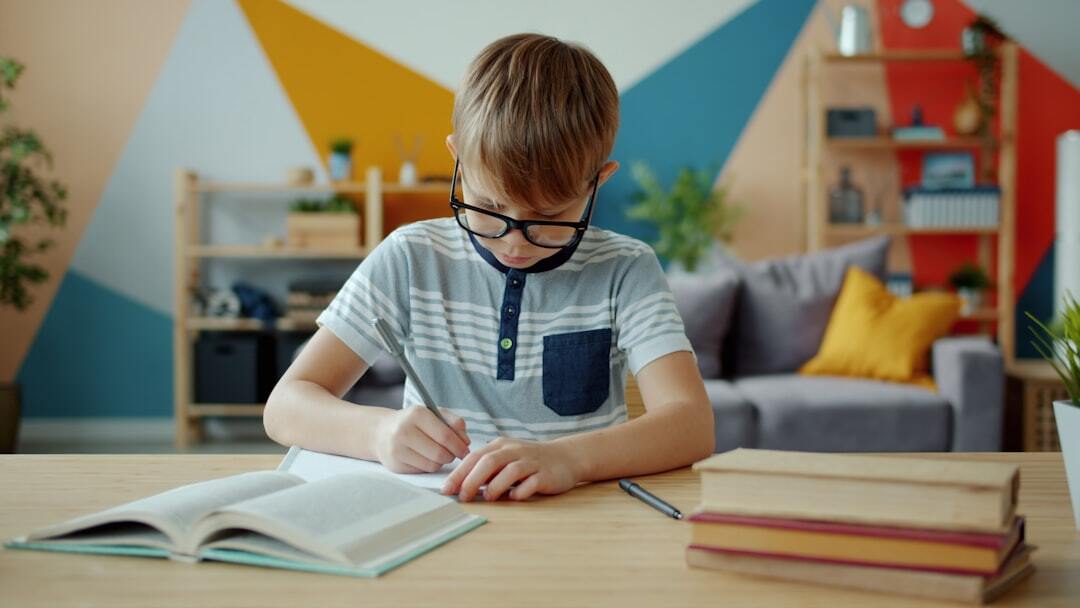
A good homework station does not need a dedicated room, expensive furniture or a perfectly styled desk. Its job is much simpler: give your child somewhere comfortable to sit, enough space to work and easy access to the things they regularly need, without making homework more complicated than it already is.
For some families, that might mean a permanent desk in a bedroom. For others, it could be a corner of the kitchen, an alcove in the living room or a box of supplies that transforms the dining table after school. What matters is creating enough consistency that your child knows where to start, where their things are and what is expected when homework time begins.
Choose the Right Location for Your Child
Before buying a desk, think about how your child actually works. Some children concentrate better in a quiet bedroom, while younger children may work more successfully somewhere close to an adult who can answer questions. A kitchen or dining area can therefore be a better homework location than an isolated desk upstairs, even if it does not look like a conventional study.
Look for somewhere with reasonable light, enough surface space for books and writing, and relatively few interruptions. Try to avoid positioning the station directly beside a television, gaming console or the busiest walkway through the house. That does not mean it needs to be completely silent; the aim is simply to reduce unnecessary competition for attention.
If you do have a permanent space, an unused alcove, landing, box room or section of a child’s bedroom can all work. In smaller homes, a fold-down desk or compact wall-mounted surface can create a study area without permanently sacrificing valuable floor space.
Get the Desk and Chair Right Before Decorating
It is easy to concentrate on storage baskets and wall colours while overlooking the part that matters most: whether the child can actually sit and work comfortably. A desk or table should provide enough room for an exercise book, textbook or laptop without requiring everything to be balanced on top of everything else.
The chair should allow your child to sit close enough to the work surface without leaning forwards constantly. Ideally, the back should be supported and the shoulders able to remain relaxed while writing or typing. If the chair has to be raised for the table and your child’s feet no longer reach the floor comfortably, a simple footrest or solid step can provide support rather than leaving their legs dangling.
Children grow quickly, so there is little point creating a beautifully fitted workstation that becomes uncomfortable within a year. Adjustable furniture can be useful, but an ordinary dining chair, suitable cushion and footrest can often solve the same problem for far less money.
Think About Screens as Well as Exercise Books
Homework increasingly moves between paper and digital work, so the station may need to accommodate a laptop or tablet as well as pens and books. If a child spends significant periods using a computer, avoid placing the laptop so low that they spend the whole session bending their neck towards the screen.
Where practical, raising the screen and using a separate keyboard and mouse can create a more comfortable set-up for longer sessions. Make sure there is room for the child’s arms and schoolwork rather than filling the entire desk with accessories.
Screen position should also take windows and lighting into account. A bright window directly behind or reflected in a screen can create glare, while a dark corner illuminated only by the laptop is not particularly comfortable either. A well-lit room with an additional desk lamp when required is usually much more practical.
Keep Everyday Supplies Within Reach
A large part of the frustration around homework can come from repeatedly getting up to find a ruler, sharpener or missing pencil. Keep the supplies your child uses regularly at the station so starting a task requires as little preparation as possible.
A basic homework kit might include:
- Pens and pencils
- Rubber and pencil sharpener
- Ruler
- Colouring pencils or felt tips where appropriate
- Scissors and glue
- Calculator for older children
- Plain and lined paper
- School-specific equipment used regularly
- Charging cable for a laptop or tablet
There is no need to display everything on the desktop. One pencil pot and a small drawer or nearby container may be enough. The easier the system is to maintain, the more likely it is to survive beyond the first week.
Use Storage That Your Child Can Actually Manage
Storage should make things easier to find rather than provide another organisational system that requires an adult to maintain. Younger children may do well with large labelled tubs or trays, while older children can use magazine files, drawers or folders divided by subject.
A simple paper system is particularly useful. Consider having one tray or folder for work that still needs doing and another for completed papers that need returning to school. That immediately reduces the chances of finished homework disappearing underneath a pile of colouring books.
Vertical space can be useful where the desk itself is small. A pegboard, shallow shelf or wall organiser can hold stationery and notebooks without reducing the working area. Keep heavy items on secure shelving rather than hanging too much directly above where a child sits.
Keep the Working Area Clear
A study space does not have to be minimalist, but the part of the desk used for working should remain reasonably clear. If a child needs to move toys, craft projects and a week’s worth of paperwork before they can open a maths book, the space is creating another reason not to begin.
Try keeping only the things used for everyday homework on the desktop. Less frequently used craft supplies, spare stationery and old schoolwork can live in drawers or elsewhere. A small wastepaper basket nearby also makes it easier to deal with scraps of paper as they appear rather than allowing them to accumulate.
It can help to make resetting the desk part of finishing homework. Put pencils back, close the laptop, return books and clear away loose paper. The station is then ready the next time it is needed.
Create a Study Space in a Small Home
A permanent children’s desk is useful, but it is not essential. If floor space is limited, concentrate on creating a repeatable homework routine rather than a permanent piece of furniture.
A dining table can become an excellent study station if school supplies are kept together in a portable caddy. Bring the caddy out after school, clear one section of the table and put everything away again before dinner. The child still has a recognisable homework set-up without the room having to perform that function all day.
Other small-space ideas include a narrow console-style desk, a fold-down wall desk, a shelf fitted into an alcove or a small workstation beneath a staircase where lighting and headroom are suitable. Older children may also benefit from a desk incorporated into a bedroom wardrobe or shelving system.
The important thing is not to squeeze a desk into such an awkward position that nobody wants to use it. A temporary but comfortable set-up is better than a permanent study nook that feels cramped.
Make It Personal Without Making It Distracting
A child’s workspace should feel like theirs, particularly if you want them to take some responsibility for keeping it organised. Let them choose a few details such as a desk mat, pencil pot, small piece of artwork or photographs.
A noticeboard can work particularly well because it provides somewhere for timetables, reminders, certificates and school information without covering the desk itself. Older children might use a weekly planner or calendar to keep track of projects and deadlines.
There is no need to redesign the room around supposed “concentration colours” or fill the walls with motivational slogans. If your child loves bright colour, use it. If they prefer a plain desk and almost nothing around them, that is equally valid. The objective is to create somewhere they feel comfortable working, not somewhere designed primarily to look good in photographs.
Use the Right Seat for the Right Task
Beanbags, floor cushions and comfortable chairs can have a place in a study area, but they are not necessarily the best choice for every type of homework. Reading a chapter of a book on a beanbag is very different from writing several pages or working at a laptop.
A supportive desk chair and suitable work surface are preferable for writing, drawing and longer computer tasks. A softer reading spot can then provide somewhere to move when the task changes. If you have enough room, creating those two small zones can make a homework area feel less restrictive without compromising the practical set-up.

Build a Routine Around the Space
The best desk in the world cannot create a homework habit on its own. A predictable routine is usually more useful than constantly negotiating when work will happen. That does not necessarily mean homework has to begin the moment your child walks through the door.
Some children need time to eat, move around and decompress after school before they can concentrate again. Others would rather finish homework immediately and have the rest of the evening free. Pay attention to which pattern produces the least friction in your household and aim for reasonable consistency.
A simple routine might be: arrive home, have something to eat and drink, take a short break, check what homework has been set and then begin. Activities, clubs and family commitments will inevitably alter the schedule on some days, so consistency should not become rigidity.
Use Timers and Planners Carefully
A visible clock, timer or checklist can help children who struggle to judge how long a task will take. For a younger child, a short list such as “reading, spelling, pack school bag” may be enough. Older pupils can use a weekly planner to divide larger projects or revision across several days.
Timers can also make an intimidating task feel more manageable. Rather than focusing on an entire evening of homework, a child can work for an agreed period and then have a proper break. The appropriate length will depend heavily on age, the task and the individual child, so there is no reason to impose the same rigid study interval on everyone.
The Education Endowment Foundation’s review of homework finds that the quality and purpose of homework are more important than simply increasing the amount completed, with the evidence for homework stronger at secondary level than primary. A homework station should therefore support the work that actually needs doing rather than encouraging children to sit at a desk merely for the sake of clocking up time.
Decide How Much Parental Help Belongs at the Homework Station
Younger children may need an adult nearby to explain instructions, listen to reading or keep them moving through a task. As children get older, the aim generally shifts towards helping them manage their own equipment, deadlines and workload.
That means the ideal location may change with age. A primary-school child might work perfectly well at the kitchen table while a parent prepares dinner. A teenager revising for exams may benefit much more from a desk somewhere quieter, particularly when they need to concentrate for longer periods.
Try to be available without taking over the work. If a child immediately asks for help whenever something becomes difficult, encourage them to read the question again, check notes or identify exactly which part they do not understand before stepping in. The station should gradually become somewhere they can work more independently, not simply a place where a parent sits beside them completing the task.
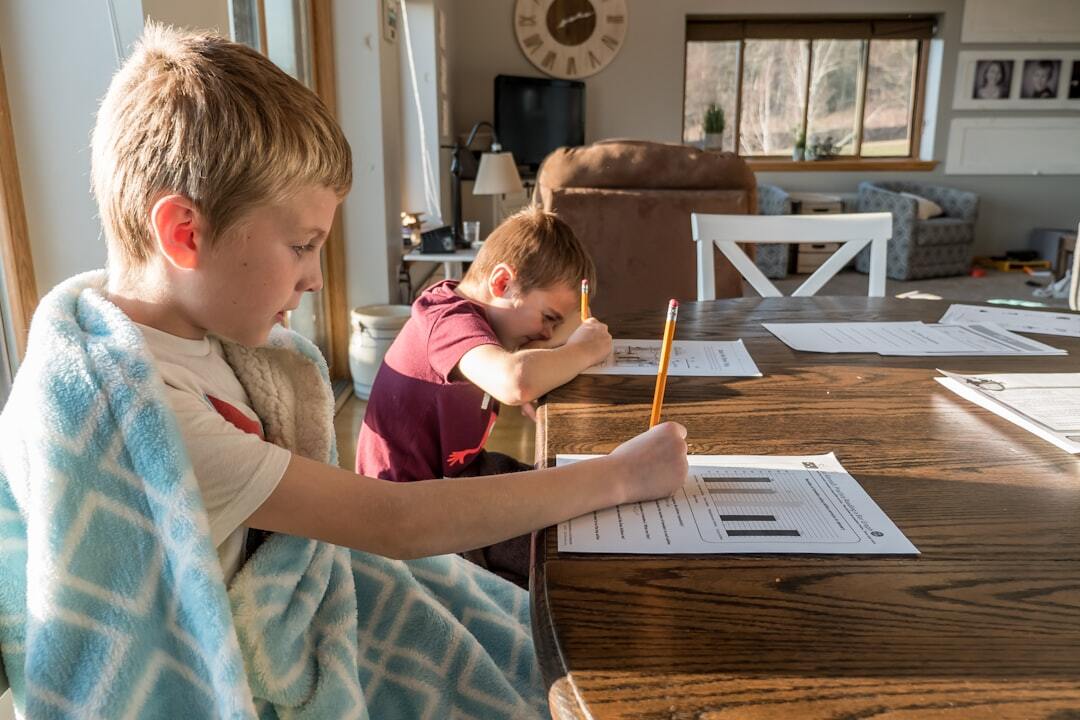
If Siblings Share a Homework Space
A shared desk or dining table can work perfectly well, but it helps to give each child somewhere to keep their own school materials. Separate caddies, drawers or folders prevent constant arguments about missing pencils and whose worksheet belongs to whom.
Consider the type of work each child is doing too. One child practising reading aloud beside another trying to revise may be a difficult combination. If necessary, stagger homework slightly or provide headphones where appropriate for digital work. A second temporary work surface can sometimes be more useful than trying to make everyone use one beautifully organised desk simultaneously.
Don’t Forget What Happens Before Homework
There is no particular need for a dedicated “snack drawer” beside the desk. In many homes it makes more sense for children to have something to eat and drink before settling down, particularly if they have come home hungry after a long school day.
Keep water available during homework and allow sensible breaks, especially during longer tasks. Moving away from the desk occasionally is useful too; homework does not need to mean sitting motionless for an entire evening. A short break between different pieces of work can provide a natural opportunity to stretch, move around and come back refreshed.
A Simple Homework Station Checklist
If you are creating a study space from scratch, concentrate on the essentials first:
- A location with manageable distractions
- A work surface large enough for the tasks your child does
- A comfortable chair with appropriate support
- A footrest if their feet cannot comfortably reach the floor
- Good general lighting and a task lamp where necessary
- Everyday stationery within easy reach
- A simple system for unfinished and completed work
- Charging access if homework involves a laptop or tablet
- Enough clear desk space to actually work
- A routine for tidying the station once homework is finished
Start with those basics and add storage or decoration only when there is a genuine need for it. The most successful homework station is rarely the one with the most organisers, shelves or accessories. It is the one that makes sitting down and getting started feel straightforward.
And if that happens to be one end of the kitchen table with a pencil caddy and a comfortable chair, that can be every bit as effective as a purpose-built study room.