
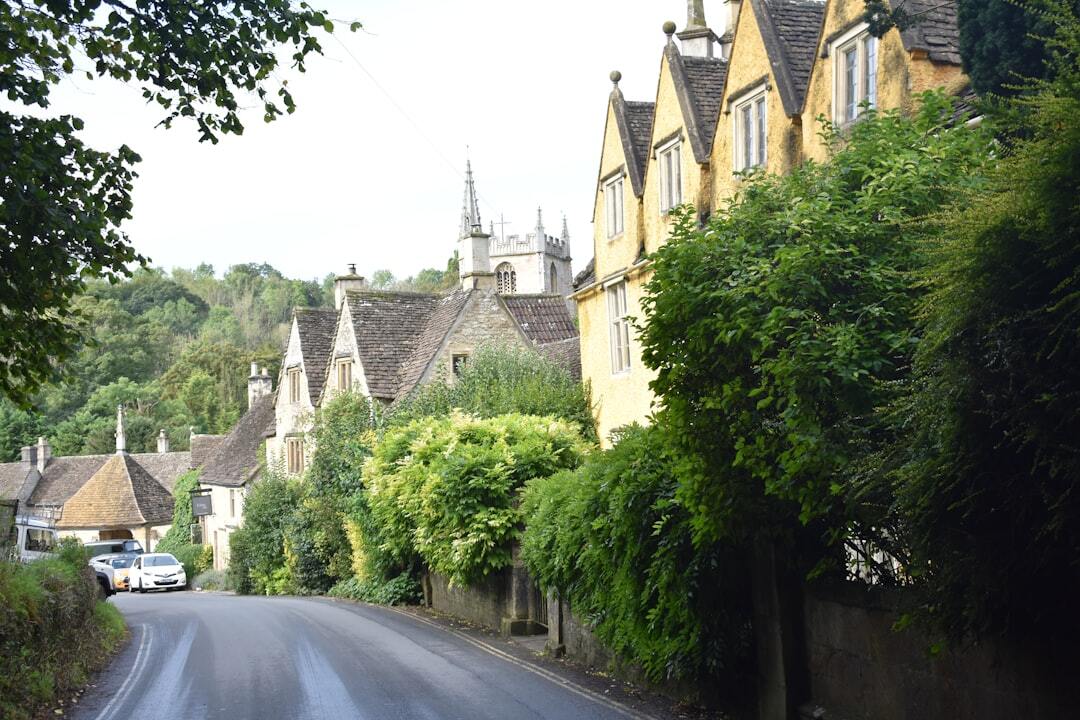
Kent’s history is not confined to its castles, cathedrals and larger market towns. Some of the county’s most atmospheric places are much smaller: villages where medieval street patterns remain visible, timber-framed houses lean towards narrow lanes and centuries-old churches still dominate the skyline.
The best of them offer enough to fill more than a quick photo stop. You can combine historic buildings with country walks, old pubs, gardens, riverside scenery and nearby attractions, making them ideal for an unhurried day out. From the near-perfect Tudor streets of Chiddingstone to Chilham’s famous village square and the old stone bridge at Aylesford, these are some of Kent’s most rewarding historic villages to explore.
Chilham – A Medieval Square on the Pilgrims’ Way
Chilham is one of those villages that immediately looks the part. Its compact historic centre is arranged around a beautiful square lined with timber-framed houses, red-tiled roofs and the tower of St Mary’s Church. Chilham Castle stands beyond the square, while the surrounding countryside places the village firmly within the landscape of the Kent Downs.
The settlement has deep medieval roots and sits close to the historic pilgrimage route towards Canterbury. Chilham Castle itself has a long and complicated history: the estate passed through the hands of major medieval families, was acquired by Henry VIII in 1539 and later developed around the Jacobean house that still dominates the village today.
You do not need access to the castle itself to enjoy Chilham. Much of the pleasure comes from wandering around the square, looking at the old buildings and church before heading out on foot. King’s Wood lies nearby, and longer walkers can pick up routes towards Canterbury and the surrounding Downs. It is particularly good for visitors who want a historic village to be the starting point for a countryside walk rather than the entire day.
Chiddingstone – One of Kent’s Best-Preserved Tudor Villages
Chiddingstone is perhaps the purest historic-village experience on this list. The narrow street is lined with half-timbered buildings, tiled roofs and cobbled edges, with very little to interrupt the sense of stepping into an older Kent. The National Trust describes it as one of the country’s best-preserved Tudor villages and has owned much of the village since 1939.
There is plenty to notice within a surprisingly small area. The Old Manor displays classic Tudor timber work, the village shop occupies a Grade II* listed 16th-century building, and St Mary’s Church contains features dating from its rebuilding after a major fire in 1624. The mysterious Chiding Stone adds a layer of folklore: stories have variously described it as an ancient boundary marker, a place of judgement and even a druid altar, although its precise history is far less certain.
Chiddingstone Castle is close by, and the countryside around the village opens into the High Weald, so it is easy to combine the historic street with a longer walk. This is the village to choose if preserved architecture is the main reason for your day out rather than simply one attraction within a larger town.
Penshurst – Tudor History and a Great Medieval House
Penshurst’s identity is inseparable from Penshurst Place, but the village deserves time in its own right. Stone walls, old cottages and St John the Baptist Church sit within a landscape of parkland and wooded countryside, while the estate’s historic buildings rise immediately beyond the village centre.
Penshurst Place was built for Sir John de Pulteney and completed in 1341, with much of the medieval house surviving. It later became associated with the Sidney family, who have held the estate since the 16th century, and it was also used as a hunting lodge by Henry VIII. Its great Baron’s Hall remains one of the outstanding medieval spaces in the house.
The neighbouring parish church is older still in origin, with Norman fabric and later medieval additions. Between the village, church, estate and surrounding footpaths, Penshurst can comfortably fill most of a day without requiring a packed itinerary. It is particularly strong in warmer months when a visit to the house and gardens can be combined with a walk through the surrounding countryside.
Eynsford – Norman Ruins in the Darent Valley
Eynsford combines historic buildings with one of Kent’s most attractive river-valley settings. The River Darent runs through the village, old houses gather around the centre and the ruins of Eynsford Castle sit only a short walk from the High Street.
The castle is particularly significant because it is a rare surviving example of an early Norman enclosure castle. Its substantial curtain wall was begun in the late 1080s and, unlike many Norman strongholds, the site was not dominated by a conventional motte and keep. A violent inheritance dispute culminated in the castle being broken into and vandalised in 1312, after which it was abandoned as a residence.
The ruins are currently free to visit, making them an easy addition to a village walk. Eynsford also works particularly well as a base for exploring the wider Darent Valley, with footpaths connecting surrounding countryside and other historic sites. Nearby Lullingstone adds further historical interest for anyone wanting to make a full day of it.
Aylesford – Medieval Bridge and Riverside Kent
Aylesford has grown considerably beyond its oldest streets, but its historic core beside the River Medway remains remarkably picturesque. The defining view is the old stone bridge crossing the river beneath St Peter and St Paul’s Church, with cottages lining the water nearby.
The bridge is itself a significant medieval survival. Built from Kentish ragstone and thought to date largely from the 14th century, it replaced an earlier crossing at a site where the river had long been forded. Its central section was altered in the 19th century to allow larger river traffic through, but much medieval fabric survives and the bridge is both Grade I listed and a scheduled monument.
A walk beside the Medway and through the old village provides the easiest way to appreciate Aylesford, while the nearby Friars and surrounding countryside can extend the visit. It is a particularly good choice for anyone who wants history without spending the whole day inside a paid attraction: the river, bridge and old village provide much of the atmosphere for free.
Smarden – Timber-Framed Kent and the Medieval Cloth Trade
Smarden is quieter than Chilham or Chiddingstone but arguably just as rewarding for anyone interested in old Kentish architecture. Its village centre contains an extraordinary concentration of historic houses, many linked to the prosperity created by the medieval and Tudor cloth trade.
The village developed significantly after Edward III encouraged Flemish weavers to settle in England. Smarden received a royal charter in the 14th century allowing it to hold a weekly market and annual fair, and prosperous cloth production helped finance substantial timber-framed houses. The surviving Cloth Hall dates from around 1430 and was later used in connection with the local broadcloth trade. The parish today contains more than 150 listed buildings.
This is not a village packed with large visitor attractions, and that is part of its strength. The pleasure is in walking slowly through the conservation area, looking at jettied timber houses, tiled roofs and old inns before stopping for lunch or heading into the surrounding Wealden countryside. Smarden suits visitors who would rather explore a living historic village than queue for a major attraction.
Goudhurst – A Hilltop Village in the High Weald
Goudhurst occupies a ridge above the surrounding High Weald, giving it a very different character from Kent’s riverside villages. Historic houses rise and fall along the main street, while St Mary’s Church stands prominently above the village and the countryside drops away towards orchards, woods and rolling farmland.
The settlement has medieval origins and was established as a hilltop village by the end of the 13th century. St Mary’s is Grade I listed and incorporates fabric dating from the medieval period. The village pond and traditional High Street add to the atmosphere without making Goudhurst feel preserved purely for tourism.
Its real advantage for a day out is location. Bedgebury National Pinetum and Forest, Scotney Castle and extensive High Weald countryside are all nearby, so the village can be combined with a much larger outdoor itinerary. Goudhurst is especially good for anyone who wants an old village, a country pub or café and a walk rather than several hours of formal sightseeing.
Wye – Medieval Streets Beneath the North Downs
Wye is larger and livelier than some of the villages on this list, but its historic centre remains full of character. Narrow streets cluster around the church and old crossing of the River Stour, with buildings that often reveal more history than their facades initially suggest.
The village developed around an ancient ford across the Stour. Many properties lining its medieval streets now display Georgian or Regency fronts, but behind them are older timber frames dating from the 15th and 16th centuries. Surviving structures include a 12th-century stone undercroft, while the place name itself appears in the Domesday Book.
Wye is particularly easy to turn into a full day because the North Downs rise immediately beyond the village. Walkers can climb towards the Wye Crown and Wye Downs, including the dramatic Devil’s Kneading Trough, before returning for food or a drink in the village. It therefore works well for groups where some people are interested in old buildings while others primarily want countryside and views.
Which Historic Kent Village Should You Visit?
Choose Chilham for the classic medieval square and easy access to the Kent Downs, or Chiddingstone if beautifully preserved Tudor architecture is the priority. Penshurst offers the strongest combination of village atmosphere and a major historic house, while Eynsford adds accessible Norman castle ruins and the landscape of the Darent Valley.
Aylesford is particularly attractive for its medieval bridge and riverside setting. Smarden is ideal for timber-framed architecture and the story of Kent’s cloth industry, Goudhurst provides a hilltop High Weald setting, and Wye combines an old village centre with some of the best downland walking in east Kent.
None requires a rigid itinerary. In fact, these places are generally at their best when you leave enough time to walk the quieter lanes, look properly at the buildings and stop when somewhere catches your attention.
Make a Day of It
Historic villages are often small, so the most satisfying visits combine them with something nearby. Chilham and Wye both provide excellent access to the Kent Downs. Penshurst and Chiddingstone can be paired with historic estates and walks through the High Weald. Eynsford sits within easy reach of other heritage attractions in the Darent Valley, while Goudhurst is close to major gardens, woodland and countryside.
It is worth checking parking arrangements and attraction opening times before travelling, particularly at weekends and during summer. Some historic houses and gardens operate seasonally, while village car parks can be modest. Where possible, arriving earlier gives you a chance to see the streets before the busiest part of the day.
What makes these villages special is not simply that old buildings have survived. They remain working communities shaped by centuries of Kentish history, from medieval pilgrims and cloth merchants to great estates, river crossings and agricultural landscapes. Spend a day exploring them slowly and that history becomes much easier to see.