
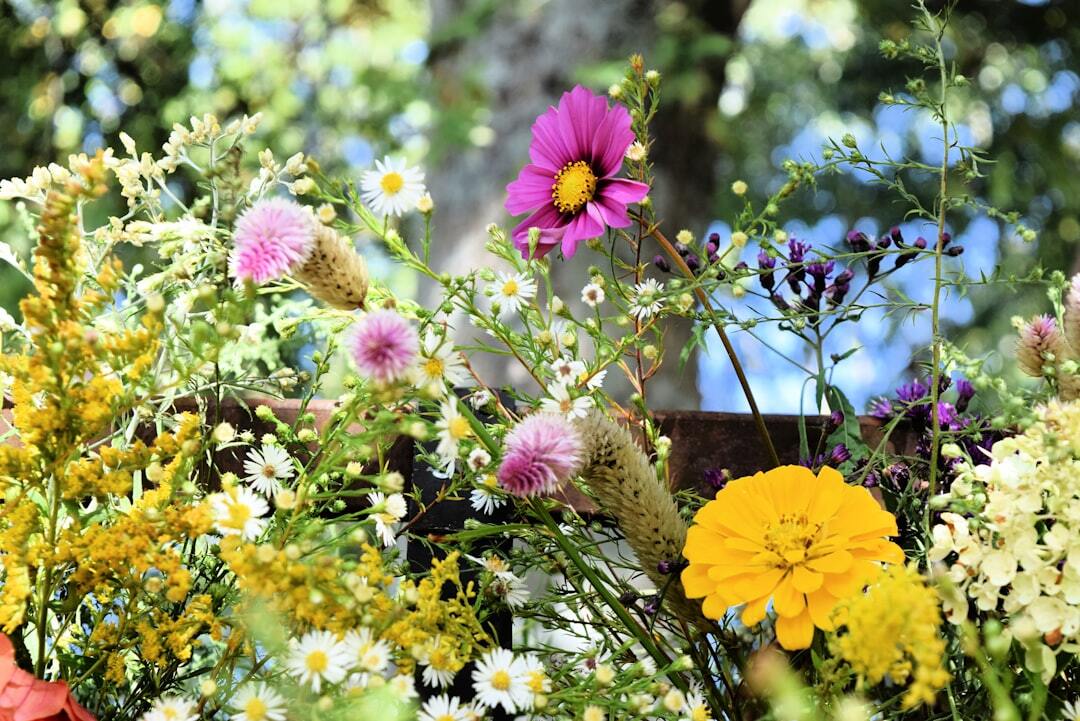
By August, some of the garden’s early stars have already faded and borders can begin to lose the freshness they had in June and July. But late summer does not have to mean a gradual decline. With the right planting, August can be one of the most colourful months of the year, bringing together bold flowers, softer drifts of colour and plants that will continue performing well into September and autumn.
The key is to choose plants that naturally peak later in the season rather than trying to prolong everything planted for early summer. From dahlias and rudbeckias to Japanese anemones, salvias and sedums, these reliable late-flowering plants can revive tired borders, fill seasonal gaps and keep patios and containers looking lively for weeks to come.
Dahlias
Dahlias are one of the great late-summer performers, often reaching their best just as other parts of the garden are beginning to fade. Their extraordinary range is part of their appeal: flowers can be neat and single, tightly packed pompoms or huge decorative blooms, with colours stretching from white and soft pink to orange, burgundy and almost-black red. Varieties such as ‘Bishop of Llandaff’, with its vivid red flowers and dark foliage, can provide as much impact from the leaves as the blooms themselves.
They work beautifully in mixed borders but are equally effective in large containers, particularly where their colour can be enjoyed close to a patio or seating area. Taller varieties may need support once their stems become heavy with flowers, and regular deadheading helps keep new buds developing. Single and semi-double forms are especially useful in wildlife-friendly gardens because their centres are more accessible to bees and other pollinating insects.
Rudbeckias
Few plants bring warmth to an August border quite like rudbeckias. Their golden-yellow petals and dark central cones provide an immediate burst of colour and sit particularly well among the deeper greens of late summer. ‘Goldsturm’ is one of the best-known perennial forms, producing masses of daisy-like flowers from late summer onwards and combining easily with grasses, salvias and other plants in purple or blue tones.
Rudbeckias are particularly effective when planted in groups rather than dotted individually through a border. Their upright habit gives structure without making the planting feel rigid, while the flowers attract bees and butterflies during a period when some earlier nectar sources are disappearing. Leave some seed heads standing after flowering and they can continue adding shape and texture as autumn arrives.
Japanese Anemones
Japanese anemones bring a very different character to the late-summer garden. Their simple pink or white flowers are carried on slender stems above generous foliage, creating movement and height without the visual weight of larger-flowered plants. They begin to earn their place particularly strongly from August onwards, making them valuable for borders that lose colour once the main flush of early-summer perennials has finished.
White-flowered varieties such as ‘Honorine Jobert’ can brighten partially shaded areas, while soft pink forms including ‘September Charm’ work well in relaxed cottage-style planting. They are particularly effective towards the middle or back of a border where their flowers can rise through neighbouring plants. Once established they can spread, so give them enough room to form a natural-looking colony rather than squeezing them into a small gap.
Crocosmia
For stronger colour, crocosmia brings fiery shades of orange, red and yellow to the August garden. Its arching flower stems rise above narrow, sword-shaped foliage, creating a distinctive silhouette that works especially well among ornamental grasses and softer perennial planting. It is a useful way of introducing vivid colour without relying on large blocks of bedding plants.
Different varieties vary considerably in height and vigour, so it is worth choosing one that suits the space available. Some forms can spread enthusiastically once established, while more compact varieties are easier to accommodate in smaller borders or larger containers. Crocosmia generally performs best in a sunny position and can remain colourful well beyond August, helping bridge the gap between summer and early autumn.
Echinacea
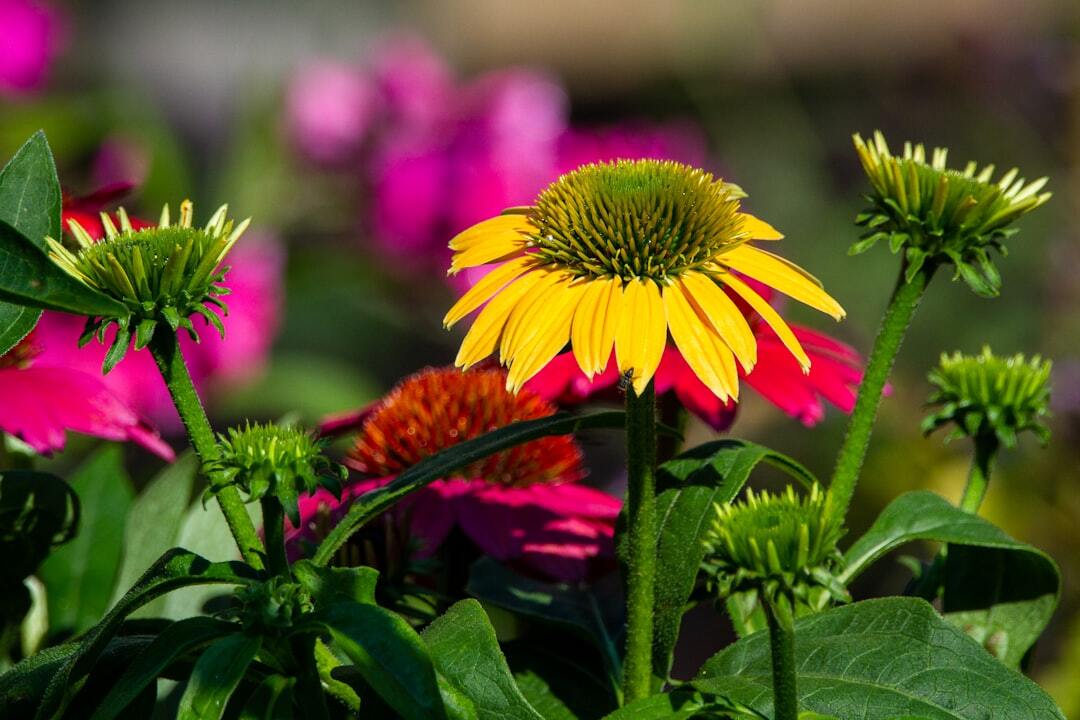
Echinacea is particularly effective in relaxed, naturalistic planting where its strong flower shape can stand above grasses and softer foliage. The distinctive raised cone at the centre of each bloom is surrounded by petals in shades that range from classic pink and white to warmer oranges and reds. Flowering strongly through late summer, echinacea brings both colour and structure at a time when many borders benefit from a fresh focal point.
Give it plenty of sun and reasonably free-draining soil, as it is less happy in persistently wet or heavily shaded positions. Echinacea is also valuable for bees and butterflies, while the dried flower heads can be left in place once flowering ends. Rather than cutting everything back immediately, keeping the cones through autumn gives borders additional texture and extends the plant’s usefulness beyond its flowering period.
Agapanthus
Agapanthus offers one of the most recognisable flower shapes of late summer, with rounded heads of blue, purple or white flowers held high above strappy foliage. The plants have a clean, architectural quality that makes them particularly useful where a border needs stronger definition, although they are perhaps at their best in containers where the flower heads can become a feature in their own right.
They prefer a sunny position with good drainage and can cope well with relatively dry conditions once established. Pots of agapanthus work especially well around terraces, doorways and seating areas, where several plants can repeat the same colour through the space. Hardiness varies between varieties, particularly among evergreen forms, so check what you are buying if the plant will remain outside in a container throughout winter.
Hydrangeas
Hydrangeas provide a more substantial option for gardeners who want long-lasting late-summer colour from a shrub rather than another perennial. By August, many are producing large flower heads that can remain attractive for weeks, gradually changing colour as they mature. Whites may take on shades of pink or green, while deeper varieties often develop increasingly muted, autumnal tones as the season progresses.
Panicle hydrangeas, or Hydrangea paniculata, are particularly useful at this time of year because their conical flowers often continue well into autumn. They bring scale and structure to mixed borders and can provide a strong backdrop for lower plants such as rudbeckias or sedums. There are now compact varieties suitable for smaller gardens too, so hydrangeas need not be reserved for large borders.
Verbena bonariensis
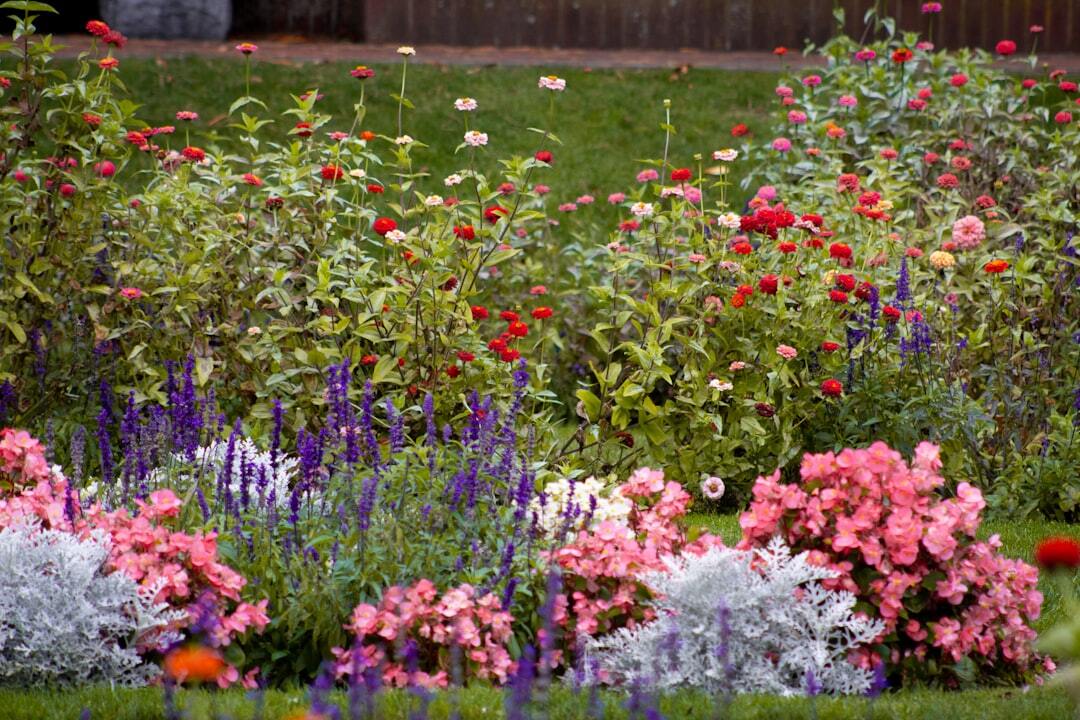
Verbena bonariensis is useful because it adds height without creating a solid wall of foliage. Its tall, thin stems carry small clusters of purple flowers well above surrounding plants, allowing you to see straight through them to whatever is growing behind. That makes it particularly effective for weaving between larger perennials such as dahlias, rudbeckias and echinacea rather than planting it in an isolated block.
The flowers are highly attractive to butterflies and other pollinating insects, and the plant can keep flowering from summer well into autumn. It prefers a sunny, free-draining position and will often self-seed around the garden once established. For some gardeners that creates exactly the relaxed, natural effect they want; for others, unwanted seedlings can simply be removed while young.
Salvias
Salvias are among the most versatile plants for late-summer colour because the genus includes an enormous range of flower shapes, colours and growing habits. Upright spikes of blue, violet, pink or red flowers provide a useful contrast to the broader blooms of dahlias, echinacea and rudbeckias, while many varieties continue producing flowers into autumn if spent growth is trimmed back.
They are also excellent plants for pollinators and can be used in both borders and containers. Perennial forms such as Salvia nemorosa work well in more structured planting, while shrubby salvias can produce colour over a particularly long season. Their hardiness varies, however, so it is worth checking the requirements of a specific variety rather than assuming every salvia will cope with the same winter conditions.
Hylotelephium (Sedum)
Hylotelephiums, still more commonly known as sedums by many gardeners, come into their own as summer begins to turn towards autumn. Their broad, flat flower heads sit above fleshy foliage and gradually develop deeper pink, red or dusky tones through August and September. Familiar forms such as ‘Autumn Joy’ are dependable choices for sunny borders and offer a completely different texture from the more delicate flowers around them.
They are particularly useful in dry, sunny positions and need relatively little attention once established. Their late flowers are crowded with pollinating insects on warm days, and there is no need to remove the heads when flowering finishes. Left standing, they dry into attractive architectural shapes that remain useful through autumn and winter.
How to Combine August-Flowering Plants
The strongest late-summer borders tend to combine different flower shapes, heights and textures rather than simply squeezing in as many colours as possible. Dahlias look particularly good emerging through the lighter stems of Verbena bonariensis, while golden rudbeckias and orange crocosmia gain extra impact alongside violet and blue salvias. Echinacea can be threaded through ornamental grasses for a softer, prairie-style effect, and Japanese anemones are useful where the planting moves into lighter shade.
Containers can echo the colours used in the borders rather than functioning as completely separate displays. A pot of blue agapanthus, for example, can pick up similar tones from salvias elsewhere in the garden, while cosmos or trailing petunias can provide quick seasonal colour around permanent planting. Heleniums are another excellent option for adding burnt orange and gold where a border needs extra warmth.
You do not need to redesign the whole garden to improve its August display. Instead, look at where early-flowering plants leave obvious gaps and use those spaces to plan for next year. Adding even two or three dependable late-flowering plants can dramatically extend the season, turning August from the point when the garden begins to fade into one of its most colourful and rewarding months.