
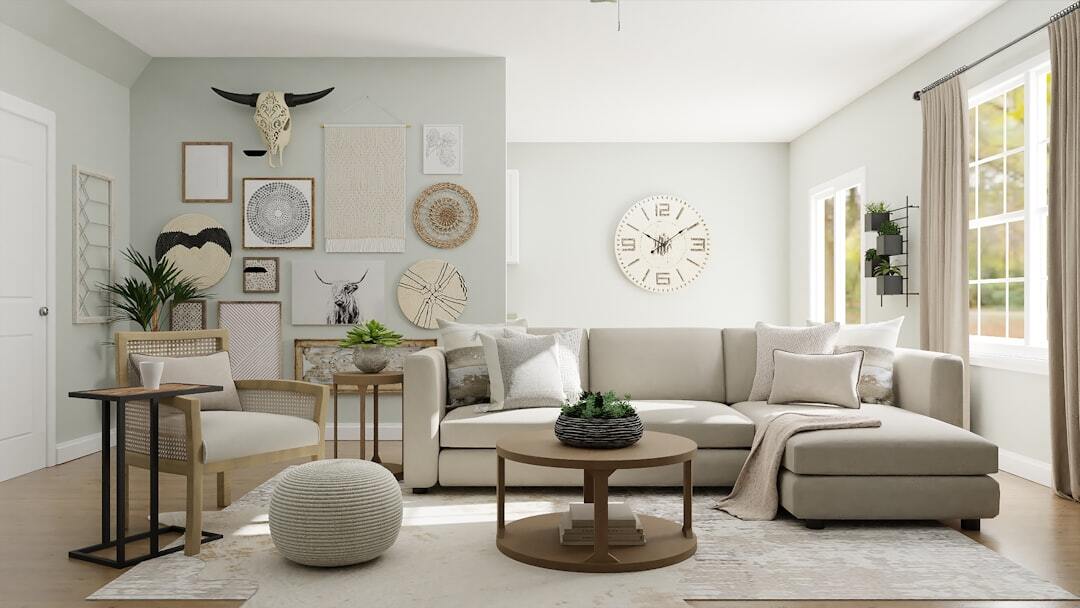
Refreshing your home does not have to mean replacing furniture, redecorating every room or embarking on a renovation. Some of the biggest visual improvements come from working with what you already have: editing clutter, moving furniture, changing how a room is lit or introducing colour and texture in a few carefully chosen places.
The key to decorating on a budget is to avoid making lots of small purchases that do not substantially change the room. Start with the areas that bother you most, decide what would genuinely improve them and spend selectively. Whether you own your home or rent, these affordable ideas can make a familiar space feel considered and refreshed without turning the process into another major project.
Start by Removing Before You Add
Before buying anything new, clear the surfaces and look at the room again. A coffee table covered in objects, an overcrowded bookcase or furniture that has gradually accumulated around the edges of a room can make a space feel tired regardless of how attractive the individual pieces are.
Remove things you no longer like or use, relocate objects that belong elsewhere and group what remains more deliberately. Books look calmer when they are not crammed into every available centimetre, while a sideboard may need only a lamp, a couple of books and one decorative object rather than ten unrelated items.
A thorough clean makes a surprisingly noticeable difference too. Wash windows, wipe skirting boards and doors, clean lampshades and mirrors and deal with marks that have gradually become invisible through familiarity. Once the room is clearer, it becomes much easier to identify whether it genuinely needs new décor or simply needed resetting.
Rearrange the Furniture Before Replacing It
Changing the layout costs nothing and can completely alter the way a room feels. Sofas do not necessarily need to sit against walls, armchairs can be pulled into a more conversational arrangement and side tables can be moved to wherever they are actually useful rather than wherever they were first placed.
Think about what the room is used for. In a living room, orientating seating around conversation rather than automatically pointing everything towards the television can make the space feel more inviting. In a bedroom, moving a bed away from an awkward doorway or improving the view when you enter can change the balance of the entire room.
Do not force a fashionable layout if it makes the room harder to use. Leave sensible routes between doors and furniture, make sure drawers can open properly and keep everyday tasks easy. A successful rearrangement should improve how the room functions as well as how it photographs.
Use Paint Where It Will Make the Biggest Difference
Paint remains one of the most effective ways to change a room without spending heavily, but you do not necessarily need to repaint every wall. A tired room may need only the walls that have become marked, while a smaller amount of colour can transform an alcove, chimney breast, shelving unit or piece of furniture.
Before committing, test colours in the actual room and look at them at different times of day. Natural and artificial light can make the same shade look dramatically different. Painting a large sample onto card allows you to move it around the room rather than covering several walls with tiny squares of colour.
Woodwork can have almost as much impact as walls. Fresh paint on skirting boards, doors or an old built-in cupboard can make the surrounding room feel cleaner and more deliberate. If you rent, check your tenancy agreement and speak to your landlord before making permanent decorative changes. Removable colour can instead come from artwork, textiles and furniture.
Change Soft Furnishings Instead of the Furniture
A sofa may feel dated because of everything around it rather than because the sofa itself needs replacing. New cushion covers, a throw or a rug can alter the colour and texture of a room for a fraction of the cost of new upholstery. Covers are particularly useful because the existing cushion pads can often be reused.
Avoid buying an entire coordinated collection. Rooms generally feel more relaxed when fabrics share a loose palette but differ slightly in texture, scale or pattern. A plain linen-look cushion, a textured weave and one patterned cover can be more effective than six identical cushions arranged across a sofa.
The same principle works in bedrooms. Changing bedding, adding a throw or replacing tired cushion covers can refresh the room without touching the furniture. Curtains can have a large visual impact too, although replacing them is not always cheap. If existing curtains are in good condition, simply washing, steaming and rehanging them properly can make them look considerably better.
Improve the Lighting with Lamps
A single bright ceiling light can make even an attractive room feel flat. Adding light at different heights is one of the simplest ways to create atmosphere without redecorating. A floor lamp beside a sofa, a table lamp on a sideboard and a small reading lamp can produce a much warmer effect than relying entirely on the central fitting.
You do not necessarily need new lamps. Changing an outdated shade can make an existing base feel completely different, while moving lamps between rooms may reveal a better combination using things you already own. Pay attention to the colour temperature of bulbs too; noticeably different tones around one room can make the lighting feel disjointed.
Replacing wired light fittings is a different proposition from swapping a lampshade or plugging in a floor lamp. Electrical Safety First advises leaving electrical work to competent professionals, particularly where you are uncertain about wiring or safety requirements.
Move Your Art Before Buying More
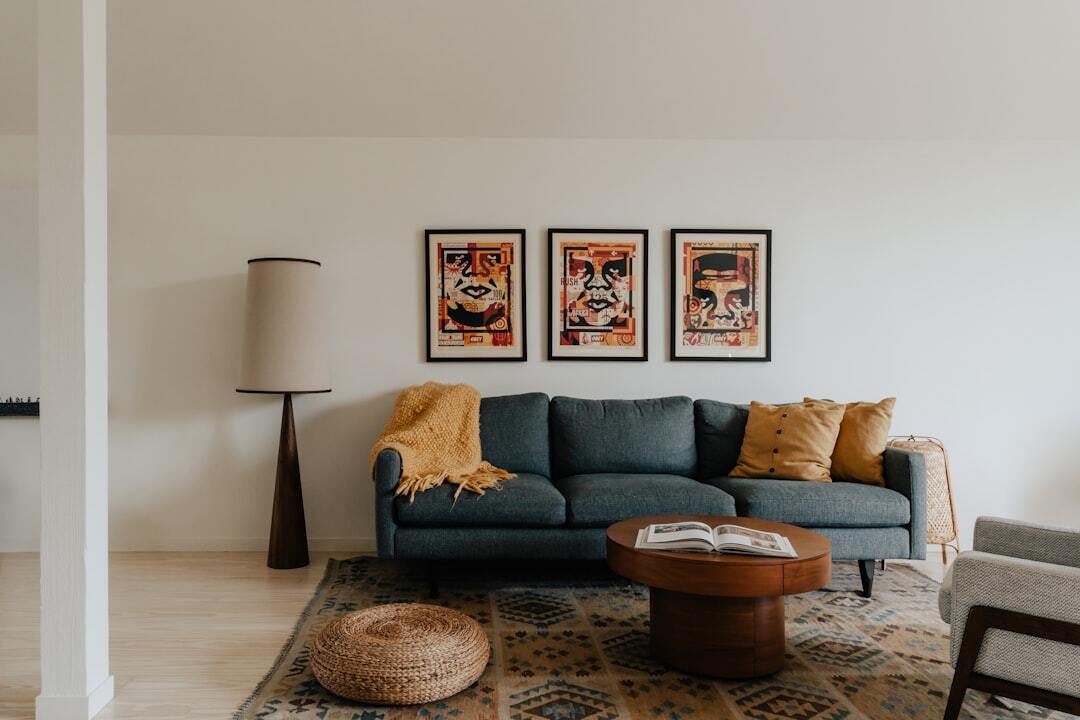
Artwork often becomes part of the background simply because it has been hanging in the same position for years. Swap pictures between rooms, create a small gallery from pieces currently scattered around the house or lean framed prints on shelves and sideboards rather than hanging everything.
Personal photographs can be inexpensive decoration when printed well and framed consistently. Second-hand shops are also excellent sources of frames, which can be repainted or used with new mounts even if the original artwork is not to your taste.
Scale matters more than price. One substantial piece above a sofa can look more intentional than several small pictures floating without any relationship to the furniture beneath them. Before putting new holes in the wall, mark the proposed arrangement with paper or removable tape so you can judge the overall proportions.
Use Mirrors to Change Dark or Small Spaces
A mirror can make a dark corner feel brighter by reflecting available light, and larger mirrors can add a sense of depth to narrow hallways or compact rooms. They are particularly useful where there is little wall space for conventional artwork.
Think about what the mirror will reflect before hanging it. Positioning one opposite a window, garden view or attractive part of the room can be effective; reflecting a cluttered shelving unit is less useful. Large mirrors can often be found second-hand for far less than new designer versions, and a dated frame may only need cleaning or repainting.
Refresh a Kitchen Without Replacing It
Kitchens tempt people into expensive renovation decisions because cupboards occupy so much of the visual space. Before considering replacement units, look at the smaller elements that can be changed independently.
New cabinet handles can alter the appearance of plain doors significantly, particularly if the existing ones are obviously dated. Measure the distance between screw holes before buying replacements so you can use the existing fixings rather than drilling every door again. Repainting suitable cupboard doors can make an even bigger difference, although careful preparation and the correct paint are essential if you want the finish to survive daily use.
Clear some of the worktop too. A kitchen often looks more refreshed when rarely used appliances, excessive containers and mismatched accessories are removed rather than replaced by a new set of decorative objects. A wooden board, bowl of fruit, pot of herbs or attractive utensil holder may be enough to add interest without reducing valuable preparation space.
Renters can concentrate on completely reversible changes such as handles that can later be swapped back, artwork, freestanding shelving, attractive storage and better lighting rather than covering every surface with adhesive products that may prove less removable than the packaging suggests.
Give the Bathroom a Low-Cost Reset
A bathroom can change surprisingly quickly because there are relatively few decorative elements competing for attention. Start with anything that looks worn: old towels, a tired shower curtain, damaged storage containers or an overcrowded collection of toiletries around the bath.
Choose towels and a bath mat that work together rather than feeling like unrelated purchases, add baskets or containers where they solve an actual storage problem and consider replacing a small mirror with a larger one if the proportions allow. Plants that genuinely tolerate the available conditions can add softness, but artificial greenery is better than repeatedly replacing unsuitable plants in a dark bathroom.
Changing taps, wired lighting or plumbing is not in the same category as changing towels or a mirror. If the update requires altering plumbing or electrical installations, factor professional labour into the budget rather than assuming it is a quick decorative DIY task.
Shop Your Own Home
Before buying accessories, walk through the rest of the house. A vase ignored in the bedroom may work perfectly on the dining table. A small chest used for storage upstairs might make a better bedside table. Books, bowls, framed photographs and lamps can all be moved between rooms.
This is particularly effective after decluttering because you can see what you already own. Try gathering decorative objects in one place and then redistributing only the pieces that genuinely improve each room. Leaving some items stored away also allows you to rotate them later, which can make the house feel different without buying anything new.
Buy Second-Hand Before Buying New
Furniture is one area where a limited budget can actually encourage more interesting choices. Charity furniture shops, local marketplaces, auctions and second-hand dealers regularly contain solid wood tables, mirrors, stools, chests and chairs at prices far below equivalent new pieces.
Concentrate on construction and proportions rather than the current finish. A well-built wooden chest with scratched varnish may be a better purchase than inexpensive new furniture designed to last only a few years. Some pieces need nothing beyond cleaning and new handles, while others can be sanded or painted if the material is appropriate.
Be realistic about projects, though. A £20 chair is not cheap if it needs £70 of fabric, specialist tools and three weekends of work before you can use it. Buy pieces whose condition matches the amount of effort you genuinely want to put in.
Bring in Plants – But Only Where They Will Thrive
Plants are an easy way to introduce colour, shape and height into a room, particularly where the décor is otherwise fairly neutral. One larger floor plant can often make more impact than a collection of tiny pots spread across every surface.
Choose plants for the conditions rather than for a photograph. A bright windowsill, shaded hallway and steamy bathroom require very different choices. If you repeatedly struggle to keep houseplants alive, cut foliage or seasonal branches in a vase can provide the same natural element temporarily without becoming another maintenance task.
Planters also offer an inexpensive way to repeat colours or materials already present in the room. Second-hand ceramic pots, baskets used as outer covers and simple terracotta can all look good without buying specialist decorative containers.
Style Shelves with More Space
Open shelves often become storage by default, gradually collecting books, paperwork, candles, photographs and objects until nothing stands out. Remove everything first and put back only what you want to see.
Mix useful and decorative items rather than filling every shelf with ornaments. Books can be stacked vertically and horizontally, a small picture can lean behind them and one bowl or vase can provide shape without needing several smaller objects beside it. Leave some empty space. The gaps are what allow individual pieces to register.
The same approach works on coffee tables, kitchen worktops and bedside tables. Budget decorating is often less about finding more things and more about presenting fewer things better.
Give Yourself a Small Budget for One High-Impact Change
If you have £50 or £100 to spend, resist distributing it across ten minor accessories. Ask which single change would have the greatest impact. In one room that may be a large rug; elsewhere it could be paint, a second-hand mirror, two substantial lamps or new bedding.
Start with the room’s biggest visual weakness. There is little point buying new cushions if poor lighting is what makes the living room feel uninviting, or adding ornaments to a bedroom when the bedding is what dominates the space.
Once the largest issue is improved, live with the room for a while before buying the next thing. That pause can prevent the familiar budget-decorating problem of spending £200 in £15 increments and still feeling that nothing has really changed.
Budget-Friendly Changes That Work Well for Renters
Renting does not mean a home has to feel temporary. Concentrate investment on things you can take with you: rugs, lamps, artwork, mirrors, bedding, plants, freestanding shelving and small pieces of furniture. These can change the character of plain rooms without altering the landlord’s fixtures.
Use existing picture hooks wherever possible and check the tenancy agreement before painting, drilling or replacing permanent fixtures. If you do temporarily change something such as a cabinet handle, keep the originals carefully labelled so they can be reinstated later.
It can also be worth asking permission rather than assuming the answer will be no. A landlord may be perfectly happy for a tired room to be repainted in an agreed colour, particularly if the work improves rather than damages the property.
Refresh the Home in the Right Order
If several rooms need attention, start with the changes that cost nothing: declutter, clean, rearrange furniture and move accessories between rooms. Next, deal with inexpensive visual improvements such as paint, lighting, cushion covers, artwork and handles. Only then decide whether larger purchases are still necessary.
That order matters because each stage can remove the need for the next. A living room that initially seemed to need a new sofa may feel completely different once the layout, rug, lighting and cushions have changed.
A successful budget refresh should leave your home feeling more personal and easier to live in, not simply fuller of inexpensive new things. Spend where the change will be visible, reuse what still works and let a few deliberate updates do the heavy lifting.